



Keypoints
- UN Secretary-General António Guterres has formally cautioned the United States and Israel that striking Iran’s power plants and bridges would violate international law.
- The UN emphasized that even if civilian sites are labeled military objectives, attacks are prohibited if they cause “excessive incidental civilian harm.”
- President Donald Trump has claimed the U.S. can carry out a “complete demolition” of these targets within a four-hour window.
- The deadline for Tehran to reopen the Strait of Hormuz expires Tuesday evening, with the U.S. threatening immediate military escalation.
Main Story
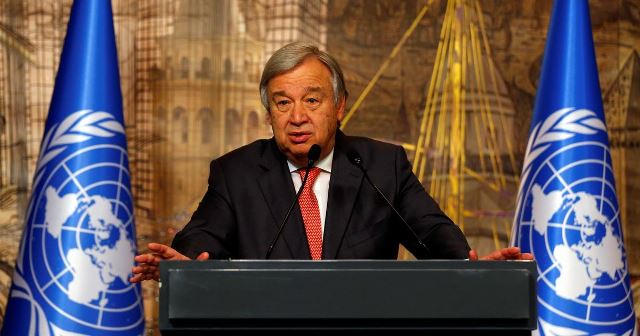
United Nations Secretary-General António Guterres issued an urgent appeal on Monday, calling on the United States and Israel to refrain from attacking Iran’s civilian infrastructure.
Through his spokesperson, Stéphane Dujarric, Guterres warned that targeting power plants and other essential facilities would constitute a breach of international humanitarian law.
The UN maintains that there is no viable alternative to a peaceful settlement, urging all parties to halt the conflict before civilian suffering reaches catastrophic levels.
The warning coincides with an intensified ultimatum from the White House. President Donald Trump has publicly threatened the “complete demolition” of Iran’s bridges and energy grid if the regime fails to reopen the Strait of Hormuz.
Trump stated that the U.S. military is prepared to launch these strikes within a four-hour timeframe once the deadline expires on Tuesday evening. As the 0000 GMT Wednesday cutoff approaches, the UN remains steadfast that international law prohibits such strikes if the resulting harm to the non-combatant population is deemed disproportionate to the military gain.
The Issues
The primary legal and ethical issue is the classification of dual-use infrastructure. While the U.S. administration may argue that power plants fuel the Iranian military machine, the UN points out that these same facilities are essential for hospitals, water treatment, and basic survival for millions of civilians. A “complete demolition” of the energy grid would likely lead to a humanitarian collapse. Additionally, the diplomatic gap remains wide, as the U.S. relies on military deadlines while the UN insists on a return to international dispute resolution frameworks that currently appear sidelined.
What’s Being Said
- “International humanitarian law would still prohibit attacks… if they may be expected to cause excessive incidental civilian harm,” stated Stéphane Dujarric, UN spokesperson.
- António Guterres emphasized that it is “high time for the parties to stop this conflict” to avoid a broader regional disaster.
- President Donald Trump asserted that the U.S. could carry out a “complete demolition” of Iranian infrastructure within four hours.
- The UN noted that there is “no viable alternative to the peaceful settlement of international disputes” in the current crisis.
What’s Next
- All eyes are on the Tuesday evening deadline to see if Iran makes any move to ease the blockade in the Strait of Hormuz.
- Human rights organizations and international legal bodies are expected to monitor any military action for potential war crime documentation.
- Global energy markets are likely to react sharply as the expiration of the ultimatum brings the threat of infrastructure destruction to its highest point yet.
Bottom Line
The UN’s intervention sets a clear legal boundary against the destruction of Iranian civilian life-support systems, even as the U.S. prepares for a rapid military campaign to break the maritime deadlock in the Gulf.