Keypoints
- UN Secretary-General António Guterres officially welcomed the 14-day ceasefire on Wednesday, urging all parties to comply with international law and work toward a “lasting and comprehensive peace.”
- While the United States and Iran have agreed to the truce, Israeli Prime Minister Benjamin Netanyahu clarified that while Israel supports the pause in strikes on Iran, the ceasefire “does not include Lebanon” or operations against Hezbollah.
- Pakistani Prime Minister Shehbaz Sharif, the primary mediator, has invited delegations to Islamabad this Friday, April 10, to begin negotiations on Iran’s 10-point plan.
- Global energy markets responded immediately, with Brent crude prices dropping roughly 13% to fall below $100 per barrel following the announcement of the Strait of Hormuz’s reopening.
Main Story
The United Nations has added its voice to the chorus of global leaders calling for a definitive end to the Middle East conflict following the breakthrough two-week ceasefire.
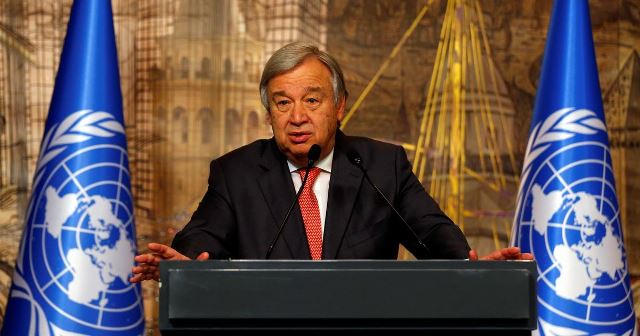
UN Secretary-General António Guterres, through spokesperson Stéphane Dujarric, emphasized that this window must be used to alleviate the “human suffering” caused by the weeks of military escalation.
The statement, issued early Wednesday, specifically commended the mediation efforts led by Pakistan and other regional partners that allowed the world to step back from the brink of a massive strike on Iranian civilian infrastructure.
While the “Final Final” deadline set by President Donald Trump for 0000 GMT was narrowly averted, the ceasefire remains fragile due to differing interpretations of its scope.
Prime Minister Shehbaz Sharif stated that the truce covers “all fronts,” but Israel has explicitly rejected the inclusion of Lebanon in the agreement. Israeli officials maintain that as long as the Iranian-backed Hezbollah continues its drone and missile campaign, the Israel Defense Forces (IDF) will continue operations in southern Lebanon.
Despite these tensions, the reopening of the Strait of Hormuz for commercial shipping has provided the first significant moment of economic relief for energy-importing nations since the war began on February 28.
The Issues
The primary diplomatic challenge is the transition from a “tactical pause” to a formal treaty. The UN has stressed that “compliance with international law” is non-negotiable, particularly regarding the protection of civilian energy grids and transportation networks. However, domestic pressures are mounting in both Washington and Jerusalem. In the U.S., Sen. Lindsey Graham has called for a “congressional review” of any deal based on Iran’s 10-point plan, citing concerns over nuclear enrichment and the withdrawal of U.S. forces. In Israel, opposition leaders have already labeled the ceasefire a “political disaster,” arguing that it allows the Iranian regime to regroup and rearm.
What’s Being Said
- “The Secretary-General welcomes the announcement… an end to hostilities is urgently needed to protect civilian lives,” stated Stéphane Dujarric at UN headquarters.
- President Donald Trump confirmed his pivot to diplomacy on Truth Social, noting that the 10-point plan provides a “workable basis” to avoid the demolition of Iranian civilization.
- Kaja Kallas, the EU’s top diplomat, described the deal as a “step back from the brink” that creates space to “restart shipping.”
- Spain’s Foreign Minister was more critical, calling Trump’s previous ultimatum “absolutely unacceptable for humankind” and urging a permanent rejection of infrastructure targeting.
What’s Next
- High-level negotiations are set to begin in Islamabad, Pakistan, on Friday, April 10, 2026.
- UN observers and maritime agencies will monitor the first commercial transits through the Strait of Hormuz under the newly established “Safe Passage Protocol.”
- The world will watch for any “proxy violations” in Lebanon or Yemen that could trigger a breakdown of the truce before the two-week window expires.
Bottom Line
The UN-backed ceasefire has provided a much-needed cooling-off period, but with Israel’s war in Lebanon ongoing and Iran’s 10-point plan containing steep demands for the U.S., the “Islamabad Summit” faces an uphill battle to turn this 14-day pause into a permanent peace.