







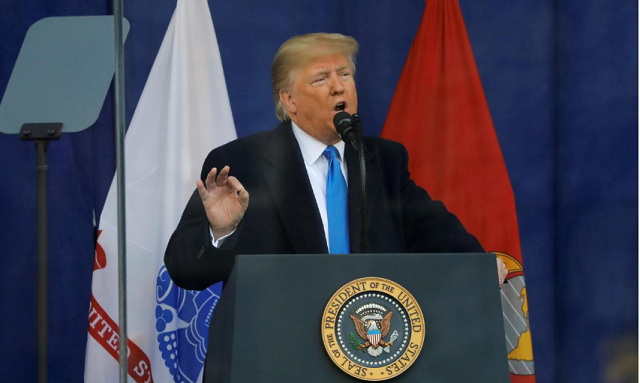
The United States government has publicly defended former President Donald Trump’s recent imposition of a 14 percent tariff on Nigerian exports, attributing the decision to trade barriers resulting from Nigeria’s import restrictions on 25 categories of American goods.
BizWatch Nigeria reports that President Trump introduced the new tariffs last week under a sweeping policy initiative dubbed the “Liberation Day” trade measures, which impact numerous countries globally, including Nigeria.
According to the Trump administration, Nigeria currently imposes an average tariff rate of 27 percent on goods imported from the United States—an action described by the former president as emblematic of “unfair trade practices.”
Officials from the Trump administration argue that Nigeria’s import restrictions have hindered U.S. market access, especially in critical sectors such as agriculture, pharmaceuticals, and consumer goods. These limitations, they claim, have resulted in substantial losses for American companies operating or seeking to operate in Nigeria.
As part of the broader “Liberation Day” initiative, the tariff announcement has triggered widespread volatility in the global financial markets. Major stock exchanges recorded steep losses, while several affected nations—including China and Canada—unveiled retaliatory trade measures against the United States.
In a detailed fact sheet published on Monday, the United States Trade Representative (USTR) outlined the rationale behind the tariffs. The document specifically cited Nigeria’s restrictive policies on U.S. exports, particularly within the food and pharmaceutical industries.
“Nigeria’s import ban on 25 distinct product categories negatively affects U.S. exporters, especially in agriculture, pharmaceuticals, beverages, and other consumer goods,” the USTR noted. “These restrictions—covering items such as beef, pork, poultry, fruit juices, medicaments, and alcoholic beverages—constrain U.S. market access and limit export opportunities.”
The agency further emphasized that these Nigerian trade policies constitute substantial barriers that undermine revenue growth for American firms targeting expansion in the Nigerian market.
The economic fallout from Trump’s new tariff regime has been significant. On Monday, stock indices in the United States, United Kingdom, China, India, and other countries saw sharp declines. The financial shockwave caused a collective loss of $208 billion among the world’s 500 wealthiest individuals—marking the fourth-largest single-day decline recorded by the Bloomberg Billionaires Index and the worst since the height of the COVID-19 pandemic.
In response to Washington’s move, China and Canada have introduced their own countermeasures. Beijing has imposed a 34 percent tariff on American imports and has also placed restrictions on the export of critical resources—including rare earth elements, food products, and pharmaceutical ingredients—to the U.S. market.
Meanwhile, the administration of President Bola Tinubu is reportedly reassessing its economic strategy in light of the new U.S. tariff, which threatens to significantly disrupt Nigeria’s export revenues.
BizWatch Nigeria gathered that the tariff could negatively impact Nigeria’s annual exports to the United States, valued at approximately $6 billion, thereby worsening current economic challenges such as rising inflation and the weakening naira.
Nigeria’s Minister of Finance and Coordinating Minister of the Economy, Wale Edun, has acknowledged the economic consequences of the newly imposed tariff and expressed concern about its potential to further destabilize the nation’s fragile economic recovery.