By BizWatch Nigeria Energy Desk | May 8, 2026
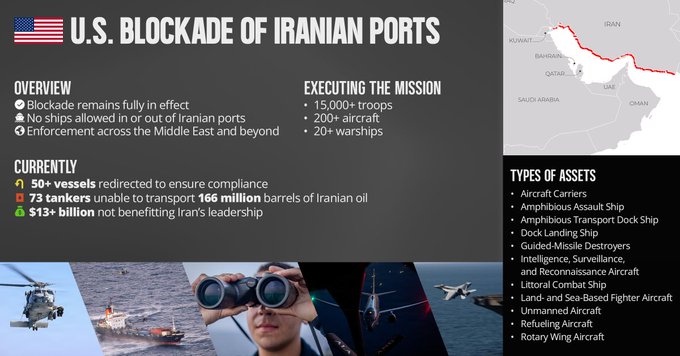
- U.S. Central Command reports more than 70 tankers currently prevented from entering or leaving Iranian ports.
- These vessels have capacity to transport over 166 million barrels of Iranian oil, valued at an estimated $13 billion-plus.
- Blockade remains in full effect with recent enforcement actions, including disabling an Iranian-flagged tanker attempting to breach it.
Main Story
U.S. forces are enforcing a naval blockade of Iranian ports, preventing more than 70 commercial tankers from moving Iranian oil, according to the latest update from U.S. Central Command (CENTCOM).
The operation, which began in mid-April 2026, targets vessels attempting to enter or depart Iranian ports and coastal areas. It has redirected dozens of ships and includes recent kinetic enforcement, such as the disabling of the unladen Iranian-flagged tanker M/T Hasna in the Gulf of Oman on May 6. A U.S. Navy F/A-18 Super Hornet from the USS Abraham Lincoln fired on the vessel’s rudder after it ignored multiple warnings.
CENTCOM states the blockade is enforced impartially against ships of all nations and does not impede freedom of navigation for vessels transiting the Strait of Hormuz to or from non-Iranian ports. Over recent weeks, U.S. forces have directed more than 50 vessels to turn around or return to ensure compliance.
The Issues
The blockade forms part of heightened U.S. pressure on Iran amid regional tensions and efforts to curb the country’s oil revenue. Iran has historically exported around 1.5–1.8 million barrels per day (bpd) of crude, a key source of foreign currency. The restrictions have contributed to plunging exports, rapidly filling onshore storage (notably at Kharg Island), and reports of Iran beginning to curb production to avoid shutdowns.
This has broader implications for global energy markets, with potential supply tightness, elevated insurance premiums for tankers, and rerouting costs affecting freight rates in the region. The Strait of Hormuz remains a critical chokepoint for roughly 20% of global seaborne oil trade.
What’s Being Said
“There are currently more than 70 tankers that U.S. forces are preventing from entering or leaving Iranian ports. These commercial ships have the capacity to transport over 166 million barrels of Iranian oil worth an estimated $13 billion-plus,” CENTCOM stated.
“The U.S. blockade against ships attempting to enter or depart Iranian ports remains in full effect. CENTCOM forces continue to act deliberately and professionally to ensure compliance,” the command added following the Hasna incident.
Analysts note the measure aims to squeeze Iran’s primary revenue stream, with some estimating daily losses in the hundreds of millions of dollars as storage constraints mount.
What’s Next
The blockade continues with U.S. naval assets, including aircraft carriers and supporting warships, actively patrolling the region. Further enforcement actions are expected as vessels test the restrictions.
Market watchers will monitor impacts on global oil prices, tanker traffic through the Strait of Hormuz, and any diplomatic developments that could ease or intensify the maritime standoff. Iran has faced pressure to adjust production and negotiate amid storage limits.
The Bottom Line
The sustained U.S. blockade is materially disrupting Iran’s oil export capacity at a time of regional volatility, potentially tightening global crude supply and reinforcing risk premiums for Middle East energy shipments. For Nigerian and other oil producers, this underscores how geopolitical flashpoints in the Gulf can swiftly influence international pricing and trade flows.