





Keypoints
- President Donald Trump has issued a final ultimatum to Iran, warning that a “whole civilization will die tonight” if the Strait of Hormuz is not reopened by 8:00 P.M. ET on Tuesday, April 7, 2026.
- The President threatened the “complete demolition” of Iran’s bridges and power plants, dismissing concerns that such strikes on civilian infrastructure would constitute war crimes.
- In a cryptic social media post, Trump claimed “Complete and Total Regime Change” has occurred, hinting at a potential transition or coup, though no independent verification of a leadership change in Tehran has been confirmed.
- Iranian President Masoud Pezeshkian responded defiantly, stating he is “willing to die” alongside millions of citizens who have reportedly formed human chains around power plants to deter attacks.
Main Story
The brinkmanship between Washington and Tehran reached a fever pitch on Tuesday as President Donald Trump warned that “one of the most important moments in the long and complex history of the World” would take place tonight.
Writing on Truth Social, Trump declared that 47 years of “extortion, corruption, and death” would end, setting a hard deadline for Iran to cease its blockade of the Strait of Hormuz.
The President’s rhetoric shifted from purely military threats to suggestions of a “revolutionarily wonderful” outcome, citing a supposed “Regime Change” that he claims has brought “smarter, and less radicalized minds” to power in Iran.
Despite the President’s claims of a new Iranian leadership, the ground reality remains one of extreme tension.
In Tehran, Deputy Minister of Sports and Youth Alireza Rahimi called on citizens—including athletes and artists—to form human chains around critical infrastructure, arguing that “attacking public infrastructure is a war crime.”
This move follows Trump’s explicit threat on Monday to decimate every bridge and power plant in the country within a four-hour window if his 15-point peace proposal, which includes the total surrender of Iran’s enriched uranium, is not accepted.
The Issues
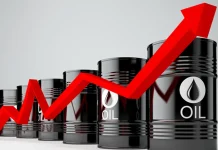
The primary conflict centers on the definition of “military objectives” under international law. While the White House and Secretary of Defense Pete Hegseth argue that Iran’s energy grid directly fuels its “terror organization” (the IRGC), United Nations spokesperson Stéphane Dujarric warned that such strikes are prohibited if they cause “excessive incidental civilian harm.” Additionally, the 20% of global oil and gas supply currently trapped behind the Strait of Hormuz has sent Brent Crude prices soaring past $110 per barrel, creating a global economic crisis that the U.S. is attempting to break through what it calls “Operation Epic Fury.”
What’s Being Said
- “A whole civilization will die tonight, never to be brought back again. I don’t want that to happen, but it probably will,” President Donald Trump posted on Truth Social.
- “More than 14 million brave Iranians have so far declared their readiness to sacrifice their lives to defend Iran,” wrote Iranian President Masoud Pezeshkian in response to the ultimatum.
- Stéphane Dujarric, UN spokesperson, emphasized that targeting civilian and energy infrastructure is “barred by the rules of war.”
- Sen. Tim Kaine (D-Va.) criticized the administration’s stance, calling the lack of concern over war crimes “embarrassing and juvenile.”
What’s Next
- The world is watching the 8:00 P.M. ET (0000 GMT Wednesday) deadline to see if the U.S. launches “Complete Demolition” strikes.
- Global energy markets are expected to see unprecedented volatility as the “Final Final” deadline expires.
- Diplomatic observers are urgently seeking clarification on Trump’s “Regime Change” claims to determine if a back-channel deal or internal Iranian shift has actually occurred.
Bottom Line
With millions of lives and the stability of the global economy hanging in the balance, the next few hours represent the most significant escalation in the Middle East since the war began on February 28, 2026.