

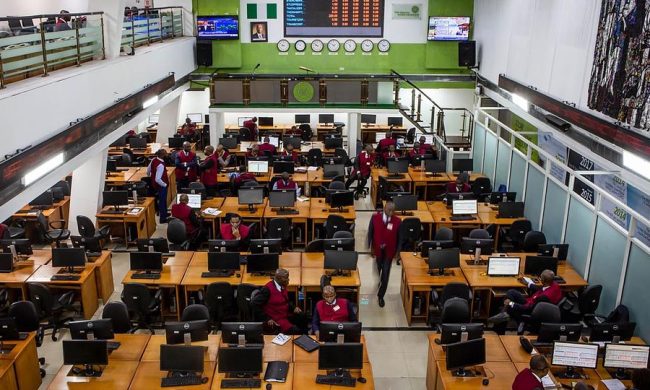









The yield gap between Nigerian Treasury Bills and government bonds has continued to widen, as investors reposition their portfolios in the secondary market ahead of the Central Bank of Nigeria’s (CBN) next round of auctions.
Data from fixed-income traders show that the average yield on Federal Government bonds closed at 15.97% in the secondary market on Monday, while Treasury Bill yields climbed to 17.35%, reflecting a strong preference for shorter-term instruments amid tighter liquidity.
Analysts expect the fixed-income market to see a general softening of yields in the coming weeks, with the exception of the Open Market Operation (OMO) segment, where yields remain elevated as the CBN intensifies efforts to attract foreign inflows.
To lure offshore investors back into the Nigerian financial system, the CBN has maintained special high-yield rates across OMO bill maturities. These instruments currently offer the most attractive returns in the fixed-income market, helping the apex bank draw U.S. dollar liquidity into the official foreign exchange window.
Trading activities in the secondary bond market were largely muted, with investors displaying a bearish bias in response to limited cash flow and anticipation of the week’s Treasury Bill auction. CardinalStone Securities Limited, in its market note, reported that the average yield on government bonds remained unchanged at 15.97%.
In contrast, investors demonstrated increased appetite for Treasury Bills, particularly the October 8 maturity, which saw yields decline by 30 basis points. This movement dragged the overall average yield slightly lower by 3 basis points to 17.35%. The October 26 paper also attracted strong buying interest, leading to further yield moderation.
On Wednesday, the CBN is scheduled to issue ₦650 billion across standard maturities, continuing its aggressive issuance calendar. Last week, trading in the bond market remained subdued, though modest buying interest was observed in select mid- and long-dated papers.
However, yields in the OMO segment surged sharply, driven by lower secondary market demand. During the previous week, the CBN floated ₦600 billion worth of OMO bills across the 193-day and 249-day maturities. Investor demand was robust, with the 193-day bill receiving ₦719 billion in subscriptions, while the 249-day bill attracted ₦1.4 trillion, underscoring investors’ preference for longer tenors with slightly higher returns.
The CBN fully allotted the offers, selling the 193-day and 249-day papers at 19.40% and 19.89% stop rates, respectively. In the secondary market, yields dipped marginally by 1 basis point to 15.97% per annum from 15.98% a week earlier.
Across the yield curve, movements were relatively mild. Short-term maturities edged up by 1 basis point to 16.26%, mid-tenor instruments declined by 3 basis points to 15.82%, while long-term maturities eased slightly to 15.55%.
Notable contractions were recorded on the March 2035 and June 2038 bonds, whereas mild upward adjustments were observed on the May 2033 and April 2049 issues.
Meanwhile, the OMO market experienced a steep repricing, with average yields spiking by 105 basis points to 21.62% per annum, up from 20.57% in the preceding week. The jump was most significant among short- and mid-tenor bills, as short-dated OMO papers rose 146 basis points to 22.50%, mid-tenor bills increased 85 basis points to 21.05%, while long-dated maturities declined slightly by 131 basis points to 19.31%.
Analysts expect continued volatility in the fixed-income space as the CBN balances liquidity management, foreign exchange stabilization, and inflation control in the coming weeks.











 next round of auctions.)