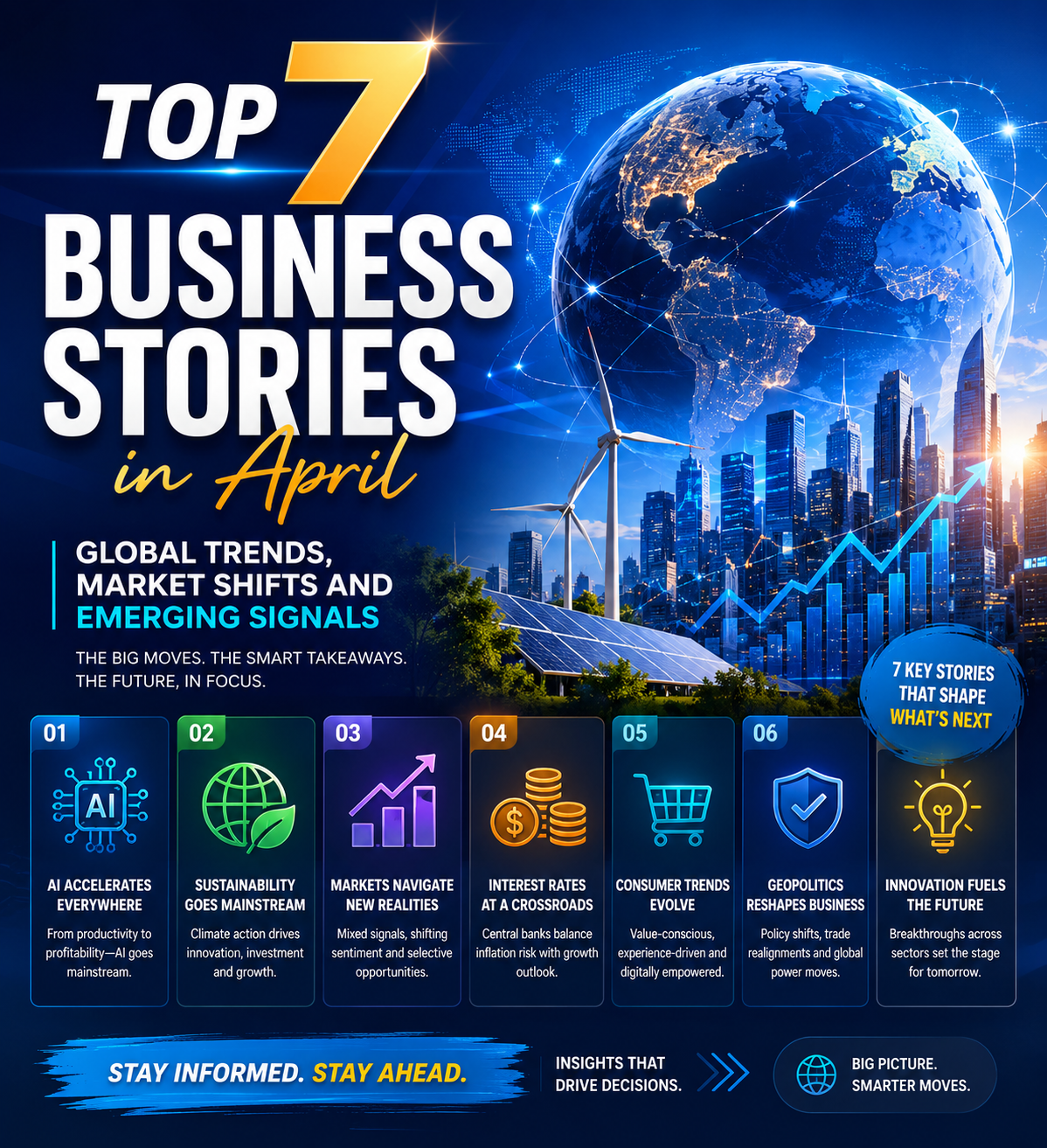
April was marked by a series of significant developments across global and regional business landscapes, reflecting ongoing economic recalibrations, monetary policy tensions, and structural shifts in key industries.
From persistent inflationary pressures in advanced economies to evolving investment patterns in emerging markets, the month underscored a global economy still navigating uncertainty while adjusting to new realities in trade, energy, technology, and finance. The following are seven of the most notable business stories that shaped April.
1. Global Markets Swing on Persistent Inflation Signals
Global financial markets experienced heightened volatility as fresh inflation data from major economies, particularly the United States and parts of Europe, indicated that price pressures remain sticky. Investors reacted cautiously to signals from central banks that interest rates may remain higher for longer, leading to mixed performances across equities, bonds, and currency markets.
2. Oil Market Reacts to OPEC+ Supply Strategy
Crude oil prices fluctuated throughout April as OPEC+ maintained production cuts in an effort to stabilise the market. While supply discipline provided temporary support for prices, concerns about weakening global demand and geopolitical uncertainties created a fragile balance in the energy market, leading to frequent price adjustments.
3. IMF Revises Global Growth Outlook Downward
The International Monetary Fund (IMF) issued a cautious revision of global growth projections, citing tighter financial conditions, persistent inflation, and geopolitical risks. The report highlighted emerging economies as particularly exposed to debt pressures and reduced capital inflows, raising concerns about uneven global recovery.
4. Nigeria’s FX Market Shows Cautious Stability
Nigeria’s foreign exchange market recorded relative stability in April following ongoing monetary reforms aimed at improving liquidity and narrowing multiple exchange rate disparities. While the reforms have improved transparency, businesses continue to grapple with foreign exchange shortages and elevated import costs.
5. Global Tech Sector Continues Restructuring Amid AI Shift
The global technology industry sustained a wave of layoffs and restructuring, even as investments in artificial intelligence infrastructure surged. Companies increasingly redirected resources toward automation, cloud computing, and AI-driven products, signalling a strategic realignment rather than a broad sector decline.
6. China’s Economic Recovery Remains Uneven
China’s economic performance showed mixed outcomes, with industrial production maintaining resilience while the property sector continued to weigh on growth. Consumer spending showed gradual improvement, but investor confidence remained subdued amid lingering real estate debt challenges.
7. African Startup Ecosystem Sees Selective Funding Growth
Africa’s startup landscape attracted continued venture capital interest in April, though funding became increasingly selective. Fintech, logistics, and climate-tech ventures dominated investment flows, with investors prioritising sustainable business models and clear paths to profitability over rapid expansion.
Conclusion
April’s business landscape reflected a global economy in transition—balancing between stabilisation efforts and underlying structural pressures. While inflation, energy volatility, and debt concerns continue to shape policy decisions, emerging opportunities in technology, renewable energy, and African innovation ecosystems signal areas of resilience and long-term growth potential. The coming months will likely test whether these stabilising signals can translate into sustained economic momentum.