





Key points
- FAO alerts to severe disruptions in global agrifood systems due to Gulf supply chain crisis.
- Fertiliser prices surge and trade delays threaten global agricultural productivity.
- Urgent coordinated global response needed to avert food insecurity and inflation.
Main story
The Director-General of the Food and Agriculture Organization of the United Nations (FAO), Qu Dongyu, has warned that the ongoing crisis affecting the Strait of Hormuz poses significant risks to global food security and agricultural systems.
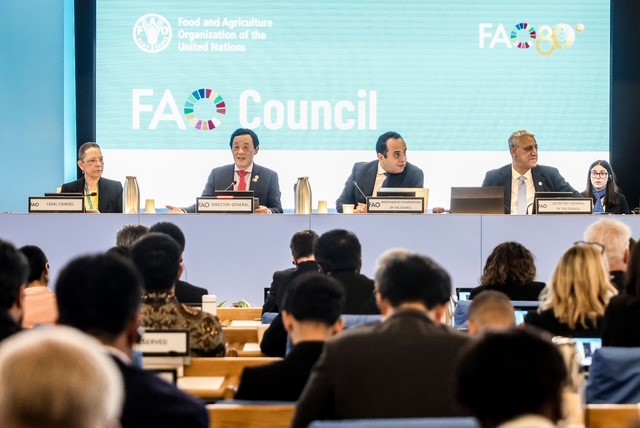
Speaking at the 180th Session of the FAO Council, Qu emphasised that disruptions to key maritime routes in the Gulf region are sending shockwaves across global supply chains, particularly in energy, fertilisers, and agrifood inputs.
He noted that the Strait of Hormuz, which typically handles about 20 million barrels of oil daily—roughly a quarter of global seaborne oil trade—has experienced a dramatic decline in tanker traffic of over 90 per cent following the crisis.
According to him, the disruption has triggered immediate shocks in the fertiliser market, with prices of Middle Eastern granular urea rising sharply. Within a week, prices surged by nearly 20 per cent, while increases of 52 per cent in the United States and 60 per cent in Brazil were recorded by mid-April.
Qu further disclosed that between 1.5 million and 3 million tonnes of fertiliser shipments are being delayed monthly, posing serious risks to global agricultural productivity.
The issues
The FAO identified four major channels through which the crisis is affecting global agrifood systems: disruption of food imports, rising energy costs, declining farmer margins, and reduced remittance flows.
Countries in the Gulf region, which depend on imports for up to 90 per cent of their staple food supply, are particularly vulnerable. Similarly, nations heavily reliant on fertiliser imports, such as Bangladesh, face heightened risks to food production.
The situation is compounded by tight agricultural timelines, as fertiliser application must align with planting cycles, leaving little room for delays without significant yield losses.
Additionally, fragile economies already grappling with food insecurity, including Lebanon and Yemen, are at risk of further deterioration.
What’s being said
Qu stressed that peace and stability remain fundamental to achieving global food security, describing access to food as a basic human right.
He warned that overlapping shocks from the crisis could accelerate food price inflation and deepen hunger, particularly in vulnerable regions.
The FAO noted that approximately 874,000 people in Lebanon and over 17 million in Yemen are already facing acute food insecurity, with the current disruptions likely to worsen conditions.
The Director-General called for immediate, coordinated global action to mitigate the crisis and protect food systems.
What’s next
The FAO has outlined a series of short-, medium-, and long-term measures to address the crisis. Immediate actions over the next 90 days include developing alternative trade routes, strengthening market monitoring, avoiding export restrictions, and providing financial support to farmers.
In the medium term, the focus will shift to diversifying import sources and delivering emergency food assistance to vulnerable countries. Long-term strategies will prioritise sustainable agriculture and investment in renewable energy.
The organisation has also activated key interventions, including real-time supply chain monitoring, coordination of strategic reserves, analysis of alternative logistics routes, and targeted fertiliser access programmes for low-income countries.
Bottom line
The Strait of Hormuz crisis underscores the fragility of global food systems, with disruptions to energy and fertiliser supplies threatening agricultural production and food security worldwide, unless swift and coordinated international action is taken.



,%20Qu%20Dongyu,%20has%20warned%20...)