Ask Boma Jacks what built Nigeria’s solar industry and he’ll give you an unexpected answer: failure. Undersized panels. Failed batteries. For thousands of early adopters, switching to solar meant expensive disappointment — and the damage to the industry’s reputation was real and lasting. That story, it turns out, is precisely why companies like SOLUSOFT LIMITED exist. And why, fifteen years later, the sector’s most valuable currency is not hardware — it’s trust.
BizWatch Nigeria’s Kehinde Victor, spoke with Jacks on what is really shaping Nigeria’s solar market today. In this conversation, he breaks down why installations fail, how rising costs are affecting adoption, and what it will take to build a more reliable and trusted solar industry.
Q: You mentioned that early low-quality solar systems damaged public trust. What exactly went wrong, and how has the industry improved since then?
Boma Jacks:
In the early days, a lot of customers had very poor experiences. Batteries failed within months because of poor quality or incorrect configuration. Inverters also failed quickly due to cheap components and poor heat management. Some panels degraded early or developed faults like hot spots.
Installation quality was another major issue. Poor wiring, lack of proper system design, and no commissioning led to frequent breakdowns. In some cases, vendors disappeared after installation, leaving customers with no support or warranty.
These failures created a strong negative perception of solar.
However, the industry has improved significantly. We now have better quality control, more reputable brands, and stronger enforcement of standards.
Monitoring systems are also more common, allowing issues to be detected early. Customers are more informed, and serious companies now focus on long-term performance and after-sales support.
Q: What are the most common technical mistakes you see in solar installations today, and what do they cost businesses?
Boma Jacks:
One of the biggest mistakes is incorrect system sizing. Many systems are undersized for the actual load, which leads to poor performance and customer dissatisfaction.
We also see underspecification of cables and protection systems, which can lead to energy losses, overheating, and even safety risks. Poor battery installation and lack of proper management can significantly reduce battery lifespan. In addition, improper panel orientation and shading issues reduce system efficiency./
Another major issue is the lack of proper commissioning and documentation. Without proper testing, problems show up later and become more expensive to fix.
The cost to businesses can be very high. They may experience reduced energy output, sometimes losing up to 40 percent of expected performance. Batteries may need replacement much earlier than planned, and maintenance costs increase. In some cases, the total lifetime cost of a poorly installed system can be significantly higher than a properly designed one.

Q: Nigeria relies heavily on imported solar equipment. How is that affecting affordability for customers?
Boma Jacks:
Most of the core solar equipment used in Nigeria is imported. We estimate that about 85 to 95 percent of panels, inverters, and batteries come from abroad.
This makes the industry highly sensitive to exchange rate fluctuations. When the Naira depreciates, the cost of solar systems increases almost immediately. In some periods, system prices have increased by as much as 30 to 100 percent in Naira terms.
This affects affordability and slows down adoption, especially for smaller businesses and households. To manage this, companies try to maintain local inventory, offer flexible payment options, and localise some components where possible. But overall, exchange rate volatility remains a major challenge.
Q: Many businesses are switching from diesel to solar. From what you’ve seen, where do they often get the transition wrong?
Boma Jacks:
One common mistake is underestimating their actual energy needs. Many businesses try to size solar systems based on cost rather than load, which leads to systems that cannot fully support their operations.
Another issue is expecting solar to immediately replace diesel without proper planning. In reality, the transition often requires a hybrid approach, especially in the early stages. Without proper system design and load analysis, businesses end up with unreliable performance.
There is also the tendency to focus only on upfront cost instead of long-term value. When systems are designed properly, solar reduces operating costs over time, but shortcuts in design or component quality can undermine those benefits.
Q: How realistic is local manufacturing in Nigeria, and where should it begin?
Boma Jacks:
Local manufacturing is possible, but it needs to be done in phases. The best place to start is with simpler components like mounting structures, cable work, and other balance-of-system items that require less capital.
From there, the industry can move into assembly of solar panels, inverters, and eventually batteries. However, this will require strong policy support, access to financing, and proper infrastructure.
Nigeria has the raw materials, but we need better local content policies and more investment to build a sustainable manufacturing base.
Q: Does Nigeria have a strong safety and quality culture in the solar sector today?
Boma Jacks:
The safety culture is improving, but it is still inconsistent. Larger and more established companies tend to follow strict safety and quality standards, especially on major projects.
However, many smaller installers do not have formal systems in place. There are standards, but enforcement is not strong enough across the industry.
We need a more coordinated effort to enforce safety training, certification, and inspections. Organisations like the Renewable Energy Association of Nigeria are making progress, but more needs to be done at a national level.
Q: There is a skills gap in the sector. How are you addressing training, and what standards should be enforced?
Boma Jacks:
We run structured in-house training programmes that cover technical skills, safety, system commissioning, and customer service. We also have mentorship and apprenticeship programmes to develop new talent.
To retain trained staff, we provide career growth opportunities, competitive compensation, and incentives. At the same time, some level of movement within the industry is inevitable.
In terms of standards, we need proper certification systems for technicians. This should include internationally recognised technical standards, safety training, and a national accreditation framework. Enforcement should involve agencies like the Standards Organisation of Nigeria and the Rural Electrification Agency.
Q: With so many solar providers in the market today, what separates serious companies from the rest?
Boma Jacks:
The difference is in execution and long-term commitment. Serious companies focus on proper system design, use quality components, and provide full documentation and commissioning.
They also invest in after-sales support, monitoring, and maintenance. Solar is not just about installation; it is about performance over time. Companies that cannot support systems after installation often create problems for customers.
Another key factor is transparency. Reputable providers are clear about system capacity, expected performance, and limitations. They do not oversell or cut corners to win projects.
Ultimately, the companies that will last are those that prioritise quality, reliability, and customer trust.
Q: What has been the hardest part of scaling your business, and how do you stay competitive in a crowded market?
Boma Jacks:
The biggest challenges have been financing and exchange rate volatility. Access to affordable capital for inventory and project financing is limited, and currency fluctuations make planning difficult.
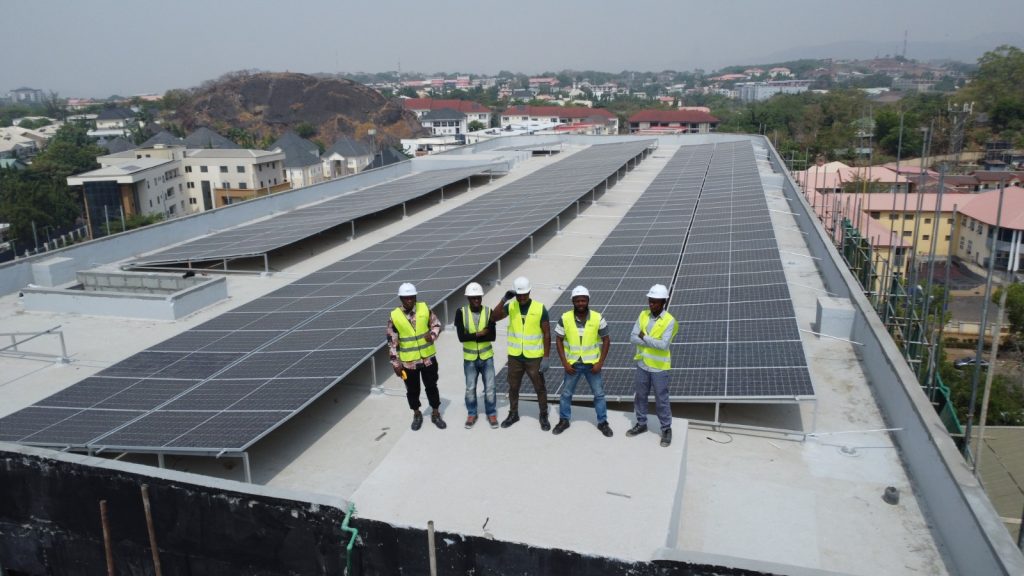
To stay competitive, we focus on proper system design, quality components, and strong after-sales support. We also provide monitoring and maintenance services, and in some cases, financing options for customers. This approach has allowed us to deliver projects for majpr institutions, including the Development Bank of Nigeria.
As the market grows, we expect consolidation, with stronger and better-funded companies leading the industry.
Q: Looking ahead, what opportunities do you see in the next five years, and what could slow the sector down?
Boma Jacks:
The opportunity is significant. Demand for reliable power continues to grow, especially in commercial and industrial sectors. Mini-grid projects and falling battery costs will also drive adoption.
However, risks remain. Exchange rate instability, the influx of low-quality products, and inconsistent policies could slow progress. For the industry to grow sustainably, we need stability, quality control, and strong regulatory support.
For Jacks, the lesson is clear. Nigeria’s solar industry will not be defined by how many systems are installed, but by how well they perform — and how much trust they can sustain over time.
About Boma Jacks
Boma Jacks is the founder of SoluSoft Nigeria Limited and a prominent member of the Renewable Energy Association of Nigeria (REAN), dedicated to scaling indigenous solar infrastructure across the federation. Since incorporating the business in 2010, he has positioned the firm as a leading original equipment manufacturer and EPC contractor, recently delivering a significant 329 kWh commercial project for the Development Bank of Nigeria. With an MSc in IT Management and a focus on climate-resilient energy, Jacks leads a specialized team in deploying mini-grids, street-lighting, and residential solar systems to provide sustainable power solutions for homes and industries throughout Nigeria.