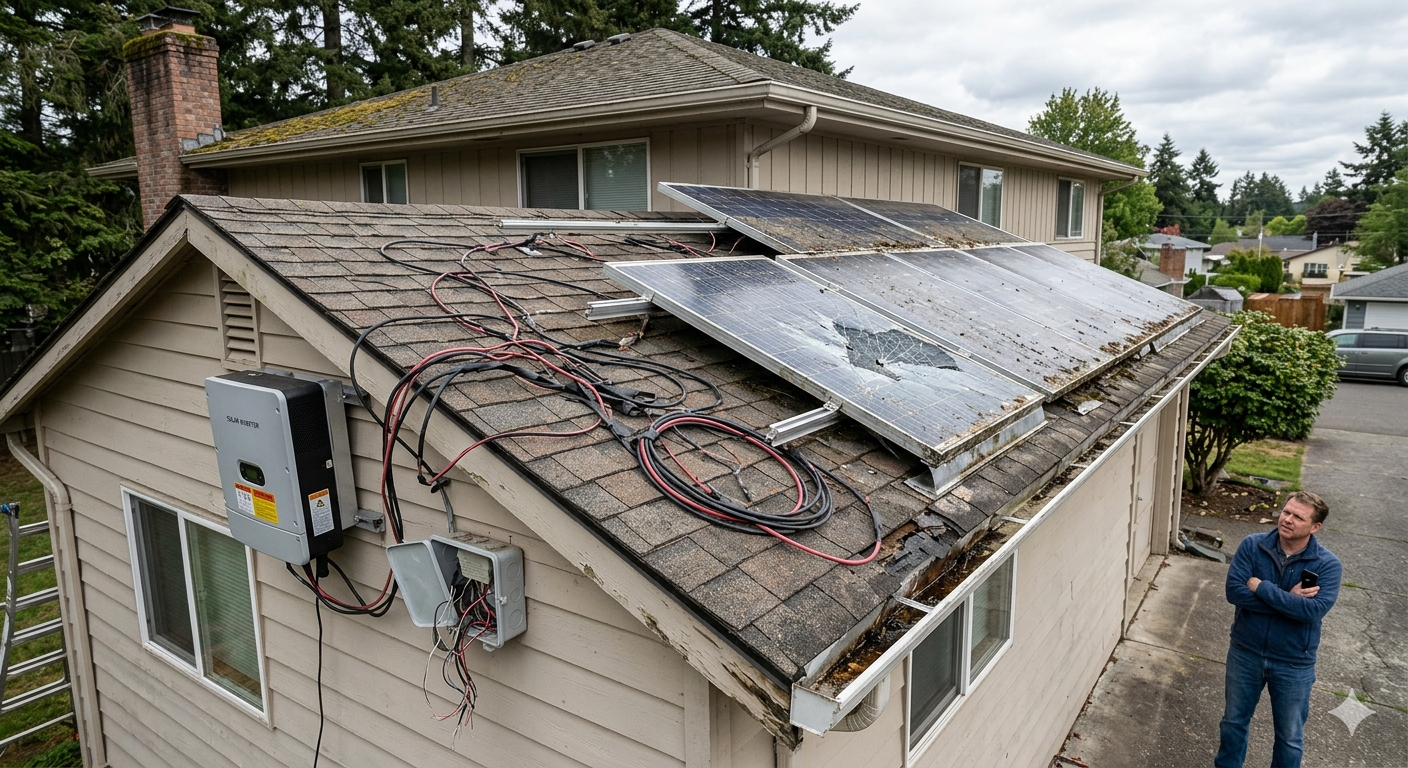
A recent video circulating on the Instagram page of Tunde Ednut has sparked a wave of reactions among Nigerian social media users, many of whom say they see their own experiences reflected in it.
In the video, a woman walks viewers through what she describes as a 10kVA solar installation in her home. She points out that the setup looks untidy and admits she feels overwhelmed by it. But beyond how it looks, her main concern is performance. According to her, the system only powers her home for about four hours before it needs to recharge, and that recharge takes much longer. Because of this, she says she relies mostly on a generator during the day and only switches to solar around midnight. She adds that she spends close to ₦38,000 daily on fuel.
That part of the video has struck a chord. In the comments and across other platforms, many Nigerians shared similar frustrations. For a technology that is often presented as a long-term solution to Nigeria’s power problems, these kinds of experiences raise an important question. Why are some solar systems not delivering as expected?
Interviews conducted by BizWatch Nigeria with installers, engineers, and solar operators in recent weeks suggest that the problem is rarely one single issue. Instead, it is usually a combination of decisions made at different stages, from planning to installation.
When the System Does Not Match the Need
One of the most common explanations from people who work in the industry is that many solar systems are simply not built to match how much electricity a home or business actually uses.
In many cases, customers approach solar with a fixed budget in mind. They want something that fits what they can afford at the moment. Installers then try to design a system within that budget, even when it may not be enough to meet the customer’s daily energy needs. The result is a system that looks large and impressive but struggles to keep up with real usage.
Several installers told BizWatch Nigeria that this is where many problems begin. A system might be labelled 10kVA, for example, but that number alone does not guarantee how long it will last or how much it can power. What matters is how the system is designed around actual usage. If the design does not take into account how many appliances are being used, how often they are used, and how much power they consume, the system will run out much faster than expected.
In situations like the one described in the viral video, where power only lasts a few hours, it is often a sign that the system is carrying more load than it was designed for.
The Planning That Many People Skip
Closely linked to this is the issue of planning. Several industry professionals say that while many technicians know how to install solar panels and connect equipment, not all of them take the time to properly study a customer’s energy needs before starting the work.
This process, which involves understanding how much electricity is used in a day and when it is used the most, is critical. Without it, the system is built on guesswork.
Obafemi Osunniyi, a solar installer who previously spoke to BizWatch Nigeria, explained that knowing how to install is not enough. He said the real challenge is in calculating and distributing power correctly. When that step is rushed or ignored, the system may appear to work at first but will struggle over time.
This is one of the reasons why some users feel disappointed after spending large amounts of money. From their perspective, they paid for solar but are still dealing with the same power issues they were trying to escape.
Problems That Come From the Installation Itself
Even when a system is properly sized, the way it is installed can still affect how well it performs.
Installers say that small decisions made during installation can have big consequences later. For example, using the wrong type of cable or poor wiring methods can reduce how efficiently power moves through the system. Over time, this can lead to energy loss, overheating, and in some cases, damage to components.
Adedayo Philip Ayegusi, a solar inverter installer, told BizWatch Nigeria in an earlier interview that cables that are too small for the system can heat up gradually and create problems that may not be obvious at first. He also warned that poor-quality materials, even when they look new, can fail under pressure.
To a user, these issues are not always visible. What they notice instead is that their system does not last as long as it should, or that it takes too long to recharge.
The Battery Factor That Many People Underestimate
If there is one part of a solar system that determines how long power lasts, it is the battery. And according to industry players, this is where many installations fall short.
Batteries store the energy generated during the day so that it can be used later. If the battery is too small, of low quality, or not properly set up, the system will not be able to hold enough power to last through the night or even a full evening.
Some installers admit that in order to reduce costs for customers, they sometimes recommend cheaper battery options. These may work initially, but they tend to lose strength faster and require more frequent charging. In some cases, people even use alternatives like car batteries, which are not designed for long-term solar use.
There is also the issue of battery management. Without proper control systems and correct installation, even a good battery can wear out quickly.
This helps explain situations where a system charges for long hours but still does not last long when in use.
The Growing Problem of Poor-Quality Products
Another issue raised by multiple installers is the presence of low-quality or second-hand components in the market.
Nigeria relies heavily on imported solar equipment, and while there are many reliable brands, there are also products that do not meet proper standards. Some panels and batteries have already been used abroad for several years before being brought into the country and resold. Others are simply substandard from the start.
Adedayo Ayegusi noted that he avoids using second-hand panels because there is no way to know how long they have already been used or why they were removed in the first place. According to him, these kinds of components may work for a short time but are more likely to fail earlier than expected.
For customers, it can be difficult to tell the difference. Many rely on installers to make those decisions, which makes trust a key issue in the process.
The Cost Pressure Behind Many of These Choices
At the centre of many of these problems is the reality that solar is still expensive for a large number of Nigerians.
Because most equipment is imported, prices are affected by exchange rates and import costs. When the value of the naira drops, the cost of solar systems rises. This makes it harder for individuals and small businesses to afford high-quality setups.
Installers say that this often forces customers to make compromises. They may choose smaller systems, cheaper components, or less experienced technicians, all in an effort to reduce upfront cost.
Over time, however, these decisions can lead to higher expenses. A system that does not perform well may require frequent repairs, replacements, or continued reliance on fuel-powered generators.
Bottom Line
The viral video has gained attention because it puts a human face to a problem many people have quietly dealt with. It shows the frustration of investing in a solution that does not fully solve the problem.
But based on conversations with industry professionals, this is not an isolated case. It reflects a broader pattern that has followed solar adoption in Nigeria as it continues to grow.
For solar to truly deliver on its promise, installers say more attention needs to be paid to how systems are designed, the quality of components used, and the level of expertise involved in installation.
Because at the end of the day, the issue is not whether solar works. The issue is whether it is done properly.