










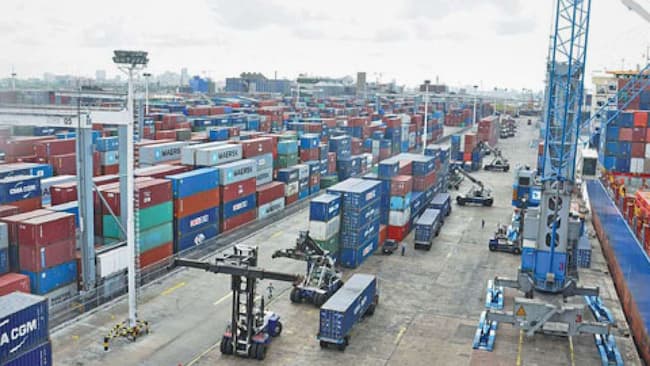
The Nigerian Shippers’ Council (NSC) has reiterated its call on shipping companies operating at the nation’s seaports to engage relevant stakeholders before implementing any increase in tariffs.
The call was made by the Executive Secretary of the Council, Dr Pius Akutah, during a stakeholders’ meeting on tariff review for charges by shipping companies, service providers, clearing agents, importers, and freight forwarders, held on Wednesday at the Council’s headquarters in Lagos.
Dr Akutah, who was represented by the Director of Consumer Affairs at the NSC, Mrs Ify Okolue, said stakeholder engagement is critical to maintaining order within the port system and ensuring that Nigeria’s ports align with global best practices, while safeguarding the interests of port users and the national economy.
He explained that the Council’s mandate is to promote fairness, efficiency, and balance within the port system.
“Our role is not only to ensure that service providers operate within an economically justifiable framework, but also to protect port users from arbitrary, unjustified, or anti-competitive charges. In carrying out this responsibility, the Council is guided by due process, transparency, stakeholder consultation, and the overriding national interest.”
“It is important to emphasise that the mandate of the Nigerian Shippers’ Council is to promote fairness, efficiency, and balance within the port system.”
Speaking further, Dr Akutah said the Council remains open to dialogue and is committed to ensuring equity, regulatory integrity, and the long-term sustainability of the maritime industry.
“Regulation is most effective when it is inclusive, which is why this engagement is critical. It provides us with an opportunity to listen attentively to your perspectives, clarify the rationale behind regulatory decisions, address misconceptions where they exist, and collectively explore solutions that are fair, sustainable, and beneficial to all parties.”
He acknowledged prevailing economic challenges but stressed the need to strike a balance between cost recovery and the protection of port users.

L-R: The Director, Inland Transport Services, Nigerian Shippers’ Council (NSC), Ahmadu Garta; Director, Human Resources, Mustapha Zubairu; Director, Consumer Affairs and representative of the Executive Secretary, Ify Okolue; and the Director, Regulatory Services, Margaret Ogbonna, during a stakeholders’ meeting on the review of shipping companies’ tariffs and charges, held on Wednesday at the Council’s headquarters in Lagos.
“I wish to assure all stakeholders that the Shippers’ Council is not insensitive to the prevailing economic realities, including foreign exchange challenges, inflationary pressures, and the need to keep Nigerian ports competitive within the sub-region. At the same time, we must ensure that cost recovery by service providers does not translate into excessive burdens on port users or undermine national trade objectives.”
Dr Akutah described the engagement as a collaborative effort aimed at strengthening Nigeria’s port system.
“Today, we are not here as adversaries, but as partners in progress, united by a common goal, a port system that supports trade facilitation, attracts investment, and contributes meaningfully to Nigeria’s economic development. The Council remains open to dialogue and is committed to equity, regulatory integrity, and the long-term sustainability of the maritime industry,” Akutah stated.
Stakeholders present at the meeting included the Importers Association of Nigeria (IMAN); Lagos Chamber of Commerce and Industry (LCCI), Maritime and Freight Forwarders Unit; Nigerian Association of Chambers of Commerce, Industry, Mines and Agriculture (NACCIMA).
Others are, Association of Nigerian Licensed Customs Agents (ANLCA); National Association of Government Approved Freight Forwarders (NAGAFF); National Council of Managing Directors of Licensed Customs Agents (NCMDLCA); and the Africa Association of Professional Freight Forwarders and Logistics (APFFLON).










 has reiterated its call on shipping companies operating at the nation’s seaports to engage relevant stakeholders before implementing any increase in tariffs.)