





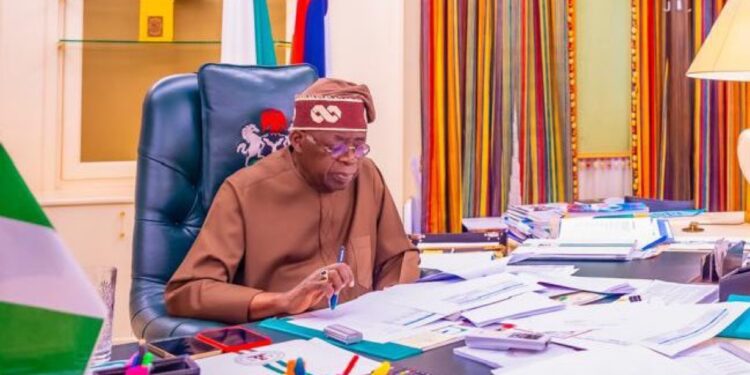
The Nigerian Senate has formally approved President Bola Ahmed Tinubu’s expansive external borrowing plan totaling over $21 billion, solidifying the financial groundwork for the full execution of the 2025 Appropriation Act.
This extensive funding framework incorporates $21.19 billion in external loans, €4 billion in Euro-denominated funding, ¥15 billion from the Asian market, a $65 million grant facility, and domestic borrowing via government-backed bonds worth roughly ₦757 billion. Additionally, lawmakers granted approval for a $2 billion foreign currency instrument to be raised locally.
The endorsement followed the presentation of a detailed report by Senator Aliyu Wamakko, Chairman of the Senate Committee on Local and Foreign Debts. He noted that the initial request, submitted on May 27, experienced delays due to documentation issues from the Debt Management Office (DMO) and the legislative recess.
Chairman of the Senate Committee on Appropriations, Senator Olamilekan Adeola, explained that the proposed borrowings had already been integrated into the Medium-Term Expenditure Framework (MTEF) and the national budget for 2025.
“With today’s approval, we now have all financial inflows—both internally generated and borrowed—in place to fund the 2025 budget in its entirety,” Adeola emphasized.
Despite general support for the proposal, some senators raised issues about the plan’s transparency and long-term implications.
Senator Sani Musa clarified that the disbursement of the approved loans would be spread over a six-year period, not confined to the 2025 fiscal year. He defended the borrowing strategy, saying it aligned with internationally accepted economic models.
“No progressive economy can thrive without strategic borrowing. What we are doing is consistent with best practices globally,” Musa noted.
Senator Adetokunbo Abiru, Chair of the Senate Committee on Banking, Insurance and Other Financial Institutions, added that the loans adhere to existing financial legislation including the Fiscal Responsibility Act and Debt Management Act.
“These are concessional loans with maturity periods ranging from 20 to 35 years. Importantly, they are earmarked for key sectors such as capital development and human empowerment,” Abiru stated.
However, Senator Abdul Ningi of Bauchi Central expressed concern about transparency, urging that Nigerians deserve full disclosure on how these loans will be utilized.
“Our constituents must know how much is being borrowed in their names, and what exactly the funds are earmarked for,” Ningi argued.
Key sectors prioritized in the borrowing blueprint include infrastructure, agriculture, power, security, digital connectivity, and housing. Among the most significant allocations is a $3 billion provision for the Eastern Rail Corridor revitalization project, which spans from Port Harcourt to Maiduguri.
Senator Victor Umeh of Anambra Central hailed the rail project as a historic investment, stating, “This is the first time I’ve seen such a large financial commitment—$3 billion—toward rebuilding the eastern rail line. It deserves our full support.”
Deputy Senate President Jibrin Barau praised the loan committee for its thoroughness and noted that the plan underscores national inclusivity under Tinubu’s administration.
“This borrowing framework shows that the Renewed Hope Agenda is not just a slogan. Every region is being carried along,” Barau declared.