










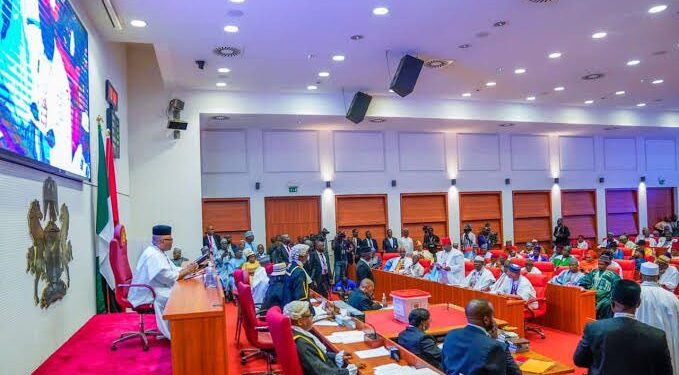
In a dramatic legislative reversal, the Nigerian Senate on Tuesday, February 10, 2026, bowed to intense public pressure and officially backed the mandatory real-time electronic transmission of election results. This U-turn comes just one week after the upper chamber initially rejected the proposal, opting instead for a “discretionary” model that would have allowed the Independent National Electoral Commission (INEC) to choose how results were handled.
That original decision sparked a wave of “national embarrassment” and protests, with the Nigeria Labour Congress (NLC) threatening a nationwide strike and civil society groups labeling the move a “death blow to democracy.”
The rowdy session that preceded this final vote saw senators debating the technical feasibility of the Bimodal Voter Accreditation System (BVAS) in rural areas with poor internet coverage. However, after a weekend of mass protests outside the National Assembly and sharp criticism from opposition leaders like Atiku Abubakar, the Senate aligned its position with the House of Representatives.
The harmonized Electoral Act (Amendment) Bill 2026 now mandates that all presiding officers must electronically transmit polling unit results directly to the INEC Result Viewing (IReV) portal immediately after the counting of votes.
Beyond transmission, the 2026 amendment introduces several other radical changes to the Nigerian electoral landscape. Lawmakers officially reduced the notice period for elections from 360 days to 180 days, a move aimed at shortening the expensive and often volatile campaign season.
Additionally, the fine for the buying and selling of Permanent Voter Cards (PVCs) was increased from ₦2 million to ₦5 million, while the two-year imprisonment term was retained. These measures are part of a broader push to restore public confidence ahead of the 2027 general elections, where President Bola Tinubu is expected to seek a second term.
While the legislative hurdle has been cleared, the spotlight now shifts to INEC’s technical readiness. Critics warn that “legal mandates mean nothing without digital infrastructure,” pointing to the 111 days remaining before the Ekiti and Osun off-cycle governorship elections as a critical test.
To address these concerns, NERC has even offered to share its high-speed SCADA optical fiber network with INEC to ensure data transmission is not hampered by the “dead zones” that plagued the 2023 polls. The Presidency is expected to sign the bill into law by late February, effectively ending the manual collation era in Nigerian politics.











 to choose how results were handled.)