










KEY POINTS
- The Rural Electrification Agency (REA) and ECOWAS signed a $700,000 Memorandum of Understanding (MoU) to electrify 15 public institutions in Nigeria.
- The project focuses on solar photovoltaic (PV) systems for rural health centers and schools in the Federal Capital Territory (FCT), Niger, and Nasarawa States.
- This initiative marks the pilot phase of the Regional Off-Grid Electricity Access Project (ROGEAP), a World Bank-supported program spanning West Africa and the Sahel.
MAIN STORY
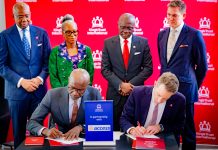
The Rural Electrification Agency (REA) has officially entered into a partnership with the Economic Community of West African States (ECOWAS) Commission to deploy solar power to 15 critical public health and education facilities. Under the Memorandum of Understanding (MoU) signed on Monday in Abuja, ECOWAS will provide a $700,000 grant through the Regional Off-Grid Electricity Access Project (ROGEAP). This regional initiative, backed by the World Bank, aims to eliminate energy poverty by expanding sustainable, off-grid electricity across 19 countries in West Africa and the Sahel.
The pilot phase targets underserved communities in the FCT, Niger, and Nasarawa States. To ensure the project’s sustainability, the REA also signed a subnational agreement with the Niger State Government. This secondary MoU allows Niger State to provide counterpart support, co-financing, and local monitoring for project sites within its borders. Governor Mohammed Bago described the collaboration as a core component of his “New Niger” agenda, which prioritizes the transition to reliable, renewable infrastructure for rural clinics and schools.
Technical implementation will be managed by a newly established Project Implementation Unit (PIU) within the REA. This unit will work alongside the ROGEAP PIU and a Steering Committee to oversee the installation of solar PV systems. By reducing dependence on expensive diesel generators and lowering operating costs, the project aims to improve healthcare delivery—such as vaccine refrigeration—and enhance learning conditions in rural areas where grid access remains unreliable.
WHAT’S BEING SAID
- “Electrifying health centres and schools means improving healthcare delivery, enhancing learning conditions, and strengthening community development,” stated REA Managing Director, Mr. Abba Aliyu.
- ECOWAS Commission President, Dr. Omar Touray, noted: “This pilot phase in Nigeria is a cornerstone of our regional strategy… we are not just lighting up buildings; we are powering the future of West Africa.”
- Governor Mohammed Bago of Niger State affirmed: “By implementing these solar projects, Niger is ensuring that its rural health and educational facilities have the reliable power they need.”
WHAT’S NEXT
- The REA will begin the formal setup of the Project Implementation Unit (PIU) to coordinate with regional ROGEAP stakeholders.
- Procurement for solar PV components is expected to commence following the finalization of the site-specific energy audits in the FCT, Niger, and Nasarawa.
- Lessons learned from this 15-institution pilot will be used to scale the ROGEAP model to hundreds of other public facilities across Nigeria and the wider ECOWAS region.
BOTTOM LINE
The Bottom Line is that the REA-ECOWAS partnership represents a strategic convergence of regional funding and local implementation. By targeting high-impact public institutions like schools and clinics with $700,000 in solar grants, Nigeria is testing a scalable model for ending rural energy poverty while reducing the operational burden of fossil-fuel dependence.


 has officially entered into a partnership with the Economic Community of West African States (ECOWAS) Commission to deploy solar power to 15 critical public health and education facilities.)