KEY POINTS
- President Bola Tinubu has identified Nigeria’s creative industry as a strategic driver of economic growth and global competitiveness.
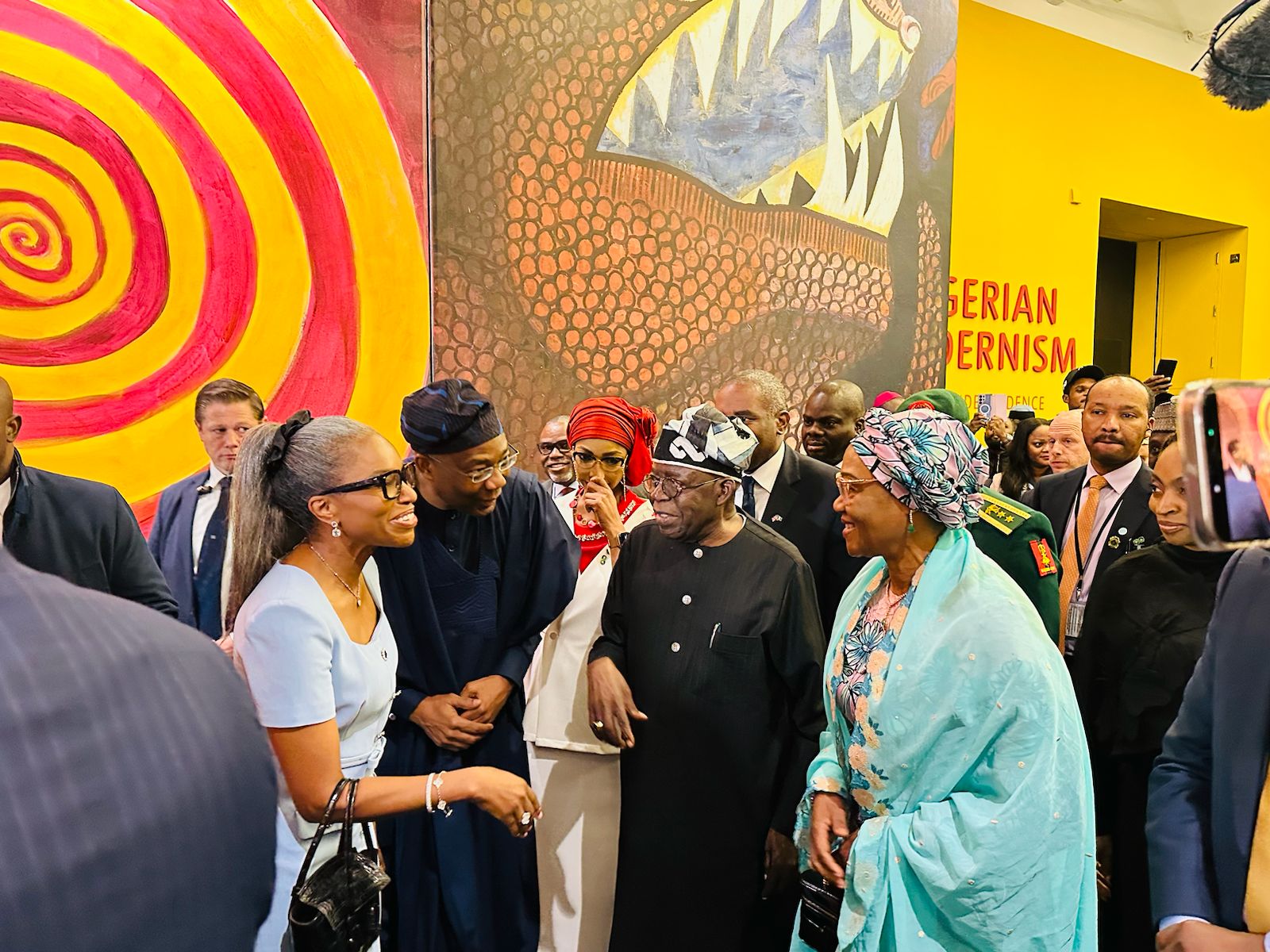
- The President made these remarks on Thursday during the “Nigerian Modernism” exhibition at the Tate Modern in London.
- The event served as the final engagement of his official state visit to the United Kingdom, attended by UK Deputy Prime Minister David Lammy.
- Tinubu called for stronger investment and sustained partnerships between the government, private sector, and international stakeholders to expand funding for Nigerian creatives.
MAIN STORY
President Bola Tinubu has emphasized the importance of Nigeria’s creative sector, describing it as a key pillar of his administration’s Renewed Hope agenda. Speaking at the Tate Modern in London on Thursday, the President characterized the “Nigerian Modernism” exhibition as a “testament to a revolution.”
He noted that the creative industries—including art, music, film, and literature—represent Nigeria’s “soft power” and remain among the nation’s greatest exports in an increasingly interconnected world.
During his address to an international audience of diplomats and business leaders, the President reflected on the mid-20th-century generation of Nigerian artists who redefined their identity beyond colonial constructs. He stated that the works on display demonstrate a unique blend of global techniques and indigenous heritage. “What we see here is a people who have taken the best of global techniques and infused them with the enduring rhythms of our heritage,” Tinubu remarked, asserting that art serves as a unifying force and a language of common humanity.
The President also commended Access Holdings and Coronation Group for their roles in sponsoring the exhibition, noting that bringing these works to London facilitates a vital dialogue between Nigeria’s past and shared future. He urged the Nigerian diaspora to continue projecting a positive image of the country, reminding them that they come from a “lineage of pioneers” with the innate ability to innovate and lead. The event marked the symbolic conclusion of the President’s official engagements in the United Kingdom.
THE ISSUES
The President highlighted that while the sector has immense potential, it requires specific structural support to reach its peak. Key challenges identified include the need for expanded access to funding, the strengthening of market structures, and the enhancement of global visibility for local talent. By framing the creative industry as a tool for cultural diplomacy, the President is signaling a shift toward using art to foster mutual understanding and economic partnerships across borders.
WHAT’S BEING SAID
- “Our creative industries… are among our greatest exports. They represent Nigeria’s soft power,” stated President Bola Tinubu.
- “Art has no borders. It is the language of our common humanity,” the President added during the exhibition.
- “By bringing these works to London, you are facilitating a vital dialogue between our past and our shared future,” Tinubu noted, praising the corporate sponsors.
WHAT’S NEXT
Following this high-profile endorsement in London, the Federal Government is expected to roll out new policy frameworks under the Ministry of Art, Culture, and the Creative Economy to attract private equity into the sector. Industry stakeholders are looking for concrete follow-ups on the President’s call for “sustained partnerships,” particularly regarding intellectual property protection and international distribution deals for Nigerian art and film.
BOTTOM LINE
The Bottom Line is that President Tinubu is positioning Nigerian culture as a serious economic asset. By choosing a world-renowned venue like the Tate Modern for his final UK engagement, he is signaling to global investors that Nigeria’s “soft power” is open for business and central to the country’s future growth strategy.