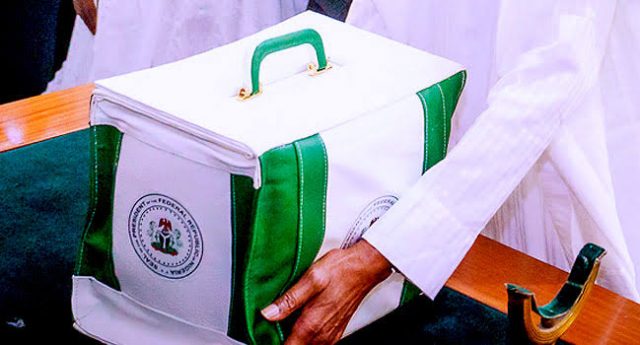
The Federal Government acquired Ways and Means Advances worth N23,719,703,774,306.90 from the Central Bank of Nigeria, and the House of Representatives approved them on Thursday.
The National Assembly had rejected domestic borrowing from the CBN in January 2023, but the President, Major General Muhammadu Buhari (retired), had been pleading with the MPs to reconsider since December 2022.
About 24 hours after the Senate granted the president’s request, which sparked outrage, particularly from the private sector, the House approved the request.
Demonstrators occupy CBN offices and call on Emefiele to resign Three weeks before the Buhari administration’s demise, the approvals arrived.
On Thursday, the Joint House Committee on Finance; Banking and Currency; and Aids, Loans and Debt Management laid its report on the request, which the lawmakers considered as a Committee of Supply and approved in plenary.
The committee recommended that the House “approve the requested additional N1tn Ways and Means Advances for the implementation of the 2022 Supplementary Appropriation Act as passed by the National Assembly” and “approve the securitisation of the total outstanding Ways and Means amount under the following terms: Amount N23,719,703,774,306.90; tenor, 40 years; moratorium on principal repayment, 3 years; pricing/interest rate, 9 per cent per annum.”
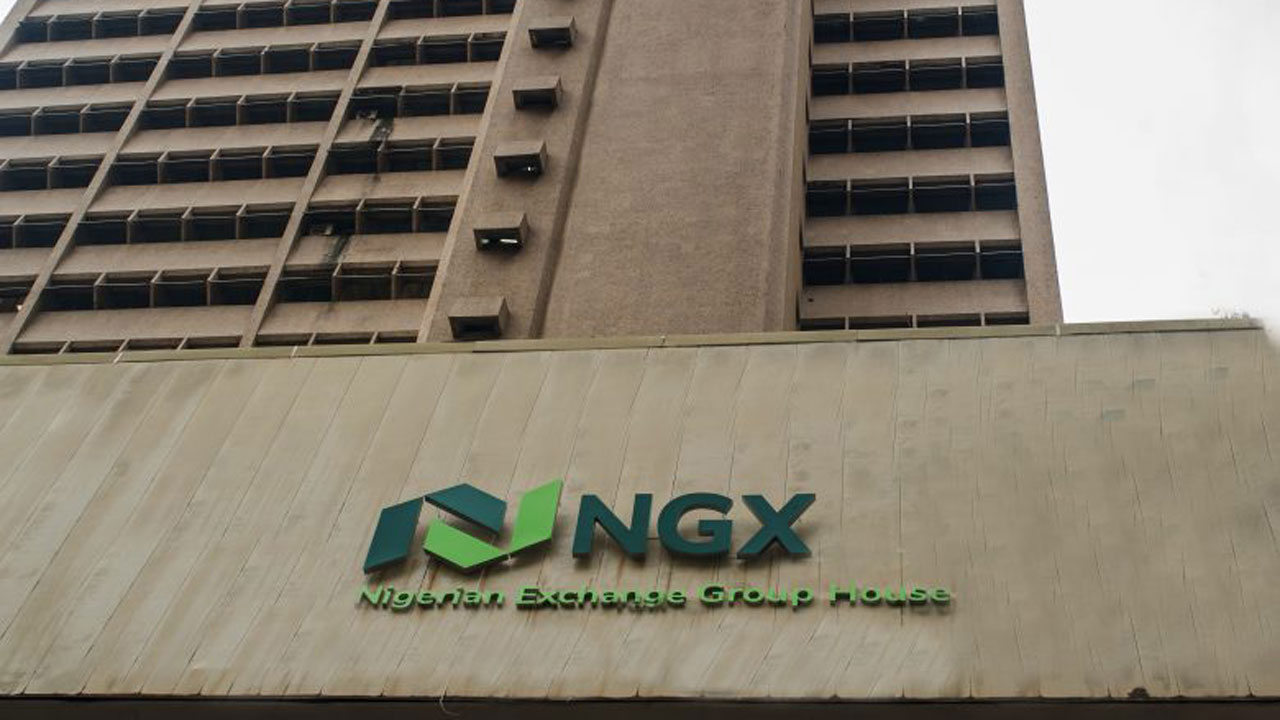
According to the Nigerian Exchange Group, the most recent general election and the Central Bank of Nigeria’s Naira redesign strategy had a negative influence on its top-line revenue, which fell by 20.5% to $1.33 billion in the first quarter of 2023 from Q1 2022 revenue of $1.67 billion. Its unaudited results for the first quarter ending March 31, 2023, made this disclosure.
According to the company, it saw “a 14.2% year-over-year fall in gross earnings to 1.56 billion (Q1 2022: 1.82 billion), led by a 20.5 percent decline in sales during a period of heightened economic and socio-political instability. However, other income increased by 57.7%, making up for the revenue decline.
“The group’s top-line revenue fell by 20.5 per cent driven primarily by reduced business transactions and consumer spending that resulted from the recently concluded general election and the CBN’s attempt to phase out Nigeria’s old higher denomination of banknotes.”
Due to fewer commercial operations, transaction fees, which made up 51.5% of revenue, fell by 30.6% YoY to 685.9 m (Q1 2022: 988.1 m). government investment income, which accounts for 31.1% of total revenue, decreased to 414.7 million in Q1 2023 from 520.5 million in Q1 2022, principally as a result of substantially lower yields on the Group’s portfolio of government investments as a result of unfavorable market circumstances and uncertainty surrounding the general election.
However, the Group saw a growth in listing fees of 44.6%, from 123.9 million in Q1 2022 to 179.2 million in Q1 2023. The rise in domestic businesses’ need for listing services was what caused listing costs to rise. Additionally, NGX Real Estate’s rental income, which accounts for 2.7% of total revenue, increased by 32.2% to $36.0 million in Q1 2023 from $27.2 million in Q1 2022. Other costs, including trading floor rent, broker annual fees, dealing licenses, and membership, decreased by 1.2% to $16.5 million in Q1 2023 (Q1 2022: $16.9 million).
NGX Group’s profit before income tax expense increased by 21.5 per cent YoY to ₦412.2m in Q1 2023 from ₦339.2m in the corresponding period in 2022 due to an improved share of profit-equity accounted investees and a fall in finance cost. Profit for the period recorded a 109.0 per cent increase to ₦310.0 m in Q1 2023 from ₦148.3 bn in Q1 2022, resulting in significant growth in profit after tax margin to 23.3per cent in Q1 2023 from 8.9per cent recorded in Q1 2022.
Commenting, the Group Managing Director/Chief Executive Officer, Oscar Onyema, said, “Despite the challenging macroeconomic environment during the quarter amidst cash and energy scarcity, and political tension from the 2023 elections, the Group remained resilient. We are pleased to announce a 109 per cent increase in net profit, achieved through the implementation of cost-saving measures that minimised the impact of revenue reduction, just as we are exploring new and innovative ways to capture more market share and appeal to a broader demographic.
“The Group will continue investing in innovative marketing strategies to appeal to the changing consumer preferences, as well as explore opportunities to expand product line, portfolio mix, and penetrate new markets. We stay committed to our long-term growth strategy and are confident in our ability to navigate the current challenging environment and create value for our stakeholders.”
As stockbrokers carried out significant buy orders, the equity market’s downward trend came to an end on Thursday. Performance metrics were boosted by the positive share price movements on mid- and heavyweight counters.
According to data from the local exchange, the Nigerian Exchange (NGX) All-share index rose 82.98 basis points today, or +0.16%, to close at 52,290.75. The overall volume and total value traded for today climbed by +89.55% and +39.36%, respectively, indicating a rise in market activity. Stockbrokers at Atlass Portfolios Limited reported 5,963 transactions totaling about 1,270.13 million units worth 7,007.55 million.
The stock with the highest amount of trading was TRANSCORP, which accounted for 40.42% of the total volume of trades. ACCESSCORP (28.49%), CHAMS (4.03%), ZENITHBANK (3.23%), and FIDELITYBK (3.16%) rounded out the top 5.
With 40.85% of the exchange’s total trading value going to ACCESSCORP, the stock was the most actively traded at the time. With a price increase of 10%, MBENEFIT headed the list of advancers, followed by NEM (9.64%), CWG (9.09%), ARDOVA (+8.47%), PRESTIGE (+8.33%), and twenty-seven other stocks.
Seventeen companies lost value, with LINKASSURE being the biggest loss with a price decline of -9.43% to end at $0.48. Other stocks that lost value were REDSTAREX (-8.73%), UPL (-8.29%), CHAMPION (-7.62%), and TRANSCORP (-6.11%).
The market breadth closed positive, recording 32 gainers and 17 losers. Trading recorded from the exchange show that sector performance closed positively.
Four of the five major market sectors were up, led by the Insurance sector (+2.08%), trailed by the Oil & Gas sector (+0.78%), the Banking sector (+0.76%), and the Industrial sector (+0.02%), while Consumer goods sector dropped by -0.29%.
Overall, equities market capitalisation increased by ₦45.18 billion, representing a growth of +0.16% to close at ₦28,472.50 trillion from ₦28,427.32 trillion yesterday.
The world will witness a momentous occasion on Saturday, 6th May 2023, as the coronation of King Charles III airs live on BBC News, DStv Ch. 400, and BBC Lifestyle DStv Ch. 174 at 7:30 pm WAT.
The event will be an historic moment as the world celebrates the crowning of a new monarch, after the death of Queen Elizabeth II, the longest reigning British monarch. The Coronation will represent the monarch’s role today and look to the future while being anchored on long-standing traditions and pageantry.
Leading up to the coronation, BBC Lifestyle will air two exciting documentaries. On Friday, 5th May at 7 pm, the channel will present “Born to Be King”, a documentary that explores the life of the monarch and his journey to the throne. The documentary will have a rerun-on Saturday, 6th May at 6 pm.
On the same day of the coronation, Saturday, 6th May at 7 pm, BBC Lifestyle will also air “Charles R: The Making of a Monarch”, a documentary that chronicles the life of King Charles III.
After the coronation ceremony, the coronation concert will air live on Sunday, 7th May at 8 pm. The concert will feature world-renowned musicians, performers and artists, such as Lionel Richie, who will come together to celebrate the crowning of their majesties in a spectacular display of music, dance, and orchestra.
“We are delighted to be broadcasting the coronation ceremony live on BBC News and BBC Lifestyle on DStv” said Dr. Busola Tejumola, Executive Head of Content and West Africa Channels, MultiChoice Nigeria. “The coronation is an historic event that will be watched by millions of people around the world. We are proud to be part of this momentous occasion and look forward to sharing it with our viewers, here in Nigeria.”
The coronation ceremony is a momentous occasion that will be watched by millions of people around the world. With the Born to Be King and Charles R: The Making of a Monarch documentaries and the coronation concert, viewers can be sure of a memorable experience. Don’t miss out on this historic event, tune in to BBC News, DStv Ch. 400, and BBC Lifestyle DStv Ch. 174, on Saturday, 6th May 2023, at 7:30 pm WAT. You, also, can stream live on your DStv App.
The hope for crypto traders in Nigeria has been restored as the Federal Government, FG, approved its National Blockchain Policy. This is according to the Minister of Communications and Digital Economy, Isa Pantami, who made this disclosure during the Federal Executive Council, FEC, meeting held at the state house in Abuja.
In a statement signed by the Senior Technical Assistant, Research and Development to the Honourable Minister of Communications and Digital Economy, Dr. Femi Adeluyi, Pantami disclosed that the activities of the policy would be coordinated by the National Information Technology Development Agency, NITDA, under the supervision of the Federal Ministry of Communications and Digital Economy.
BizWatch Nigeria understands that the National Blockchain Policy for Nigeria aligns with the National Digital Economy Policy and Strategy which was unveiled and launched by President Muhammadu Buhari on November 28, 2019.
The policy was, however, developed by the Federal Ministry of Communications and Digital Economy, in line with the 7th Pillar of the NDEPS, which focuses on Digital Society and Emerging Technologies.
“Blockchain Technology has the potential to revolutionise many industries, from finance and healthcare to transportation and supply chain management. Blockchain Technology makes transactions more transparent, trustworthy, and efficient and it can result in considerable cost savings and better user experiences. Furthermore, Blockchain Technology can boost innovation, improve public services, create job opportunities, and drive economic growth.
“The vision of the Policy is to create a Blockchain-powered economy that supports secure transactions, data sharing, and value exchange between people, businesses, and Government, thereby enhancing innovation, trust, growth, and prosperity for all. The implementation of the National Blockchain Policy will have a positive effect on both the public and private sectors of the country.
“These benefits have inspired governments around the world to explore ways to leverage this important technology. With the approval of the National Blockchain Policy, Nigeria joins the United Kingdom, Switzerland, Estonia, Singapore, United Arab Emirates, Denmark, and other leading technology countries in adopting Blockchain Technology at the national level,” the statement read.
FEC, therefore, directed relevant regulatory bodies to develop regulatory instruments for the deployment of Blockchain Technology across various sectors of the economy.
These regulatory agencies include NITDA, the Central Bank of Nigeria, the National Universities Commission, NUC, the Securities and Exchange Commission, and the Nigerian Communications Commission, among others.
The FEC also urged all other Federal and State Government institutions, as well as the private sector to leverage Blockchain Technologies in education, health, security, agriculture, and finance, among many other sectors in view of the fact that deploying these applications will further support the implementation of the NDEPS for a digital Nigeria.
How the Approval of National Blockchain Policy will affect crypto traders in Nigeria
FEC approved the National Blockchain Policy 27 months after the Central Bank of Nigeria, CBN, directed financial institutions in the country to now allow crypto-related transactions.
With this development, crypto traders and digital asset holders would see the embargo lifted.
To create a top-notch securities market in Nigeria, the Chartered Institute of Stockbrokers has stated that it will continue to collaborate with the board and management of the Nigerian Exchange Limited.
Oluwole Adeosun, president of the CIS, made this statement at the closing-gong ceremony honoring the CIS and marking the anniversary of the exchange in Lagos’ return to full physical trading.
“I am happy to say that the working connection between CIS and NGX has grown stronger over the years and will continue to do so because we will assist the exchange with the help of the members on the trading floor of NGX”, He said.
“We will continue to collaborate with the exchange as partners and provide assistance for its efforts to establish a top-tier securities market in Nigeria, we reiterate,” Oluwole added.
Oluwole praised the NGX for its tenacity and inventiveness in ensuring that the market continued to function throughout the COVID-19 epidemic in 2020, noting that the exchange did not let the pandemic dominate trading as investors saw gains during the time.
The CIS President then promised to work closely with NGX to restore the status of fixed-income trading platforms and asked the board of NGX to uphold its zero-tolerance stance on market manipulation.
Abubakar Mahmoud, the chairman of the NGX board of directors, said in his opening remarks that the capital market has been deepened and repositioned for effective service delivery to the general public and its valued stakeholders over the course of 30 years thanks to strategic partnerships and ground-breaking initiatives.
Yomi Adeyemi, a non-executive director on the board of the NGX, served as Mahmoud’s representative. Mahmoud stated, “The capital market, notably the NGX, has no doubt enormously benefited from the calibre of professionals that have gone through the ranks of the institute”.
“We fervently hope that we may continue to rely on the institute to uphold this unblemished record of turning out outstanding individuals who have the highest sense of duty and devotion to the growth of the capital market ecosystem”. He said
“There is no question that to properly address the change and uncertainty at the outset of COVID-19, NGX had to rely on the collaboration of important parties, including CIS”.
He further said, “We are very happy to report that NGX transitioned to remote trading effectively, with zero downtime seen during the entire period. This is a significant accomplishment that would not have been achievable without the institute’s collaboration and the steadfast support of its members”.
We are certain that the capital market will benefit from the return to fully physical trading and achieve better results, which will restore investor confidence and stimulate the market to contribute more to the economy.
Alhaji Umar Kwairanga, chairman of the NGX Group, commended the institute for working to improve confidence in the financial services industry over the past 30 years by boosting standards for education and training.
Temi Popoola, the CEO of NGX, said in his remarks that the CIS are the market’s gatekeepers and added, “We truly do hope that the stockbrokers come back on the floor.
“Although we are aware that most people are accustomed to trading remotely, we would like for the trading floor to once again have that atmosphere”.
Sudan’s ambassador to Nigeria, Muhammad Yusuf, has invited Nigerian evacuees to return to the North African country (Sudan) once the crisis has subsided.
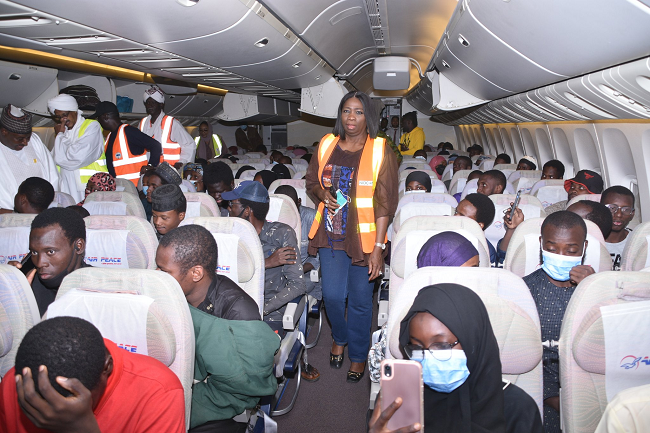
Yusuf made the appeal on Thursday, following the arrival of some of the evacuated Nigerians at Abuja’s Nnamdi Azikwe International Airport.
The Nigerians arrived in the country after being stranded in Egypt for about a week due to visa and border clearance complications.
Second home
Yusuf advised them to view Sudan as a second country, expressing hope that the instability will be brought under control soon.
“The situation in Khartoum is calming down and the army is going to soon control the whole territory,” the ambassador said.
“I’m very sorry for what is happening there but at the same time I’m very happy to have these evacuees coming from Sudan safe, no life is lost. Nigerians are coming from their second country now to their home countries.
“I hope that things will be controlled there (Sudan) and safety would be back and rehabilitation will be started there and you can come back to your second country to pursue and continue your studies for those who are students and for others who have business there.”
He stated that the administration had proposed another humanitarian truce but emphasized that no conversations would take place between the army and the Rapid Support Forces (RSF).
“About the truce, yes, there is a proposal to have a truce for seven days. The government of Sudan has given its acceptance to this truce for only humanitarian purpose to make way for people who are trapped to get their basic needs like food, shelter, water, medicine.
“But, definitely as announced by the government of Sudan, no direct negotiations will be held between the rebels and the legitimate army,” Yusuf.
Stanbic IBTC Bank Plc, a member of Stanbic IBTC Holdings Plc, has announced its upcoming Women-in-Tech event. Themed “Embracing Equity: Building Digital Skills for Life”, this event is the third edition and is set to hold virtually.
The Women-in-Tech event aims to promote women’s growth and development in technology and create a platform for networking, collaboration, and skill-building among women. It will bring together thought leaders, experts, and stakeholders in the tech industry to discuss gender equity, digital skills development, and career advancement opportunities for women in tech.
The event will feature a lineup of notable speakers and panellists who will share their expertise and experiences on various topics related to women in tech. The event will also feature interactive sessions, breakout sessions, and networking opportunities, all aimed at helping women build the skills and connections they need to succeed in the tech industry.
Speaking about the event, Bunmi Dayo-Olagunju, Executive Director, Operations, Stanbic IBTC Bank, said, “Stanbic IBTC is committed to promoting gender equality and providing opportunities for women to thrive in all spheres of life. The Women-in-Tech event is one way we demonstrate our commitment to empowering women and building a more equitable society.”
“It highlights the importance of creating a more equitable and inclusive tech industry and empowering women to develop the digital skills they need to succeed. The event addresses the gender gap in the technology industry and provides a platform for women to develop and showcase their skills.”
As part of Stanbic IBTC’s commitment to gender diversity and inclusion, Bunmi expressed excitement about the upcoming event, stating that it proves the organisation is committed to creating a welcoming and inclusive workplace for all and supports initiatives that promote gender equity and empower women.
The Women in Tech event promises to be an insightful and inspiring event that will empower women to take charge of their digital skills and drive change in their communities.
Registration for the event is open, and interested participants can register on the Stanbic IBTC website.
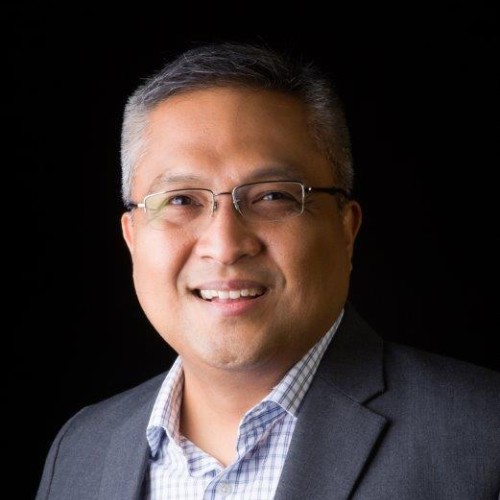
Airtel Africa, a leading provider of telecommunications and mobile money services, with a presence in 14 countries across Africa, has announced the appointment of Carl Cruz as Managing Director and Chief Executive Officer of Airtel Networks Limited (Nigeria).
The appointment which takes effect from 5th May 2023, will also see Mr. Cruz join the Executive Committee as the Regional Operating Director reporting to the Airtel Africa Group CEO, Mr. Segun Ogunsanya as well as the Board of Airtel Networks Limited (Nigeria).
Mr. Cruz has over 31 years of business and corporate experience from multiple geographies across Africa and Asia. In his most recent position, Mr. Cruz served as the Chief Executive Officer and Managing Director of Unilever in West Africa, with responsibility and oversight of three listed operating companies, including Nigeria, Ghana, and Francophone Africa. He was a board member in the role of Executive Director in Unilever Nigeria Plc and a Non – Executive Director in the board of Unilever Ghana representing Unilever as a shareholder.
Prior to this, he was the Chairman and Managing Director of Unilever Sri Lanka, in addition to occupying leadership roles in Unilever Philippines and Hindustan Unilever India. Throughout his career, Mr. Cruz has managed strategic and directional responsibility in sales, distribution, customer and brand development, trade development and commercial engagement.
He holds a Bachelor’s degree in Marketing Management from the University of De La Salle, Philippines.
Speaking on Mr. Cruz’s appointment, Airtel Africa Group CEO, Segun Ogunsanya said, “Mr. Cruz brings to Airtel Africa a wealth of business experience, exceptional track record and strong values. He has a solid record of accomplishment as a strategic and transformational business leader who thrives on problem solving and building strong teams to deliver business growth. We look forward to working with him to steer our largest region and to deliver on our corporate purpose of transforming lives.”
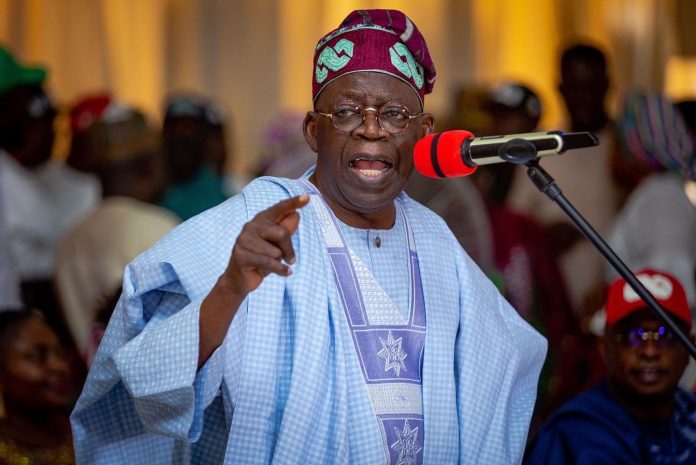
Bola Tinubu, Nigeria’s President-Elect stated on Thursday that Nigeria’s unity is non-negotiable, assuring all citizens that he will be fair to all.
Tinubu made the remarks when commissioning the Magistrates’ Court Complex in Port Harcourt, Rivers State’s capital, at the request of Governor Nyesom Wike.
The President-Elect who concluded his two-day official tour to the oil-rich South-South state said that Nigerians must tolerate one another.
Despite not belonging to the same political party, the All Progressives Congress (APC) powerbroker and Wike, a chieftain of the Peoples Democratic Party (PDP), are promoting unity.
“I will fulfil the promise I made to the people of Rivers State and that is what I intend to do in all policy formations coming up,” Tinubu said.
“I promise Nigerians that the unity of this country is not negotiable. That is what Wike and I are promoting jointly. I promise I will be fair to all.”
Once he has been sworn-in, Tinubu promised to review the welfare of judges.
“The reform is on the way,” he said, addressing legal luminaries at the occasion and tasking them on the culture of maintenance. “I am here with the hope that you will collaborate with me. I promise you (of) my commitment to fulfill all political promises that I made.”
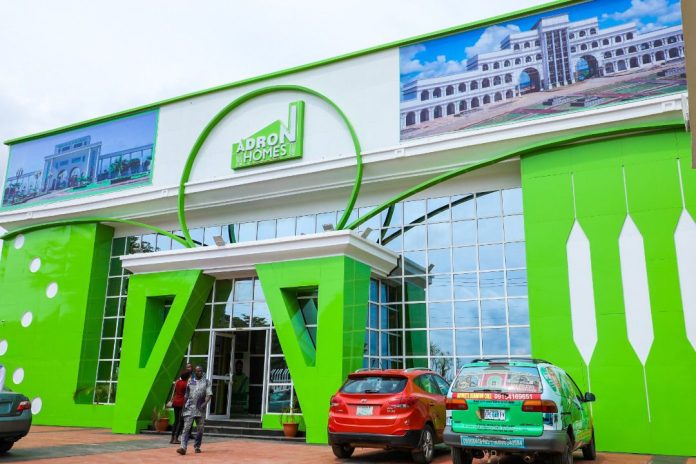
Adron Homes has been called out, as its customers took to social media to lament their awful experiences with the real estate firm.
The customers, who had purchased properties from Adron Homes, complained that the company failed to deliver on its numerous promises, including the allocation of lands even after payments had been made.
Some of the customers also accused Adron Homes of using deceptive marketing tactics to lure customers into purchasing properties, such as promising unrealistic returns on investment.
”Adron Homes is a fraudulent company. They allocated a piece of land in Shimawa, near the RCCG area, and gave a complementary bag of rice and keg of groundnut oil. Shimawa had experienced a developmental boost due to the presence of the Redeemed church. However, years after almost completing the payment, Adron Homes reallocated the land to an entirely different area, a proper tropical rainforest. This action seemed like a breach of agreement, so we decided to back out and requested a refund. Unfortunately, their terms and conditions booklet is heavily loaded in their favor, which protected them. They charged a huge percentage of the money as a default fee and even demanded we return the bag of rice and keg of groundnut oil we received before they refunded a ridiculous amount…” one of the customers, @Engr_Series, wrote.
Adron Homes is a fraudulent company. They allocated a piece of land in Shimawa, near the RCCG area, and gave a complementary bag of rice and keg of groundnut oil. Shimawa had experienced a developmental boost due to the presence of the Redeemed church.
”Adron wey collect money for my hand and tell me told me to oay 1.5m for development fee on half plot i just kuku dash dem d money Adron na fraud,” @vantundenani wrote.
However, while many people continued to share their awful experiences with Adron Homes, others spoke glowingly of the real estate firm.
”Actually I have seen, both local and overseas guys that buy and build. As an architect I have also designed, supervised and built houses for clients in Adron homes. I think the best advise is just pay your money in full, collect your land where you paid for and start building,” @aramitunji wrote.
Another Twitter user, who ruled out insinuation that Adron Homes is fraudulent, attributed people’s bad experiences with the real estate company to their inability to ask questions and read their terms and conditions.
”In simple truth, Nigerians love the idea of living in an estate, and, the state of the earth’s infrastructure and the serenity of the real estate company puts in place drives them to buy. In the case of Adron Homes, I personally took families and friends to go buy from them after reading carefully the terms and conditions. I went there and saw massive infrastructural work and I asked how the company manages to put all these amenities such as concrete roads, drainages, dedicated power supply, and other amenities I saw when I was taken on inspection I was told one has to pay for the infrastructural charges to build and I agreed cos I can see what I’m paying for and why it was necessary. I intend to build and resell some acquired plots of land just when it’s ripe for reselling. The problem is that people don’t ask questions,” @Bodmas18_ wrote.
In simple truth, Nigerians love the idea of living in an estate, and, the state of the earth's infrastructure and the serenity of the real estate company puts in place drives them to buy. In the case of Adron Homes, I personally took families and friends to go buy from them https://t.co/whqvpvAlzx
In response to what he described as an unestablished accusation of Adron Homes, one of the company’s marketers, who pleaded not to be mentioned in this report, told BizWatch Nigeria that a lot of people don’t have an idea of how real estate works.
When asked if it’s true that people don’t get their lands allocated to them after payments, the marketer explained that Adron Homes has a policy that only those that are ready to build get their lands allocated to them.
”We don’t allocate lands to people until they are ready to build, and this is a transparent policy. It is clearly written in the documents we present to our clients. This is because we marketed these properties with the promise to provide social amenities, and security, amongst other things. Tell, how do you want us to provide security for someone who has a house in one of our estates, but is surrounded by bushes because the land owners that are supposed to be his or her neighbour aren’t ready to build?” he queried.
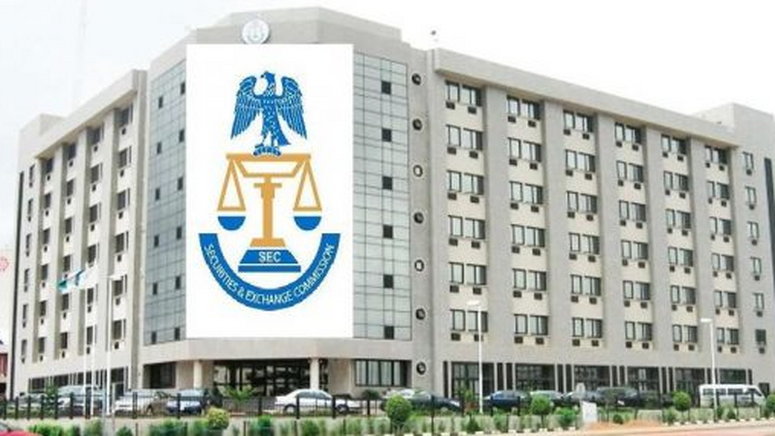
The Securities and Exchange Commission (SEC) has granted NASD Plc permission to start implementing its Digital Securities Platform (DSP) as part of the Regulatory Incubation (RI) initiative.
NASD Plc is an Over-the-Counter (OTC) securities exchange that facilitates trading of all securities of unquoted companies, primarily in Nigeria.
The Regulatory Incubation (RI) programme is designed by the SEC to address the needs of new business models and processes that require regulatory authorisation to continue carrying out full or ancillary technology-driven capital market activities.
According to a statement from NASD and its group of partners, Blockstation Inc. USA; T.K. Tech Limited, Nigeria; and Sophus Consulting Limited, Nigeria, the SEC approval is a positive development for the Nigerian capital market ecosystem and marks the conclusion of development work that spanned roughly two years.
In addition to democratizing access to the capital market by lowering the barrier to both issuing and investing in securities, it was claimed that the digital securities platform would offer an end-to-end solution for the issuance, trading, and settlement of digital assets. It would do this by utilizing blockchain technology to increase accessibility and reduce cost.
Mr. Eguarekhide Longe, Managing Director, NASD Plc, stated, “We are truly excited at NASD to be working with the right partners such as Tk Tech Africa, Blockstation Inc, and Sophus Consulting to introduce to the Nigerian capital market this opportunity to adopt innovation through digital securities trading of real assets that are securitized by tokens, presenting the capacity to deploy trading solutions to varied asset classes, revolutionize the trade settle”.
Remember that the NASD successfully tested the NASD-DSP with the participation of a number of institutions, including Stanbic IBTC Custodian, Stanbic IBTC Bank, and a number of brokers, including Afrinvest Securities Limited, Greenwich Securities Limited, and Anchoria Investment & Securities Limited.
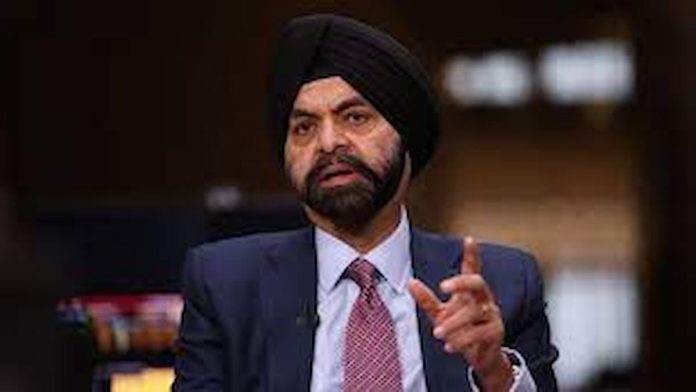
Ajay Baanga, the former CEO of Mastercard, was chosen by the World Bank’s board of governors to lead the organization for a five-year term.
Banga is an Indian-born financial and development expert who will restructure the bank to better address climate change and other global challenges.
The 63-year-old Banga was the sole candidate to succeed David Malpass when he was nominated for the position by US President Joe Biden in late February. On June 2, he starts his new work.
Banga was interviewed by World Bank board members for four hours on Monday before the election. June 1 will be Malpass’ last day working for the bank. Instead of the customary consensus-based procedure, the decision was made by a vote of 24 of the board members, with Russia abstaining, according to a source familiar with the proceedings.
“Ajay Banga will be a transformative leader, bringing expertise, experience, and innovation to the position of World Bank President,” Biden said in a statement congratulating Banga.
He further said, “He will guide the organization as it develops and grows to address issues such as climate change that directly relate to its fundamental objective of eradicating poverty”.
Since its establishment at the end of World War Two, the World Bank has been led by an American, whereas the International Monetary Fund has been led by a European. Since 2007, Banga, who was born in India and spent his formative years there, has been a citizen of the United States.
Given that consumers in Nigeria are fiercely mobile-first, organisations looking to boost customer engagement would be wise to maximise their customer acquisition efforts during the Holy Month of Ramadan.
This comes as a result of new data from AppsFlyer which compared mobile app trends in Ramadan 2023 to Ramadan 2022 to reveal that overall installs of mobile apps were up by 19% in the country.
Linking this data back to a recent joint report by AppsFlyer & Google on the mobile app industry in Africa, showing a year-on-year rise of 33% on mobile app installs from 2021 to 2022 in Nigeria, Michael Zaitsev, Managing Director West Africa & CIS at AppsFlyer said “As mobile marketers continue to navigate the congested mobile app space, it is clear that targeting special holidays can play a pivotal role in a company’s fortunes with getting ahead of the competition.
With mobile apps being the go-to channel for consumers in Nigeria, special periods like the Holy Month of Ramadan will be key for mobile marketers going forward”.
Operating systems battle it out
Both iOS and Android enjoy widespread popularity in Nigeria, raising the question of where the country’s marketers should focus their efforts. AppsFlyer’s data indicates that iOS users are currently more receptive to app marketing campaigns, as during Ramadan 2023, overall app installs on devices running the operating system increased by 36% compared to 2022.
In addition, overall installs for Android apps also increased by 16%. On the other hand, non-organic installs increased this Ramadan for mobile apps on both iOS and Android devices by 35% and 39% respectively.
Finance apps still leading the way
One industry that always stands out is the financial sector – and with smartphone penetration continuously increasing, mobile marketing is crucial for success. Compared to last year, this category of mobile apps saw both overall installs and non-organic installs increase by a whopping 74% and 82% respectively.
These installs peaked in the final week (week 4) of Ramadan, showing the high demand for financial services such as peer-to-peer payments, money transfers from the USA and UK diaspora to Nigeria, including money transfers between relatives inside of the country, and Pan-African transactions.
These kinds of transactions increased towards the end of Ramadan, as celebration preparations usually begin to take flight in the final week of the Holy Month.
Kristalina Georgieva, the managing director of the International Monetary Fund, has issued a warning about the potential for unanticipated “consequences” that could result from the use of digital currencies issued by retail central banks.
In an interview on May 1 at the Milken Institute’s 2023 Global Conference, Georgieva discussed her reservations about retail CBDCs.
The head of the IMF claims that the IMF believes retail CBDCs have much more leeway for error than wholesale CBDCs.
She stated, “We think that retail CBDCs completely transform the financial system in a way that we don’t quite know what consequences it could bring, whereas wholesale CBDCs can be implemented with fairly little space for unfavorable surprises.”
Retail CBDCs are state-backed virtual currencies that central banks issue for usage by individuals and businesses, according to a Cointelegraph report, while wholesale CBDCs are similarly issued by central banks but are made to enable financial institutions to carry reserve deposits with a central bank.
In order to ensure that best practices are adopted, the IMF MD stated that the agency was working with roughly 50 countries. She predicted that this collaboration would have a significant impact on banks and economies in the future.
The decision to produce a CBDC manual to assist central banks with CBDC design and implementation was made earlier by the IMF in response to the unprecedented levels of interest from countries all over the world.
Nigeria became one of the first nations in the world to create a central bank digital currency that is accessible to the general public on October 25, 2021, with the launch of the eNaira.
The Bahamas and the Central Bank of the Eastern Caribbean were also included on the coveted list by the most populous country in Africa.
Godwin Emefiele, the governor of the Central Bank of Nigeria, said during the unveiling that the eNaira was introduced following four years of research by the top bank. The eNaira is a digital currency that is pegged to the naira and used as a store of value and a medium of trade, according to the CBN.
According to the CBN governor, 33 banks were successfully included into the eNaira network, and the central bank issued N500 million to commemorate the launch of the new currency.
The regulator reported that N200m had been given to financial institutions, and at the time of the launch, more than 2,000 consumers had also been accepted.
Once eNaira was operational, the CBDC speed wallet app and merchant wallet became accessible for download.
The merchant wallet had 83,000 downloads as of December 2021, while the consumer wallet had over 583,000 from more than 160 nations.
The CBN governor revealed on Tuesday that as of March 31, 2023, there were around 1.4 million e-Naira transactions.
Emefiele, who was represented by Dr. Hassan Mahmoud, Director of Policy of the CBN, claimed that his team pushed the electronic payment channels by utilizing COVID-19 and other local innovations.
He declared, “There is little doubt that the onset of the Corona Virus epidemic sparked quick improvements in financial technology, leading to speedy digitization of money and finance.
“The CBN seized the chance and introduced the eNaira in October 2021. The eNaira was created to give Nigerians more options for making payments, to promote financial inclusion online, and to potentially expedite social and intergovernmental transactions.
Since its debut, the CBN has continued to change its features to increase its usability for a variety of consumers.
“A smartphone is no longer necessary to utilize the eNaira because it is now compatible with all mobile device generations (both old and new). Over N1.4 million worth of transactions have gone through the eNaira platform so far.
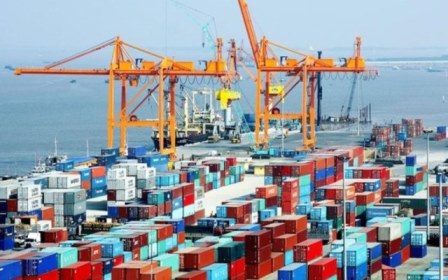
According to the Nigerian Ports Authority, the Federal Government intends to build another deep seaport within the next three to four years. Muhammad Bello-Koko, the managing director of the NPA, made the announcement in an interview with Nigerian Ports Today, the agency’s quarterly publication.
“If we look at what happened in the Lekki Deep seaport, it took at least three years and we expect that in the next three to four years, another deep seaport will come up. So, the Badagry deep seaport has the Federal Government’s approval. The other ports are still developing and a proposal has been set up for all these port locations and we are working with the Federal Ministry of Transportation and other government agencies to ensure that the business case is properly developed. I believe that after the issue of financial construction, most of them would have concluded their financial arrangement, approvals, and some of them will be working, and we expect to see at least one or two seaports in the next four to five years.”
The NPA boss, however, disclosed that the agency had witnessed an increase in revenue by over 60 to 70 per cent in 2023. Bello-Koko said in the last eight years, the agency had been able to capture more of the cargoes that were going to neighbouring countries.
“This means that we have more cargo traffic into the country, which has added to the gross domestic profit of the country and also increased the revenue of the NPA,” he noted.
The NPA boss added that the agency had witnessed increased activities in Calabar port, stating that the agency wanted to ensure that the tariff trickles down to the end users.
“What was done has more to with Calabar port, to encourage people to bring large vessels into that port and we have seen some increase in the activity. But we are going to ensure that this tariff trickles down to the end users.”
Bello-Koko also said that the agency had set up a committee to ensure that reduced tariff is used to encourage importers to use the Calabar port.
“That is if I bring in a container here and it is costing me a million naira, if we reduce the tariff, we should be able to bring it to Calabar and there is a committee working on this. It is not only tariff that you have to make eastern ports work. You also need to ensure that there is security there, and that is why we are working with the Nigerian Navy.”
Meanwhile, Bello-Koko disclosed that the NPA had not reviewed port tariffs in 30 years, despite the rising inflation in the country. He stated this on Tuesday night during a television interview. According to him, the agency only reviewed its towage services between 2012 and 2014. He claimed authority had been using the same rates since 1993.
“The NPA has not increased its tariff since 1993. The rates that we have been using since 1993 are still the same rate that we are using today. The last time the NPA increased its tariff was in 1993. Yes, the cost of doing business at the ports may be high, but we have not increased our tariff in the last 30 years.”
He said that the cost of doing business could be increasing but would not be attributed to the tariff rates of NPA.
“It was in 2012 or 2014 that the NPA increased the cost of towage. Every other tariff has remained as it is since 1993. The cost of doing business could be increasing, but it is not attributable to the tariff and rates of the NPA,” he asserted.
Bello-Koko said that the agency only harmonised the tariffs in 2012.
“What we did in 2012 was to harmonise the tariffs and merge them because they were so many. Before then, if anybody is looking for our tariffs, they will find many tariffs broken into pieces. So, what we did then was to merge them,” he explained.
On port construction, the NPA MD said the situation at Tincan Port was the worst even though every other port needs some level of rehabilitation.
“What we have been doing is palliative work, trying to manage the situation. However, it has now gotten to a stage where we feel palliative works are no longer tenable.
“So, what we have done is an authority-wide NEEDS assessment, where we checked those infrastructures. After that, we took the decision that it is time we fully reconstruct those infrastructures. Tincan Port is the one that is in the worst state, very terrible. We believe it is time to reconstruct and rehabilitate Tincan Port. There are some quays at other ports too that need rehabilitation. Some quays in Apapa, Warri, Calabar, Onne and virtually all the ports need rehabilitation. Our assessment showed that we need about $800m to rehabilitate all the ports.” he said.
While expectations of rate hikes by major central banks are limiting price increases, data from the United States (US) showed a larger-than-anticipated drop in crude inventories, indicating a rebound in the country’s demand outlook.
International benchmark Brent crude closed at $75.47 per barrel, up $0.20 over the previous trading session’s closing price of $75.32 per barrel. West Texas Intermediate (WTI), the American benchmark, was trading at $71.72 per barrel at the same time, up 0.08% from the session’s closing price of $71.66 per barrel.
In contrast to the market consensus of a 1 million-barrel decline, the American Petroleum Institute (API) released their estimate of a fall in US crude oil stockpiles of 3.93 million barrels late on Tuesday.
The US Energy Information Administration’s data on oil stocks will be announced later on Wednesday. A fall in crude stocks in line with the API’s expectations would signal a rebound in crude demand in the US, the world’s largest oil consumer, and support upward price movements.
The price increase was backed by the decline in the US dollar index, which reduced the cost of crude oil for overseas customers. At 9.34 a.m. (0634 GMT), the US dollar index, which gauges the value of the dollar against a basket of currencies including the British pound, Canadian dollar, Swedish krona, and Swiss franc, dropped to 101.483, down 0.24% from Tuesday’s closing price of 101.725.
However, despite the potential interest rate increases by the US Federal Reserve and the European Central Bank on Wednesday, prices are still under pressure. Oil demand would decline as a result of slower economic growth brought on by higher interest rates.
In other markets, the price of Urals, Russia’s premier oil, experienced a year-over-year decrease of about 40% between January and April of this year, according to official estimates.
According to a statement from the Finance Ministry, the price of Russian Urals crude oil fell by 39.7% annually from $84.68 per barrel in the same time last year to $51.05 per barrel from January to April of this year.
The price of a barrel increased little to $58.63 in April of this year, the government noted. EU members came to an agreement in December of last year to restrict the price of Russian crude oil exports that are shipped by sea at $60 per barrel.
Many nations that still buy Russian oil, especially China and India, demand discounts from Russia while running the risk of breaking sanctions.
According to the National Bureau of Statistics (NBS), food costs such as yam, beans, and meat increased in March. This is featured in the NBS Selected Food Prices Watch Report for March 2023, which was issued on Wednesday in Abuja.
According to the research, the average price of 1kg of boneless beef climbed by 25.05 percent year on year, from N1, 982.92 in March 2022 to N2, 479.61 in March 2023.
“On a month-on-month basis, 1kg beef boneless increased by 1.38 per cent from N2, 445.96 recorded in February 2023.” The report also said the average price of 1kg of tomato on a year-on-year basis, rose by 13.81 per cent from N409.96 in March 2022 to N466.60 in March 2023.
“However, on a month-on-month basis, 1kg of tomato declined by 0.32 per cent from N468.09 recorded in February 2023. The report also showed that the average price of 1kg of brown beans (sold loose) increased by 13.13 per cent on a year-on-year basis, from N527.66 in March 2022 to N596.96 in March 2023.
“On a month-on-month basis, it increased by 0.47 per cent from N594.15 recorded in February 2023.” Similarly, it said the average price of 1kg of onion bulb rose by 17.37 per cent on a year-on-year basis, from N378.59 in March 2022 to N444.37 in March 2023.
“While on a month-on-month basis, it dropped by 1.27 per cent from N450.07 recorded in February 2023.” The report said the average price of 1kg of Yam tuber rose by 25.30 per cent on a year-on-year basis from N353.56 in March 2022 to N443.02 in March 2023.
“On a month-on-month basis,1kg tuber of yam increased by 1.51 per cent from N436.41 recorded in February 2023.” In addition, the average price of one bottle of vegetable oil stood at N1, 220.62 in March 2023, showing an increase of 25.80 per cent from N970.29 recorded in March 2022.
“On a month-on-month basis, it rose by 2.00 per cent from N1, 196.68 recorded in February 2023.” The report said at the state level, the highest average price of 1kg of beef (boneless) was recorded in Anambra at N3,107.44, while the lowest was recorded in Kogi at N1,778.00.
According to the report, Edo had the highest tomato price at N901.23, while Kogi had the lowest at N196.41. According to the research, Ebonyi had the highest price for beans brown (sold loose) at N906.00, while Kebbi had the lowest at N352.70.
According to the report, Cross River state had the highest average price for a 1kg onion bulb at N981.86, while Taraba had the lowest at N205.50. According to the NBS, the price of one kilogram of yam was N900.80 in Akwa Ibom and N188.60 in Taraba.
According to the survey, Abia had the highest price of Vegetable oil (1 bottle) at N1,618.21, while Benue had the lowest at N720.00.
According to a zone analysis, the average price of 1kg of boneless beef was greatest in the South-East at N3,044.46, while the North-Central recorded the lowest at N2,077.44.
It said the average price of 1kg of tomato was highest in the South-South at N811.13, while the lowest was recorded in the North-East at N237.52.
The report said the South-East recorded the highest average price of 1kg of brown beans (sold loose) at N793.71, while the lowest was recorded in the North-East at N479.30.
PAC Capital Limited (PAC) is pleased to have acted as the Lead Financial Adviser and Fund Arranger to Access Holdings Plc (Access Holdco) on its recently concluded US$300 Million Investment Finance Facility.
Speaking about the facility, Mr. Humphrey Oriakhi, the Managing Director, of PAC Capital stated that the firm is committed to providing high-quality advisory and fund arrangement services that enhance its clients’ growth and expansion prospects.
“We are delighted to bring this landmark deal to a close for our client. This is in line with our value proposition to leverage opportunities that support our clients with access to long-term and short-term funding,” Mr. Oriakhi said.
The US$300 Million facility obtained by Access Holdco will be injected into its banking subsidiary, Access Bank Plc to further strengthen its capital base as proceeds of this will supplement the capital needs of its African expansion strategy.
“The investment takes the form of a Tier 1 capital qualifying mandatory convertible instrument and is expected to improve the bank’s shareholders’ funds and total capital ratios,” Access Holdings said in a statement.
PAC Capital’s active participation in landmark transactions of this nature further corroborates that the investment banking firm is at the fore of driving company and business growth in Africa through the provision of increased access to borderless capital.
Through this deal, PAC Capital has shown its commitment towards consolidating its activities in the financial services space as this comes yet after the firm’s role as Fund Arrangers to an investor and raised US$300 million for the acquisition of majority stake in a Nigerian Financial institution in 2022.
Standard Chartered Bank Limited has announced the appointment of Olukorede Adenowo (K.O) as its Chief Executive Officer (CEO).
Adenowo’s appointment as CEO followed his recent appointment as Executive Director, Corporate, Commercial and Institutional Banking business in Nigeria where he is responsible for driving and implementing the bank’s business strategy for its corporate clients.
“Korede takes over as CEO from Lamin Manjang. After 24 years of service providing strategic direction in various capacities across seven markets in Africa and Middle East, including CEO for Kenya and East Africa, Oman, Uganda and Sierra Leone, Lamin has been promoted to Vice Chairman for Africa and will be based in Nigeria,” a statement announcing Adenowo’s appointment read partly.
Prior to the latest appointment, he was the CEO for Standard Chartered Bank, The Gambia with dual responsibility for managing the bank’s business interest in Senegal.
He had been a Non-Executive Director of the bank in Sierra Leone and also served as a Non-Executive Director on the Board of Standard Chartered Gambia.
Adenowo’s Profile
K.O has a total of 35 years of post-university experience in Banking, Finance and Consulting. He was a founding staff of Standard Chartered Bank in Nigeria and has held various senior positions in Standard Chartered Bank Group in the last 24 years. He has served as Head of Origination and Client Corporates for Standard Chartered, West Africa; Deputy Managing Director of Standard Chartered Bank Cameroon and a senior management executive in the Wholesale Bank in Standard Chartered Nigeria.
In his penultimate role as Africa Co-Head Financial Institutions and Public Sector business for SCB, K.O provided strong leadership in building and managing key strategic FI relationships across West Africa.
He worked closely with several Banks and Governments across the region i.e. Cameroon, Gabon, Senegal, Ghana, and most recently Nigeria in advising them on accessing international capital markets and ultimately improving the banks visibility in Public Sector for business success and growth in an increasingly stringent regulatory environment.
He was also appointed the first Regional Head of Global Corporates for Standard Chartered Africa where he led the Africa Multinational business.
Prior to joining the bank, he had worked in Societe Generale Bank Nigeria and Deloitte Nigeria, where he qualified as a Chartered Accountant in 1990.
An Economist turned Chartered Accountant; he was appointed Fellow of the Institute of Chartered Institute Accountants of Nigeria in 2000. He is an alumnus of INSEAD and Said Business School of Oxford University where he had management training in Leadership and holds an MBA from the Lagos Business School.
He is married to Olajumoke and both have two children.