The naira on Friday, January 22, dropped by 0.3 per cent at the parallel market barely 24 hours it hedged up against the dollar.
The News Agency of Nigeria (NAN) reports that the naira lost N1 to exchange at N297 to the dollar. It had previously traded for N296 to the dollar on Thursday.
It, however, continued to exchange at N197 to the dollar at the official interbank window.
Traders at the market said that the scarcity of the dollar was having negative impact on the market.
They added that there were apprehensions that the apex bank might come up with yet another policy next week.
NAN reports that the Monetary Policy Committee Meeting (MPC) of the Central Bank of Nigeria (CBN) will be held on Jan. 25 to Jan. 26.
The Revenue Mobilization, Allocation and Fiscal Commission, RMAFC, on Friday, January 22, said the solid minerals sector generated 10.8 billion in 2015.
The acting Chairman of the commission, Shettimma Abba-Gana, disclosed this in an interview with the News Agency of Nigeria (NAN) in Abuja.
Abba-Gana said that the states that contributed to the revenue generated had been paid 13 per cent of the sum based on the principle of derivation.
He said the derivation principle affected both the oil mineral producing states and those producing solid minerals as well.
“Some states did not generate much but some states did generate a lot and those states got some money,” he said.
“So virtually all the states, any revenue that came to the federation account from that 10.8b, states got their 13 per cent.
“But that is the beginning, they now know that they can get it so they will also now begin to monitor more and more whatever revenues in solid minerals in their states will now come into this.
“Virtually every state in the federation has some solid minerals to varying degree and to varying types and so no state should be idle, every state has something.
“Therefore if states begin to show interest in those solid minerals in their states, they can look for investors.
“They can partner with those investors, invite them, encourage them, create an enabling environment for those investors to come and work on those solid minerals in the state.’’
The Minister of Communications, Adebayo Shittu, has revealed that the Federal Government will create two million jobs from the Information and Communication Technology (ICT) sector.
Shittu, who spoke at the maiden Nigeria Communications retreat organized by the Federal Ministry of Communications, at International Institute for Tropical Agriculture (IITA), Ibadan on Friday, January 22, said investors from China would be investing 15 billion dollars in the sector.
“Information and Communication Technology today creates more jobs than oil and gas and that can further be enjoyed, as investors from China would be investing N15 billion dollars in the ICT sector in Nigeria. So, potential two million jobs will be made available through investments in the sector,” he said.
The minister also disclosed that 550 post offices in different Local Government Areas in the country would soon start engaging in financial services like internet services, call services apart from the traditional letter posting.
“The time has now come to fully embrace ICT to enhance our lives, to enhance transparency and good governance if we are to really fulfill the “change” mantra that Nigerians voted President Muhammadu Buhari to bring about,” he said.
The Central Bank of Nigeria., CBN, on Friday, January 22, took the decision to refund the N35 million Mandatory Caution Deposits to the Bureaux De Changes (BDCs) as part of the strategy to curb the excesses of the BDCs and stop the free fall of the Naira
However, the apex bank will retain the N1 million licensing fee collected from the BDCs.
The CBN in a circular signed by Mr Kevin N Amugo, Director, Financial Policy and Regulation Department said: “given the recent development in the operations of BDCs in the economy, the CBN has decided as follows: The refund of mandatory caution deposit of N35 million to all BDC operators and the retention of N1 million licensing fee.”
The CBN asked all eligible BDCs “to apply for refund of their caution deposits, attaching evidence of payment and bank transfer details.”
On January 11, CBN governor Godwin Emefiele while rolling out new forex policies had lamented that “it is almost impossible for the CBN to monitor over 2700 BDCs with its limited number of examiners.
“It is almost practically impossible and because of inadequate foreign exchange, the BDCs have to source their foreign exchange autonomously. We do not have the resources to cope with over 2,000 BDCs in the country right now.
“BDCs not happy with this decision are free to return their license and get a refund of the N35 million cautionary fees besides we need more people to go into other forms of businesses like agriculture where we believe there is a lot of scope at this time.”
The troops of the Operation Lafiaya Dole said they intercepted three suspected suicide bombers attempting to enter Maiduguri the Borno state capital on Friday, January 22, along Maiduguri/Mafa checkpoint.
The Deputy Theatre commander of Operation Lafiya Dole Major General Lucky Irabor told newsmen at the operation media centre in Maiduguri the troops at the checkpoint sight two female suicide bombers and a male suicide bomber trying to infiltrate Maiduguri along Maiduguri-Mafa road, where one of the female suicide bomber detonated her own killing herself and one other female bomber, while the male suicide bomber was gunned down by the troops of the Nigerian Army while trying to run into their midst.
He also stated that 63 Boko Haram terrorists were killed from Monday 18th January 2016 to Friday 22nd 2016 at various places within the theater of operation, adding that many AK47 riffles, ammunition, Anti Aircraft Gun, RPG, GMPG, explosives, vehicles, motorcycles among others were recovered from the operations.
“Our troops conducted a fighting patrol at Afe, Kudiye, Souma, Dikwa Mijigeta, Mida villages of Borno state. During the operation our troops come in contact with Boko Haram terrorist at Kudiye and Mijigete where 370 hostages were rescued and brought to IDP camp in Dikwa and 3 rifles and 41 motorcycles were destroyed,” he said.
Maj. Gen. Irabor also stated that troops have cleared some Boko Haram hideouts in Wala, Tirkopytir and Durubajuwe in Gwoza local government area, where they recovered GMPG, locally made Dane gun and a grinding machine were recovered.
He stated that troops also came in contact with Boko Haram terrorist in Huyum in Askira/uba local government area, adding that “the terrorists sighting troops abandoned their families behind which including five women and 12 children and are currently undergoing interrogation.
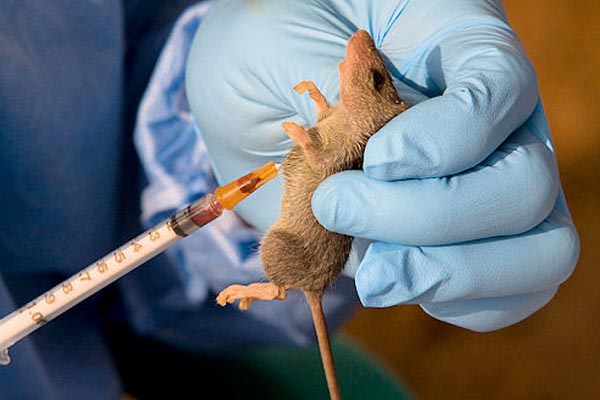
According to the Plateau State Commissioner for Health, Dr. Kuden Kamshak, five cases of Lassa fever have been discovered in the state capital, Jos. He stated that there is need for citizens of the state to maintain a healthy and dirt free environment as the state is been noted as the hotspot of the ailment due to its proximity to the other affected states. Health official are also sent out to rural communities to alert them on the dangers of the disease and enlighten them on the symptoms to look out for.
Apparently, after the death of a resident doctor at the Maxilofacial Surgery Department at the Obafemi Awolowo University Teaching Hospital Complex, Ile Ife, 55 other persons are placed under surveillance.
Also, the Permanent Secretary, Osun State Ministry of Health, Dr. Temitope Oladele said that the state had set up emergency centres to ensure that the virus is contained. He further said that no other case have been discovered in the state.
He said “We have dedicated lines of those in the emergency centres, the numbers are: 08032394921; 08062473160: 08035620234 and 08034175852.”
Ebonyi state government revoked reports of Lassa fever outbreak in the state, saying that none has been recorded.
There is no question that the era of mobile has arrived – by June 2014, there were about 329 million unique mobile subscribers in Sub Saharan Africa, equivalent to a penetration rate of 38%. The 2014 Mobile Economy report by GSMA (Groupe Speciale Mobile Association) estimates that the number of unique mobile subscribers in Sub-Saharan Africa will pass the half billion mark in 2020 as mobile services become increasingly affordable and accessible to millions of currently unconnected citizens across the region. But, what exactly does this mean for Nigerian businesses and how can entrepreneurs and business managers utilize the mobile phone to grow their business?
How are your customers using their phones?
Smartphones are becoming more affordable and accessible. With increasing competition within Nigeria’s broadband sector, the landing of more undersea cables and the passage of more public-focused policies, connectivity prices will be drastically reduced in the near future. Many mobile network operators across the country have continued to announce reductions in data service costs, making mobile web usage commonplace for Nigerian consumers. As a result, mobiles are being used for more than just SMS and voice. Consumers are using their devices for searching, social networking, mobile banking and, not as common but slowly increasing, mobile shopping.
Mobile strategies
According to a recent Consumer Barometer study by Google, about 76% of online users in Nigeria use their smartphones to search for information about local businesses, and the reality is we can expect even more growth in these numbers in the not too distant future. The mobile opportunity is likely to be even more widespread than previously estimated as mobile usage in Nigeria and Africa continues to go beyond traditional means. Enter the true ‘arrival’ of mobile advertising – with billions of Internet ads shown every month in Africa, it is quickly becoming important for businesses across the continent to take advantage of the capabilities of the mobile phone.
African online companies like Konga have long recognized that the mobile space is unique and have, consequently, innovated specifically for mobile. Businesses must recognize the importance of mobile strategies, including the need to create user-friendly mobile sites. It is also imperative that businesses understand the fundamentals of the mobile search terms that consumers will use when searching for a particular product.
Businesses can also explore the unique characteristics of mobile by providing users with richer media experiences such as animated ads, video ads (increasing in popularity across Africa) and click-throughs on social networks. Online video platforms like YouTube mobile are also providing more opportunities for the mobile savvy advertiser.
The next milestone for mobile is to follow trends in ‘local content’, something sure to deliver innovative opportunities for businesses. Online mapping tools like Google Maps provide an opportunity for business owners to list their companies for free so consumers in the area can find them. In addition, African developers are encouraged to create locally relevant mobile apps for Android, a mobile platform with more than 1.4 billion active users worldwide – a growing number of these activations coming from Nigeria and other markets across Africa.
Nigeria is definitely one of the first post-PC countries, emphasizing the importance of the mobile as a way to connect to the internet. Across Africa, we are seeing a higher percentage of people using mobile handsets than PCs to access the Internet, listen to music, play games, download content and engage with social networks. This trend is thought to be similar in other parts of the continent. There has never been a more significant time for mobile in Nigeria and Africa and these exciting developments are set to continue for some time to come.
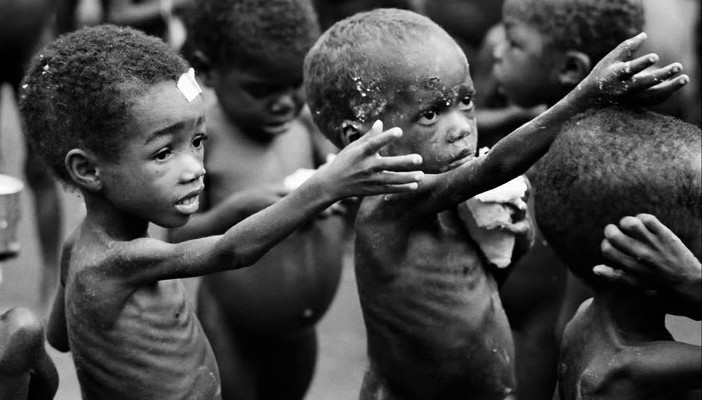
The Dangote Foundation and Bill & Melinda Gates Foundation have announced a combined financial package of $100 million over the next five years (2016-2020) towards ending malnutrition in Nigeria which is expected to improve the lives of at least five million families by 2020.
Chairman of Dangote Foundation, Alhaji Aliko Dangote, speaking the official signing of the pledge with Co-chair Bill and Melinda Gates Foundation, Bill Gates, noted that tackling malnutrition in children has been identified as critical in reducing infant mortality.
Dangote said Nigeria had the second highest level of acute malnutrition at 18 per cent, globally as well as 37 per cent of chronic malnutrition rate, also second highest globally.
“Acutely malnourished children often fall very ill and die, and at least half of all children under the age of five years that die in Nigeria do so as a result of underlying or overt malnutrition.”
The two foundations said they will begin a joint planning process to determine the details of the partnership. Programs will include community-based approaches and proven interventions linked to behavioural change, fortification of staple foods with essential micro-nutrients, the community management of acute malnutrition and investments in the local production of nutritious foods.
A key objective will be to improve the livelihoods of households by supporting nutrition-sensitive agricultural programs that can increase family income, improve diets and empower women and youth.
Dangote said however that the government would need to make its own input to the success of the initiative.
According to the Vice President Yemi Osinbajo, the Federal Government is beginning to notice a silver lining in the fall in crude prices as fuel no longer has to be subsidised. ”we are not paying any subsidies, which frees up something in the order of about $5bn (about N985bn),” Bloomberg quoted the vice president as saying.
However, Brent oil in London has discarded more than 60 per cent to below $28 a barrel since November 2014, as shale production from the United States increased and the Organisation of Petroleum Exporting Countries retrained from cutting output in the face of a global oversupply in an effort to defend market share.
Osinbajo revealed that Nigeria, Africa’s largest oil producer, will still face challenges in financing its budget deficit and aims to increase Value Added Tax and customs duty collection to help plug the gap.
He explained, “We think with adequate governance around budget management and around expenditure management, we can do quite a bit. If we are able to do those things, we might be able to come away with under $30 a barrel oil.”
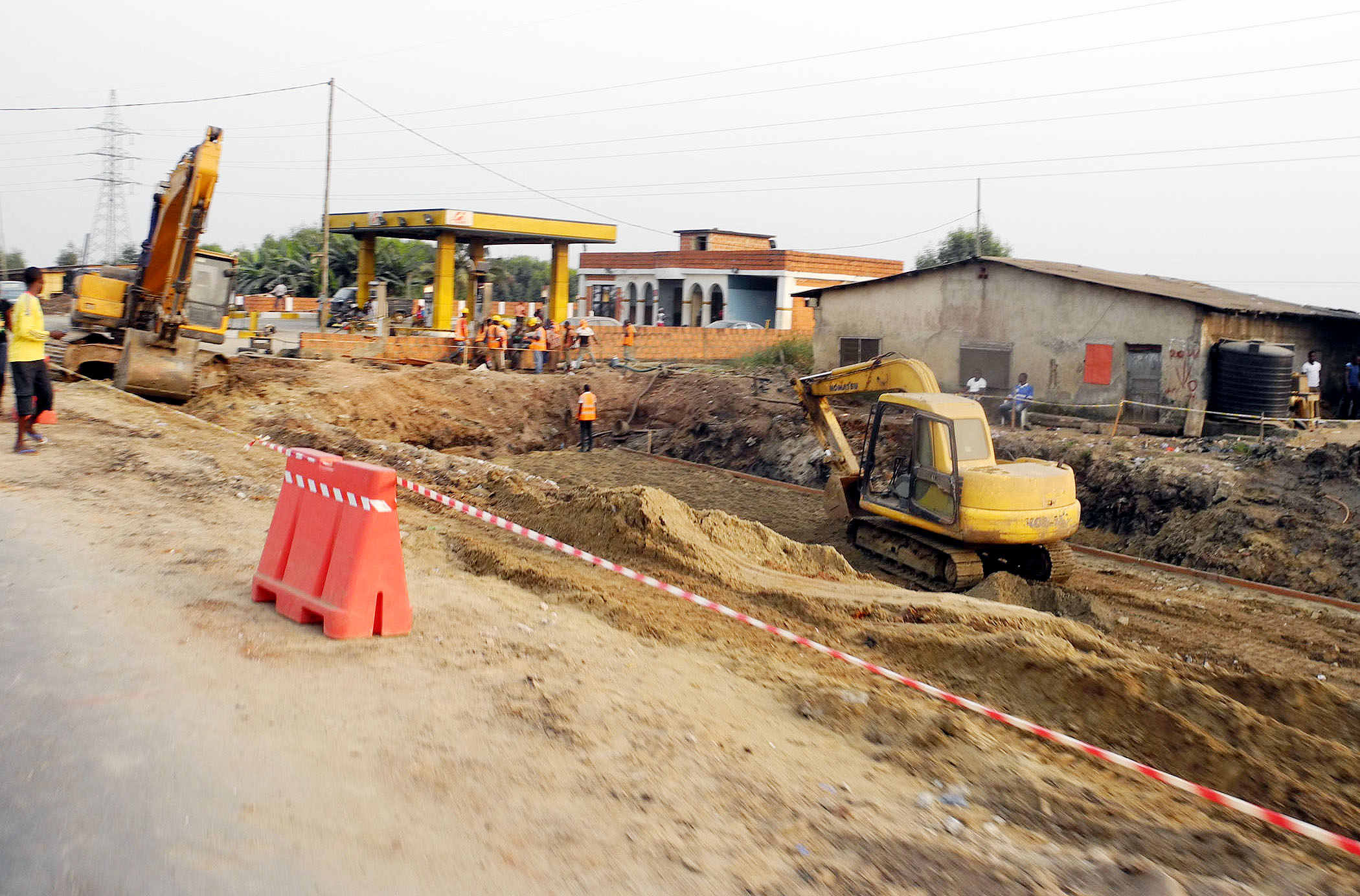
Yesterday, Lagos State Governor Akinwunmi Ambode, said work will begin on the Ajasa-Command and Abesan roads in two weeks, describing their present state as disheartening.
Work, he said, would begin on the Ajasa-Command axis, after Ile-Iwe junction, where the earlier construction stopped, explaining that the project will accommodate walkways, street lights and drainage systems.
The road has become deteriorated because of high volume of vehicles. Motorists, he said, preferred to link Ipaja and Ayobo through the axis from Alagbado.
The community leader, Alhaji Abdulrazak Olajide, said their problem was lack of road, pipe-borne water, health facility, electricity and schools.
He also added, that schools and health centres will be constructed within the community which is the highlight of the 2016 budget, he however told the residents in Aboru to be patient saying that the projects will be completed before the end of the year.
The Nigerian Bottling Company Limited is one of the biggest companies in the non-alcoholic beverage industry in the country and is the sole franchise bottler of The Coca-Cola Company in Nigeria.
Our company serves approximately 160 million people by producing and distributing a unique portfolio of quality brands, bringing passion to marketplace implementation, and demonstrating leadership in corporate social responsibility.
The Senior Buyer reports to Indirect Spend Procurement Manager (ISPM), or Direct Spend Procurement Manager (DSPM)
Purpose of the Job
Lead and execute sourcing of a specific complex category in the country. Indirectly report to and support Strategic Procurement Manager & Strategic Procurement Support Manager for the strategic sourcing of the specific category.
Ultimate responsible to optimize service levels provided to internal customers for the specific category in the country, in alignment with the Spend Procurement Managers of each country.
The Key Job Responsibilities
Analyze spot buys and take actions to reduce in the future
Execute spot buys for the category in the country
Execute strategic sourcing tasks for the category in the country
Support Strategic Procurement Manager to track savings value creation in relation to country BP
Support Strategic Procurement Manager & Strategic Procurement Support Manager in executing strategic sourcing for the category
Support Strategic Procurement Manager, Strategic Procurement Support Manager and Country Procurement Manager to integrate procurement indirect category savings in country BP
Contribute to manage knowledge of category
Check invoice accuracy and completeness
Introduce new suppliers
Maintain master data, including Purchase Info Record and catalogues
Manage contract expiration and maintain contract
Measure and improve contract utilization
Perform local communication on new contracts
Upload scanned contract in the system, update master data, and enable contract
Build supplier relationships that generate value for both Hellenic and the supplier over time for local categories in alignment with SPM & SPSM
Monitor SLA’s and KBI’s for assigned categories to country stakeholders
Follow-up on claim management process
Manage internal customer relationships for local categories in alignment with Spend Procurement Managers, SPM & SPSM.
Support the introduction of new processes and systems
Ensure CSR strategy implementation in alignment with the predefined standards and guidelines
Requirements
Knowledge:
University Degree (Business Administration, Finance, Engineering, Legal or similar) Knowledge in the category or in procurement (CIPS certification is a requirement for the role)
Masters degree or MBA will be of added advantage
Experience:
At least 3 years of experience working for an industry related to the category, or in procurement
Successful track record and development potential
Working experience in a cross cultural environment and in a matrix organization preferable At least 3 years of experience in SAP, other ERP system with focus on Purchasing
Skills:
Action Oriented
Functional/Technical Skills
Drive for Results
Customer Focus
Peer Relationships
Managing Diversity
Application Closing Date
28th January, 2016
How to Apply
interested and qualified candidates should APPLY
Benai Broadcasting Company Limited – We are a new Radio Broadcasting Station in Enugu State. We are desirous of engaging qualified and experienced staff for the following vacant positions below:
Deloitte is the largest private professional services network in the world. Our reputation for providing high quality services with integrity has earned us the trust of our clients and our people. If you’re ready for a career with a dynamic organisation in an environment that fosters professional development and career advancement, you’re ready for Deloitte. With 210,000 people in over 150 countries, Deloitte member firms serve more than 80 percent of the world’s largest companies as well as large national enterprises, public institutions and successful fast-growing companies.
We are recruiting to fill the following vacant positions below:
The United Nations Children’s Fund (UNICEF) – In September 2014 UNICEF began implementing a joint programme with UN Women on Women, Peace and Security (WPS) funded by the European Union (EU). The programme will support the Nigerian Government (Federal level), three Northern Nigerian States namely Adamawa, Gombe and Plateau and selected Local Government Areas (LGAs) to strengthen women’s leadership, advance gender equality and improve protection for women and children in conflict settings.
UNICEF is responsible for implementation of Component 2 of the programme, namely ‘to increase access to reporting mechanisms and protective services for girls and women affected by human rights abuses, including gender based violence, in 3 states of northern Nigeria”. This will entail enhancing avenues for reporting of child rights violation and Gender Based Violence in Plateau and Gombe States, strengthening access to and quality of services for children and women who have experienced violence (including gender based violence (GBV), abuse, neglect and exploitation and strengthening the information management system for collecting data on violations.
We are recruiting to fill the following vacant positions:
The minister of Agriculture and Rural Development, Audu Ogbeh, has said that agribusiness in the livestock sector will receive a boost to include commercial production of grass for feeding cattle.
Ogbeh said this would bring to an end the roaming of the cattle rearers and perennial conflicts between the pastoralists and farmers all over the nation.
The Minister said; “We are taking a radical step and we are beginning now. We are going to grow grass on a very large scale all over this country. I am as rigid as a rock that we are going to grow grass,” Ogbe maintained.
He disclosed that some grasses taken from Africa to Brazil and subjected to 16 years of research for use in that country, produces 28 per cent crude protein. It will be brought in for use under this programme. “By April ending (2016), the first grass supply should be on the way if not already arrived,” he said.
The minister noted that, with the continued existence of “cattle grazing and stock routes, conflicts still continue to grow, with cases of deaths rising along the routes.”
The Senate, on Thursday, January 21, justified the allocation of N115 billion for the National Assembly in the 2016 budget.
It also urged the government to explore tax avenues to fund the N6.08 trillion budget.
Making his contribution in continuation of the debate of the general principle of the 2016 Appropriation Bill, Senate Chief Whip, Senator Olusola Adeyeye, said N115billion allocation to the National Assembly represents only 1.8 per cent of the total budget figure of N6.08 trillion.
He said some of those who criticised the allocation spoke as if the vote was provided for senators and members of the House of Representatives alone to share.
The Osun Central lawmaker said the provision was also made to pay the salaries and allowances of those in the National Assembly bureaucracy and agencies.
He said: “I want to point out that I have looked at the budget and in the light of all the opprobrium that has been heaped on the National Assembly in the press, I want to report that this year’s budget contains a total request of N115 billion for the National Assembly. This represents only 1.8 per cent of the N6.08 trillion.”
On how to fund the budget, he said 54 per cent of the $3.8 trillion budget will be sourced from taxation.
He said: “If we are going to move this country forward, we must go back to what we did in the days of Obafemi Awolowo, Ahmadu Bello and Nnamdi Azikiwe.
Local manufacturers have expressed delight over the Central Bank of Nigeria, CBN, forex policy, saying it has raised production capacity and enhanced their operations.
Two leading local manufacturers in the packaging industry, acknowledged that the impact of the CBN policy on forex has more than doubled their productive capacities, helping them to meet increased demand for their products.
Deputy Managing Director, Tempo Paper Pulp & Packaging Limited, Nassos Sidirofagis, said since the policy’s implementation started, his firm has increased its production capacity from 50 per cent to 70 per cent.
He said this raised their export volume and foreign exchange earnings for their firms and the economy.
He said the policy has helped manufacturers to realise the urgent need to expand because of increasing demand for their products.
Sidirofagis said the company planned to start an expansion project due to expected increase in demand within this year and next. “We have since developed capacity to also attract foreign investors, who we believe are exploring investment opportunities in our organisation. Therefore, on all sides this is a win-win situation for Nigeria and local manufacturers”, he said.
The weekend attack on Nigeria Gas Company, NGC’s, pipeline connected to Chevron Nigeria Limited’s facility at Escravos, will have massive impact on the 600megawatts (Mw) capacity Olorunsogo National Integrated Power Project plant and others.
In a statement endorsed by the Special Adviser on Communications to the Minister of Power, Works and Housing,Hakeem Bello, explained that the sabotaged gas pipeline which contributes to the Escravos Lagos Pipeline System (ELPS) has led to a loss of 160million standard cubic feet of gas daily (mmsfcd) of gas.
The statement noted that at a cost of $2.50 per thousand standard cubic feet (scf), this translates to a loss of about $400,000 to the country on a daily basis (N78,800,000 daily) in gas volume.
It expalied that this is in addition to losses to be incurred daily from affected power generation ($1,988,223 or N391,680,000 daily). The total daily loss to the country is therefore estimated at N470,479,931. Repairs of the damaged pipeline is estimated as costing ($609,137 or N120,000.000).
FCMB Group Plc has plans for its subsidiaries to generate higher earnings in 2106.
The concerned firms are First City Monument Bank (FCMB) Limited, FCMB Capital Markets Limited and CSL Stockbrokers Limited.
In a statement, the holding company said its subsidiaries would also deepen the financial services support they provide to customers and the nation at large with their array of products and bespoke solutions to further enhance customer experience in their respective target markets.
Managing Director of FCMB Group Plc, Peter Obaseki, said:‘’2016 will be characterised by continued growth in retail contribution, stabilisation of wholesale banking revenues and increased focus on cost efficiencies’’.
He added that the retail banking business of the Group, which is driven by First City Monument Bank (FCMB) Limited, has continued to ‘’show greater resilience and earnings momentum over the years’’.
The Dangote Foundation and Bill & Melinda Gates Foundation have announced a combined financial donation of $100 million between 2016-2020 towards ending malnutrition in Nigeria.
This commitment is expected to improve the lives of at least five million families by 2020.
Chairman of Dangote Foundation, Aliko Dangote, who spoke at the official signing of the commitment with Co-chair Bill and Melinda Gates Foundation, Bill Gates, noted that tackling malnutrition in children has been identified as critical in reducing infant mortality.
The business tycoon said Nigeria had the second highest level of acute malnutrition at 18 per cent, globally as well as 37 per cent of chronic malnutrition rate, also second highest globally.
“Acutely malnourished children often fall very ill and die, and at least half of all children under the age of five years that die in Nigeria do so as a result of underlying or overt malnutrition.”
Both foundations said they will begin a joint planning process to determine the details of the partnership.
Programs will include community-based approaches and proven interventions linked to behavioural change, fortification of staple foods with essential micro-nutrients, the community management of acute malnutrition and investments in the local production of nutritious foods.