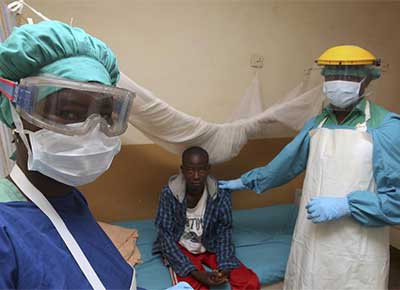
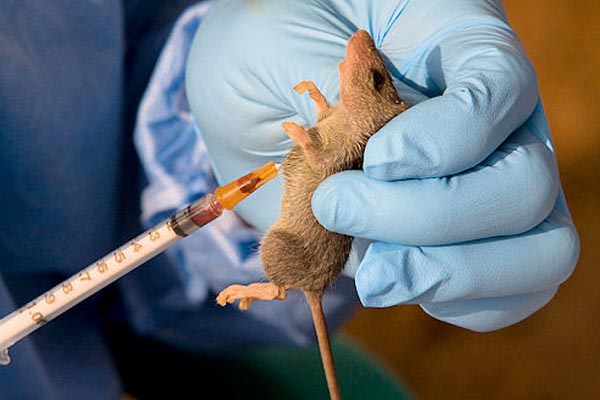
The Federal Capital Territory has recorded it’s first death of the deadly viral disease, Lassa Fever. Minister of Health, Prof Isaac Oyewole made this known during a visit to the National Hospital, Abuja where the patient died.
The medical director of the hospital, Jack Momoh, while confirming the death, said the patient, a 33 year old newly married man, was brought in unconscious from a private hospital in Kubwa, a suburb of Abuja, where he had been admitted for eight days.
He however died within 24hours of being at the national hospital. Search for all the primary and second contact of the deceased is ongoing.
Niger-Delta ex-militant Government Ekpemupolo (aka Tompolo),has shunned the order of a Federal High Court in Lagos to unconditionally appear today to answer a 40-count of alleged N13bn fraud levelled against him by the Economic and Financial Crimes Commission.
While all his co-accused, including a former Director-General of the Nigerian Maritime Administration and Safety Agency, Patrick Akpobolokemi, were present in court, only Tompolo failed to appear.
Justice Ibrahim Buba has consequently issued a bench warrant on Tompolo and ordered the police to produce him in court by all means.
A Nigerian firm, Epic Refinery Group, has signed a consulting agreement with a foreign firm, Chiron Refineries, for the construction of a 100,000 barrel refinery in Bayelsa State in south-eastern Nigeria.
The Managing Director of Epic Refinery, Barango Wenke Jnr., said that the agreement followed the granting of licence to the company by the Nigerian Government.
He said that his group had signed a consulting agreement with Mr. Kuperberg and his company to find the best match for Epic’s location, and that the future was Brownfield, as opposed to Greenfield, to find a lasting solution to the energy problems in Nigeria.
According to local media report, the agreement for the construction of the refinery was sealed in Lagos by representatives of both companies, led by Wenke Jnr., and Managing Director of Chiron Refineries, Ron Kuperberg, an expert on relocation and assets management.
Wenke disclosed that the initiative was his company’s response to the growing demand for refined products in the country in the midst of the sharp decline in the price of crude oil in the international market.
He noted that with the forecast that the price of crude oil may further drop to below $20, it was imperative that the country commence refining of its crude.
Less than 1% of Nigerians voluntarily subscribe to life insurance due to a general apathy for the business by the government and the citizens.
This revelation was made by the Director-General of the National Insurers Association, Mr Sunday Thomas, who expressed worry that Nigeria was among the least countries in terms of insurance contribution to the Gross Domestic Product at 0.72 per cent.
The Nigerian insurance sector, he said, was grossly untapped because it had not yet appealed to the informal sector, which constituted over 80 per cent of the population.
Thomas noted that it was common knowledge that insurance culture was very low among people in the informal sector, adding that it would take deliberate efforts to win the confidence of this sector.
English Premier League side Arsenal has reportedly tabled a £6 million bid for Nigeria youngsters Kelechi Nwakali and Samuel Chukwueze.
The youngsters, who shone at last year’s FIFA U17 World Cup in Chile in November, are expected with their guardians and academy officials in London this month to complete the transfer to the London Gunners.
Last year, Nwakali’s agents demanded £4m from another EPL side Manchester City after he underwent trials at The Etihad.
City officials felt the player was overpriced and did not follow up on the deal.
Kelechi’s older brother Chidiebere is on the books of City and his own transfer three years ago was put at over £3m.
The Lagos State Government has announced that it is planning to extend the operation of the state’s Bus Rapid Transit (BRT) scheme to 24, as it is the wish of the present administration that the BRT buses work at night..
The state government is also intensifying efforts on the state’s Light Up Lagos project, to provide functioning streetlights in every nook and cranny of the state.
The Lagos State Commissioner for Energy and Mineral Resources, Mr. Wale Oluwo, on Wednesday in Ikeja said the efforts being made by the government to make BRT buses operate for 24 hours and provide streetlights everywhere in the state were in line with the campaign promise of Governor Akinwunmi Ambode.
The commissioner said most major highways and streets had their streetlights working, adding that repairs of streetlights were being carried out in other strategic places.
He noted that places from Berger to Lekki, Ikorodu to the Lagos Island, Ikeja, Victoria Island and Ikoyi, among others, were already enjoying functioning streetlights at night.
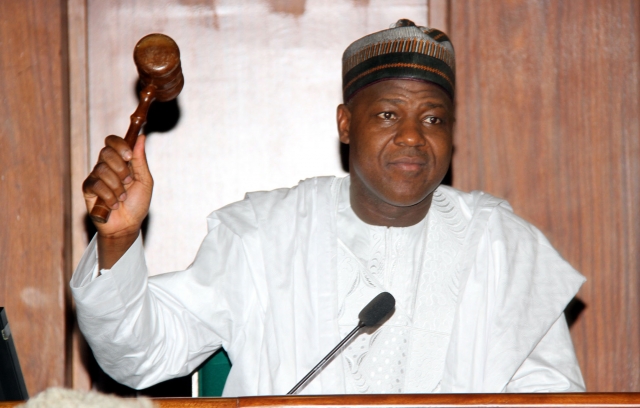
Yakubu Dogara, Speaker, Nigeria's House Representative Denies Media report
The House of Representatives has commenced an amendment of the National Minimum Wage Act, 2004 to make it mandatory for companies with foreign interests to pay the minimum wage of N18,000 to their workers.
The Act, under its current provisions, exempts such foreign companies from paying the wage as they are included on the list of establishments exempted from the wage policy.
However, on Wednesday, a former trade unionist, Mr. Peter Akpatason, sponsored a bill to amend the Act to reverse the trend.
Akpatason, who is a member of the All Progressives Congress from Edo State, informed the House that while some of those companies might have a fewer number of employees in some cases, they raked in more revenues than companies with a higher number of workers.
The bill was titled, “A Bill for an Act to Amend the National Minimum Wage Act Cap N6, Laws of the Federation of Nigeria 2004, to Exclude the Establishments that have Foreign Participation from the List of Establishments Exempted from the Payment of the National Minimum Wage and for Other Matters Related Thereto.”
Akpatason argued that such companies, which did not have up to 50 workers as pegged in the Act, made “millions and billions” of revenue yearly, but did not pay their employees the minimum wage.
To address the issue, he added that the number of workers applicable in such instances should be amended from 50 to 20 to cover the foreign companies.
Akpatason argued that by not paying the minimum wage, the country was also losing the revenues accruable to it from the operations of the companies.
He said the Act defined foreign companies to include firms that had up to 50 per cent equity participation by foreigners.
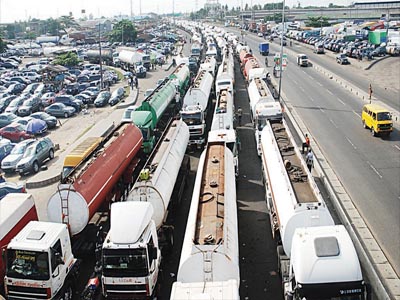
NNPC Triples Daily Petrol Supply, Deploys 1,661 Trucks
The Federal Airports Authority of Nigeria has begun moves to permanently move petroleum tankers out of the Murtala Muhammed International Airport access road in Lagos.
The Managing Director, FAAN, Mr. Saleh Dunoma, said that the move was part of the efforts to ensure safety and security on the access road.
A statement by the General Manager, Corporate Affairs, FAAN, Mr. Yakubu Dati, stated that in line with the agency’s resolve, officials of the Federal Road Safety Corps recently paid a working visit to FAAN corporate headquarters, Lagos.
Issues discussed during the visit included how to move the petroleum tankers out of the area and relocate them to a safe and secure place.
The Federal Executive Council on Wednesday approved an additional $200m loan from the International Development Association, an arm of the World Bank, in support of Lagos State Development Policy Operation.
The Minister of Information and Culture, Alhaji Lai Mohammed; and the Minister of Power, Works and Housing, Mr. Babatunde Fashola, briefed State House correspondents at the end of the meeting presided over by President Muhammadu Buhari.
Mohammed explained that the loan would enable the Lagos State Government to complete some if its desirous projects, such as the 61Km 10-lane Lagos-Badagry Express way.He said the facility would also enable the state government to rehabilitate the inner roads in Apapa in addition to some other major ongoing works.
Fashola explained that the facility was not a new loan but a segment of a programme of developmental initiatives which was approved in 2010 with a total sum of $600m for Lagos State,meant to be disbursed in tranches of $200m each year starting from 2011 to 2013,and to be refunded over a 40year period,a 10-year moratorium and 0.5 percent interest.
He said the arrangement suffered delays as a result of partisan political differences in the last dispensation.
He explained also that such loans are deducted at source at monthly FAAC meetings; therefore the risk of defaults is minimal.
Nigeria’s Minister of State for Petroleum Resources, Emmanuel Kachikwu said he doesn’t expect oil prices to fall below $20 and that the current $30 price was never really anticipated by members.
Kachiwu spoke to CNN on the sidelines of an energy conference in Abu Dhabi, United Arab Emirates on Tuesday where he said an Organisation of Petroleum Exporting Countries (OPEC) emergency meeting is necessary for member countries to review strategies if they must continue to survive in the oil business.
He said a time has come for member countries to sit back, have a meeting and dialogue once more without the sort of tension that trailed previous meetings.
Asked whether the dialogue will lead to action especially by Saudi Arabia giving up around 1.5m barrels crude in the market, he said, “I think ultimately for the interest of everybody some policy change will happen…The symbolism will be more important to me than the numbers and that symbolism is essential if you are going to have a meaningful dialogue with people like Russia or the rest.”
“I expect to see it on those fringes of $30, a month or two months I expect to see it to begin to climb. I am optimistic that 2016 we are going to $50 barrel type level but the first quarter is going to be very rough,” he said.
Kachikwu said members must agree on common positions else, “the meetings won’t make any meanings until you have both protagonists agree to common positions.
Nigeria Postal Service, NIPOST, Area Postal Manager, Plateau Territory, Rev Danso Yinka has said that total compliance of Stamp Duty Act can generate revenue worth over N1 trillion to the federation account annually.
Yinka who made this known to reporters at the launching of Stamping Protocol Promotion campaign yesterday in Jos, said that NIPOST is one of the government’s oldest agencies that have the potential and capacity to create jobs and wealth in enormous dimension for the citizenry.
He said that the Stamp Duty Act should be seen as an alternative source of revenue to the government if only the government and the people can enforce the implementation/compliance, the resultant effect of this is bringing billions of naira into the coffers of government of Plateau State in particular and the entire nation at large on an annual basis.
Yinka said that NIPOST has the power to administer the Stamp Duty Act as a means of creating huge revenue base for the country’s economy, but remains unpopular till date among its targeted audience, the citizenry. Majority of Nigerians are not aware of the stamp duty, hence the need to sensitized the public i n the Plateau.
In its effort to step up the fight against Lassa fever, the federal government yesterday earmarked the sum of N140 million as funds to tackle the disease.This came as the total number of deaths has now risen to 41.
Meanwhile, the Ondo, Oyo and Nasarawa State governments on Tuesday confirmed cases of the disease in their respective states.
At a joint press briefing in Abuja on Tuesday, the Minister of Health, Prof. Isaac Adewole, and his Information and Culture counterpart, Alhaji Lai Mohammed, stated that efforts are being made by government to arrest further spread of the disease, which is now present in 10 states of the federation.
Adewole said: “With respect to the cost, we are currently handling it within our in-house resources, using drugs that we had in stock. But we are trying to replenish our stocks; we estimate that we will spend N56 million to replenish the drugs. And in order to mount the response, we are looking at N140 million.
“So everything is manageable within the budget of the Federal Ministry of Health, therefore we need not panic for now. When we set up an inter-ministerial committee to ensure that we finally declare Lassa fever dead, and buried completely, we will come up with the budget.”
The minister explained that government would be discreet and transparent with any funds geared towards fighting the disease, adding: “We will also be very realistic in line with the posture of the present administration. We are not going to declare a bazaar, so no one should expect to feast on Lassa fever.”
On the current status of the disease, Adewole stated that: “As at today, records from our surveillance show that the number of suspected cases is 93, number of laboratory confirmed cases is 25 and the number of reported deaths is 41, with a case fatality of 44.0 per cent.”
Foremost financial Institution; Guaranty Trust Bank (GTBank), has launched the #GTBankMobileWin100k competition to reward its mobile banking customers by availing them a chance to win N100,000 weekly in the mBank January rewards. The competition will run throughout the month of January 2016 and ten lucky customers will win N100,000 weekly during the period.
To participate in the competition, customers are required to perform two banking transactions weekly on the GTBank Mobile App, such transactions include funds transfers, airtime purchases, bills payments and purchases on the SME MarketHub. Multiple entries are allowed and winners will be notified by telephone or email.
The GTBank Mobile App is a versatile mobile application that merges the bank’s internet banking and mobile money service offerings to allow customers enjoy 24/7 flexibility in carrying out banking transactions without having to visit the Bank’s offices. Using the mobile app, customers can confirm transactions, transfer funds, pay bills and check balances from the comfort of their mobile devices.
The app also host other amazing features such as the SME MarketHub; an online e-commerce platform that allows businesses owners create online stores to sell and promote their offerings to millions of buyers online.
Commenting on the launch, Segun Agbaje, Managing Director / Chief Executive Officer of GTBank said: “Understanding that customers are always on the go; mobile banking puts us in the palm of our customers and provides a unique opportunity to offer quick and more efficient ways of providing banking services. As a Bank, we remain firm on our objective to deliver value adding services that are tailored to meet the diverse needs of our ever-growing customer base by leveraging technology to make banking more convenient for all our customers.”
GTBank has consistently played a leading role in Africa’s banking industry. The GTBank brand is regarded by industry watchers as one of the best run financial institutions across its subsidiary countries and serves as a role model within the financial service industry due to its bias for world class corporate governance standards, excellent service quality and innovation.
The naira maintained its plunge against the dollar at the parallel market on Wednesday, January 13, selling at N300 to the dollar.
The value of the currency had continued to crash shedding 6.5 per cent of its value from N277 to the dollar which it sold last weekend.
A BDC staff who spoke with Leadership said she did not go the work as there was nothing happening at the office since the CBN refused to sell dollars to them.
The acting President of the Association of Bureau de Change Operators of Nigeria (ABCON) Aminu Gwadabe had noted that the move by the central bank is bound to put almost 12,000 individuals out of job.
Many of the BDC staff are waiting for Friday when their umbrella body will meet to know their fate. According to a BDC operator, “we don’t know yet if the CBN will allow us to buy from banks. We hope to find out at the meeting on Friday.”
Traders at the market said that they were concerned about the depreciating naira exchange rate in the black market. They, however, expressed optimism that the policy might impact positively on the market in the long run.
Oil prices soared on Wednesday, January 13, as positive Chinese trade data and an unexpected draw in weekly U.S. crude oil inventories gave investors reasons to buy crude futures.
Brent crude, the global benchmark, was up 63 cents at 31.49 dollars a barrel.
U.S. West Texas Intermediate crude (WTI) was up 69 cents at 31.13 dollars a barrel.
“The API inventory data triggered a profit-taking wave, that’s the main reason for this uptick,” said Hans van Cleef, senior energy economist at ABN Amro in Amsterdam.
“But the overall sentiment is still negative, meaning downside risk is still greater than upside potential.”
U.S. crude stocks fell unexpectedly last week, data from industry group, the American Petroleum Institute showed on Tuesday.
China reported exports dipped just 1.4 per cent in U.S. dollar terms in December, compared to forecasts of an eight per cent drop, positively surprising world markets.
The world’s second-biggest oil consumer has also been taking advantage of the oil price rout to stock reserves, increase exports of refined products, and may be set to overtake the United States as the world’s largest importer.
Global audit firm, Pricewaterhousecooper in its recent forecast on the performance of the Nigerian economy in 2016, said it will struggle to grow at 4.0 per cent of Gross Domestic Product (GDP).
PWC said: “Our economists have developed three economic scenarios to help public and private sector organisations prepare for an uncertain environment in 2016. In these scenarios, we explored two types of shocks: an oil price shock and a political shock.”
“We expect that even under a benign economic scenario, the Nigerian economy will struggle to realise any growth much higher than 4.0 per cent.
“Nigeria’s economy has tended to suffer following an oil price crash, although its resilience has improved in more recent times. Getting the policy response right matters as falling economic growth imposes a real ‘human’ cost on the population,” PWC said in its recent 2015/2016 World Economic Outlook.
This is coming as the International Monetary Fund (IMF) recently cut Nigeria’s GDP growth forecast for 2016, to 4.0 per cent growth rate as the country continues to contend with the challenge of declining income from the drop in crude oil prices.
The latest growth forecast by the fund is 2.25 percentage points lower than its last year’s projection for Nigeria.
The multilateral donor agency stated this in its 208-page World Economic Outlook (WEO) titled: “Adjusting to Lower Commodity Prices,” released in Washington DC, recently.
Orange Telecom and Bharti Airtel International (Netherlands) BV has sealed a pact leading to Orange’s acquisition of Airtel’s operations in Burkina Faso and Sierra Leone.
Orange, on Wednesday, January 13, stated that they will acquire 100 per cent of the two companies’ share capital.
This follows the slump in profitability for global mobile operators in Africa posing serious challenges to their investments. The consolidated revenue of the Burkina Faso and Sierra Leone subsidiaries is around 275 million euros. These acquisitions will be implemented in partnership with Orange’s subsidiaries in the Côte d’Ivoire and Senegal.
The outlay for Orange for these transactions will be based on the financials of Airtel’s two subsidiaries for the year ended March 31, 2016 and will represent the equivalent of 7.9 times Airtel’s EBITDA (Earnings Before Interest, Tax, Depreciation and Amortisation) in these two countries at this time. The completion of these transactions remains subject to approval by the competent authorities.
These acquisitions provide a clear illustration of Orange’s international development strategy, which places a priority on accelerating growth in high-potential, emerging markets where the Group is not already present.
Through this deal, Orange will reinforce its presence in Africa with two additional countries, adding almost 5.5 million customers to its mobile customer base. This acquisition marks an important step forward in Orange’s dynamic growth strategy and will bring the Group’s African footprint up to 20 countries in 2016.
This is further to the initial agreement signed between Airtel and Orange in July 2015 regarding the potential acquisition of Airtel’s operations in Burkina Faso, Sierra Leone, Chad and Congo Brazzaville. The agreements regarding potential transactions in the remaining two countries have lapsed. Lazard and Société Générale were advisors to Orange for this transaction. Airtel was advised by Arma Partners LLP.
A new study by global technology research and consulting firm International Data Corporation (IDC) said Africa may well be the next frontier for growth and expansion for global telecom operators, but a number of major players have encountered serious challenges around the profitability of their investments in trying to establish a sustainable and economically viable footprint on the continent.
The move was spurred by the steadily declining revenues that Etisalat was pulling in from its international subsidiaries, with all of its West African operations (including Nigeria) contributing just seven per cent to its overall revenues in 2014. IDC also said Orange Telecom talks with Bharti Airtel to acquire subsidiaries in Francophone and Anglophone Africa is largely due to concerns around sustainability and profitability.
Paul Black, director of IDC’s telecoms program for the Middle East, Africa, and Turkey said “The poor level of infrastructure – particularly in relation to electricity supply – is one of the key challenges that telcos encounter when it comes to deploying and maintaining top-quality network operations in Africa.”
“This issue has consistently affected the profitability of telcos due to the increased levels of capital and operational expenditure they must undertake in building and maintaining a passive telecom infrastructure. Some global telcos have also failed to adapt and implement strategies that have succeeded in other regions. Indeed, the majority of global telcos have been unable to localize their global strategies to suit the unique operating environments of the African market.”
He said “The operational challenges facing telcos in Africa have driven growth in the continent’s third-party telecommunications infrastructure management business, and IDC expects the pressing need for telcos to reduce their costs and increase their levels of control to sustain growth in this space,” continues Black. “
IDC advises that in order to increase the likelihood of success, telcos wishing to pursue growth and expansion in the African market must focus on developing enterprise products and services that appeal directly to the wants and needs of the local market, and to small and medium-sized businesses in particular.
The bear sentiment retained dominance on the floor of the Nigerian Stock Exchange, NSE, on Wednesday, January 11 following investors panic sell off.
The All Share Index (ASI)-the benchmark index slid to a new low at 25,103.05 points as against its opening index of 26,034.93 points, representing a drop of 3.6 per cent.
Aggregate market value of all quoted equities on the NSE slipped from N8.954 trillion to close at N8.633 trillion, indicating a loss of N321 billion.
Nestle Nigeria, Nigeria’s highest-priced stock, led the losers with a loss of N41 to close at N779. Dangote Cement followed with a loss of N7.65 to close at N145.45. Seven-Up Bottling Company dropped by N7 to close at N175. Nigerian Breweries declined by N4.84 to close at N97.18. Lafarge Africa lost N3.55 to close at N91.31 while Okomu Oil Palm dropped by N3.51 to close at N32.64 per share.
Total turnover stood at 369.23 million shares worth N1.69 billion in 2,893 deals. Diamond Bank was the most active stock with a turnover of 88.68 million shares worth N177.37 million in 32 deals. Unity Kapital Assurance followed with a turnover of 70 million shares valued at N35 million in a deal while Zenith Bank placed third on the activities chart with a turnover of 51.44 million shares worth N564.66 million in 536 deals.
The three contrarian advancers yesterday were Ashaka Cement, which rose by N2.26 to close at N26.50; Custodian and Allied, which added 14 kobo to close at N4.20 and NEM Insurance, which inched up by two kobo to close at 67 kobo per share.
The Southward movement at the Nigerian stock market on Wednesday, January 13, escalated to panic trading as investors scrambled for exit over concerns that the global decline in crude oil price could worsen Nigeria’s volatile foreign exchange management.
With more than 11 losers to every gainer, the market was in full sell mode yesterday.
The use of open market sell orders, which mandate brokers to sell at prevailing prices, turned the market into a complete buyers’ market, piling up losses on the divesting investors.
Aggregate market value of all quoted companies stood at N321 billion in the marked down that followed the flood of sell orders. There were 34 losers to three gainers, while several other stocks were stuck at their nominal value of 50 kobo each.
The mid-week steep decline worsened the negative eight-day average year-to-date return to -12.4 per cent.
In the past three trading sessions, the stock market has lost an average of 7.6 per cent in consecutive negative trading sessions.
The Central Bank of Nigeria, CBN, is said to be grooming Travelex, a global foreign exchange (forex) dealer, to replace Bureaux De Change operators (BDCs) to retail forex for end users, The Nation gathered.
Travelex is the world’s largest foreign exchange bureau specialized in international payments, bureaux de change and issuing prepaid credit cards for travelers.
In 2000, it bought Thomas Cook’s worldwide forex business for £440 million, expanding significantly its international operations.
Travelex has been opening retail shops at airports and in highbrow areas to enable it meet the rising forex demand, and fill the vacuum created by the CBN’s stoppage of dollar sales to BDCs.
Some of the outlets are in Lagos, Port Harcourt, Kano and Abuja, Travelex said in a statement last September.
The apex bank on Monday, January 11, suspended dollar sales to BDCs to conserve the foreign reserves and protect the naira. The move is also meant to enable the apex bank meet forex demand by domestic importers.
Aminu Gwadabe, Chief Executive Officer, SABIL Bureau De Change Limited, who confirmed the development, said CBN’s desperation to meet dollar demands from banks, government agencies and importers prompted it to give dollar import licence to Travelex.
Gwadabe, who doubles as the President, Association of Bureaux De Change Operators of Nigeria (ABCON) said Travelex has secured approval to open more offices across the country where dollar will be directly sold to banks, government and other end-users in a move to bridge the supply gap in the economy.
But CBN spokesman Ibrahim Mu’azu said Travelex will not take the place of BDCs. He, however, said the CBN’s stoppage of BDCs’ funding will create more room for Travelex to control the retail market space.
He said: “They (Travelex) have been in the market for a long time and will do more retail than before, going forward.”
Gwadabe insisted that although licensed as a wholesale supplier and forex importer into Nigeria, the intention of Travelex is to take over the retail segment of the forex market, where BDCs operate.