The International Finance Corporation, in conjunction with the Central Bank of Nigeria, is set to establish a collateral registry, which will enable individuals to obtain loans from financial institutions using movable assets and intellectual property as collateral, in the first quarter of 2016.
This was disclosed by the Central Bank of Nigeria (CBN)’s deputy director, Development Finance Department, Mainasara Mohammed, during a workshop for journalists on Credit Reporting and Collateral Registry organised by the CBN in collaboration with the International Finance Corporation (IFC) in Lagos.
A collateral registry is a databank where moveable assets such as cars, inventories, and equipment as well as intellectual properties are registered for the purpose of being used as collateral to obtain facilities from financial institutions.
According to Mohammed, the collateral registry is aimed at getting financing across to micro, small, and medium scale businesses without using immovable collateral such as land as bonds. He noted that the launch of the registry is expected to help increase the level of loan that goes into the MSME sector and eventually drive growth in the Nigerian economy.
On his part, the project manager, Nigeria Financial Infrastructure Project at the IFC, Ubong Uwah, said that the collateral registry will also contribute to economic growth by decreasing the cost of credit as “better risk management and prudent lending paves way for efficient lending, lower non-performing loans, lower interest rates, and a move from informal to formal lending.”
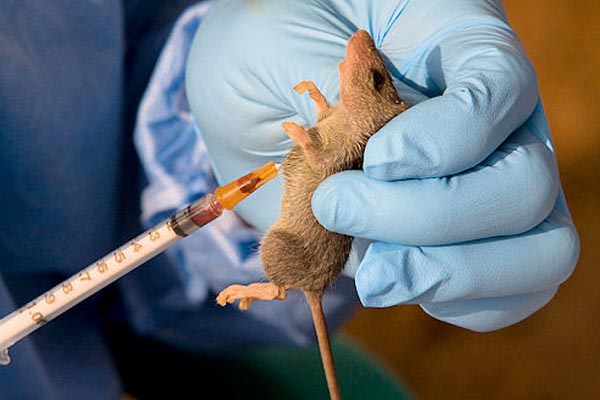
The federal government has warned that the present Lassa fever outbreak ravaging some parts of the nation might end up claiming the lives of over 1,000 Nigerians, adding that over 17 states in the country have been affected, with Edo, Rivers, Nasarawa and Taraba States as the virus hotspots, while a high incidence of the disease outbreak has also been recorded in Bauchi, Kano and Niger States,
This was stated by the Minister of health, Prof. Adewole at the National Council on Health (NCH) emergency meeting with Commissioners for Health from all the states of the federation and other stakeholders in the health sector in Abuja, where he further stated that the present epidemic of the virus is a thing of national embarrassment, and ignorance of the virus is increasing its spread.
While stating that the meeting’s main objective was aimed at aiding discussions on the control of the Lassa fever outbreak, the minister appealed to all health practitioners in all states not to withhold anything from their political leaders.
The minister disclosed that the Lassa fever virus had spread to 64 local governments in 17 states, with 212 suspected cases recorded, and strongly warned that the consequences of not doing enough to contain the spread of the virus might result in a wider spread of Lassa fever around the country.
Adewole indulge the public to desist from the traditional method of drying grains and other food items on road pavement, adding that food items might be contaminated by rats.
In light of the mushrooming ICT evolution and innovation experienced across the digital world in the past few years, as the New Year approaches, it is clear that 12 months of great possibility and opportunity lie ahead of us. Instead of trying to make precise predictions about our incredibly dynamic industry, I’ve listed my top trends to watch during the coming year.
Betting on online
Nigeria is still picking up pace in terms of individuals and businesses moving online. The rate of adoption has increased in the last few years but 2016 is going to see the barriers falling away and many more Nigerians flooding online. As this consumer shift happens, more businesses will look to retain their previously offline customers and reach this bigger market. Businesses both large and small will turn to search marketing to drive new traffic to their websites, as online advertising becomes the lifeblood of those trying to get ahead in the digital economy.
2. Offline events will drive online search
Advertisers will take advantage of the direct link between offline events and the subsequent surge in online search. People immediately search the internet for news, insights and video relating to major offline events. From sports to politics and natural disasters, offline events provide savvy and fast-acting advertisers the opportunity to make the most out of rising online search activity surrounding each event. The reverse is also true: If customers can’t find you online to make an evaluation then you’re missing a substantial portion of the market straight away.
3. Data beats opinion
Every day, hundreds of millions of people search on Google – we are able to see trends emerge in real time. Access to search trend information is available to everyone through Google Trends. For example the Xenophobic attacks in South Africa was one of the most popular searches in Nigeria in 2015. This year we expect to see an increase in the use of search trend data in structuring online marketing campaigns. This new level of insight into the trending online searches will empower advertisers to move away from relative guesswork and work from an informed point of reference. Marketing and Brand Managers are also able to make comparisons with their competitors using Google Trends.
4. Websites get better and better
More web users are starting to make use of the readily available free and easy-to-use tools to improve the usability and functionality of their websites. You can use advanced tools to turn your website into a more effective sales tool by understanding how visitors use your website. For example, Google Analytics allows you to track user browsing behaviour on your site (which pages they visit, what point they leave the site, how much time they spend) and Google Website Optimizer can suggest ways to improve the layout and format of your website to make it more user friendly.
5. Going mobile, Going big
More than 80% of Google’s mobile search queries come from outside the U.S., and Nigeria has shown growth in mobile search traffic. More people do business on their mobile phones than on their laptops because mobile search gives users instant, contextually relevant access to information anytime, anywhere. Nigeria’s mobile penetration massively exceeds the broadband penetration, and even with the expected rise in broadband access in 2016, it isn’t going to catch mobile. So, it is important for Nigeria’s advertisers to think mobile as they head into the New Year.
6. Telemedicine
Increased mobile penetration means better access to cutting-edge health technology, potentially improving the health and welfare of people across Africa and further afield. For example, the Wall Street Journal reports of ECG apps that have today been approved by the U.S. Food and Drug Administration for consumers and validated in many clinical studies.
7. The internet is social
The social media landscape will continue to evolve at a break-neck pace and many companies will launch marketing campaigns within the social media space to take advantage of the massive power of social networks. From the video of an aspiring rock band on YouTube, to on-the-ground footage of flashmobs; from one person’s political Twitter stream, to a sophisticated multi-party political blog portal, the Internet is providing greater transparency into what is happening in the world, and in the process widening our perspective.
8. Cloud computing is in your future
Cloud computing moves all of our computer-based activities – searching, emailing, watching videos, creating documents, and more – to a virtual space referred to as ‘the cloud’. By keeping and accessing the information that’s important to us online, or in the cloud, we’re bringing an unprecedented level of flexibility and accessibility to our lives. Infrastructure investments will increase the availability of access; thereby driving mobile web adoption, new cloud computing services, and in turn, demands for media and advertising.
9. High-tech cross-cultural communication
Developments in translation, voice search and text-to-speech technology will empower people to more easily communicate across languages; thereby breaking down cultural barriers and increasing cross-continental trade.
10. Video will continue to take centre stage
Online video viewing will become even more popular. About 400 hours of video were added to YouTube every minute in 2015. 2016 will see not only a continued growth, but an explosion in innovative uses of video within marketing campaigns.
Taiwo Kola-Ogunlade
West Africa Communications & Public Affairs Manager, Google
The equities market recorded marginal loss of N33 billion on Tuesday, January 19, when market capitalization stood at N7.723 trillion from N7.756 trillion it opened.
Market turnover closes positive as volume moved up by 30.66 per cent against 58.83 per cent decline recorded in the previous session.
Guaranty Trust Bank Plc, Diamond Bank Plc and Zenith Bank Plc were the most active to boost market turnover. Zenith Bank Plc and Guaranty Trust Bank Plc top market value list. S
terling Bank Plc leads the list of active stocks that recorded impressive volume spike at the end of the trading. Market breadth closed negative as Lafarge Africa Plc led 24 gainers against 27 losers topped by Nestle Nigeria Plc at the end of the trading session which was an unimproved performance when compared with previous outlook.
Top on gainers’ log was Lafarge Africa Plc with a gain of N1.70 kobo to close at N80.00 kobo, followed by GlaxoSmithKline Plc with N1.26 kobo to close at N27.00 kobo and UAC of Nigeria Plc with N0.82 kobo to close at N17.22 kobo per share.
On the other hand Nestle Nigeria Plc topped losers chart with N27.95 kobo to close at N675.10 kobo, Seplat Petroleum Development Company Plc with N8.40 kobo to close at N159.72 kobo per share, Mobil Nigeria Plc with N7.25 kobo to close at N137.75 kobo and 7-Up Bottling Company Plc with N4.25 kobo loss to close at N162.00 kobo per share.
Chairman of the Federal Inland Revenue Service, FIRS, Tunde Fowler, on Tuesday, January 19, said the operation of the Nigeria National Petroleum Corporation, NNPC, may be shut-down over tax evasion.
Fowler said FIRS has the constitutional powers to shut-down operations of any government agency over the offense, which NNPC was found to be committing through its subsidiary company, Duke Oil Limited.
This was just as the Nigeria Customs Service said it has no record of oil import by Trafigura Nigeria Limited, despite having records of the company’s total export of 12.5 million metric tonnes under the swap arrangement with the NNPC.
The FIRS Boss, who was responding to question posed by the Zakari Mohammed-led House of Representatives ad hoc committee investigating oil swap agreements entered by NNPC, said the laws allow the service to shut-down such erring agencies and to report them to EFCC for prosecution, until all outstanding taxes were paid.
The chairman told the committee that FIRS was not even aware of the existence of the company until the invitation by the committee was extended to them, which cumulatively paid N26.5 million taxes since its inception in Nigeria.
He said upon the receipt of the committee’s invitation, seeking details of some companies, including Duke Oil Limited, the FIRS went into research and found out its existence owned by NNPC with its registration in Panama back in 1989.
On his part, Assistant-Comptroller General of Customs (ACG) in charge of port operations, Andrew Sule told the committee that the service was not aware of any swap deals by NNPC with any company.
He said the Nigeria Customs only records crude oil exports and imports by companies, without having knowledge of the status of such activities by the oil companies.
Two of the nation’s refineries located in Kaduna and Warri, Delta State, were shut down by the Nigerian National Petroleum Corporation, NNPC, due to pipeline vandalism by the Niger Delta militants last week.
The refineries, with a combined capacity of 235,000 barrels per day, resumed production in December and January respectively after long maintenance work.
Sources at the refineries said the work stopped on Sunday, January 17.
Spokesperson of the corporation, Mr Ohi Alegbe, confirmed the shutdown of the refineries which he said was to avoid any fire incident along the pipelines.
He said the corporation shut-in the pipelines both for gas and crude oil along the affected areas to avoid further damage to the two refineries. He said the NNPC will continue to monitor the progress of the refineries and the Nigeria Gas Company and update the public at the appropriate time.
The Central Bank of Nigeria , CBN, on Tuesday, January 19, said the number of borrowers under the credit bureau system in the country climbed to 26,639,641 in 2015 from 14,523,780 in June 2012.
The number of registered borrowers is also 29,285,471 from 18,640,000 borrowers recorded in June 2012.
At a media awareness and education programme for credit reporting in Lagos yesterday, a Deputy Director at the Central Bank of Nigeria (CBN), Steven Nwadiuko, said the development was a manifestation of the growth of the credit reporting industry in Nigeria.
Nwadiuko expressed the apex bank’s commitment to providing the required regulatory support to enable the credit reporting industry to thrive in Nigeria, adding that the CBN has made it mandatory for all financial institutions to have data exchange agreements with at least two credit bureaux.
He said:“All banks are required to obtain credit report from at least two credit bureaux before granting any facility to their customers, while quarterly portfolio checks must also be carried out to enable them determine borrowers’ current exposure to the financial system.
The federal government has been tasked to invest $500 million in the information and communication technology, ICT, to help revamp the economy and create jobs.
The Chairman of Zinox Group, Chief Leo-Stan Ekeh, gave the advice in Lagos at an interactive session with ICT correspondents.
Ekeh, who stressedthat the miracle to turn around the country’s economic lies within the ICT sector, said,:“The country is about 75 per cent analogue. Tell me the commercial sector that does not need ICT? Most importantly, government must have a rethink.”
He stated that unemployment in the country “is a time-bomb waiting to explode, while tertiary institutions are releasing graduates in hundreds of thousands.”
Trying to profer a solution, he said:“We always have a platform, mostly in this 21stCentury where people can use their brain and create wealth.”
Transactions on the Nigerian Stock Exchange , NSE, closed Tuesday, January 19, on a negative note as the All Share Index plummeted by 0.42 per cent to close at 22,456.32 points from 22,550.83 on Monday, January 18.
Similarly, market capitalization also dropped from N7.756 trillion to N7.723 trillion.
The market recorded only 24 gainers today led by International Breweries with a gain of N1.40 or 9.40 per cent to N16.30 followed by NEM Insurance with a gain of N0.05 or 8.62 per cent to close at N0.63 Unity Bank that gained N0.59 or 8.47 per cent to close at N0.64 per share.
On the other hand, Okomu Oil topped 27 stocks on the losers’ chart with N3.02 loss or 9.74 per cent to close at N27.99 followed by Guinness that lost 9.89 or 9.61 per cent to close at N93.00 per share, and Champion Breweries that lost N0.29 or 8.58 per cent to close at N3.09 per share.
All together, a total of 256,439,035 shares worth N1.974 billion exchange hands in 4,731 deals.
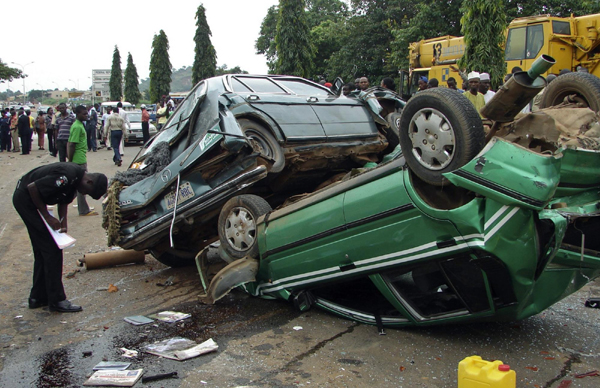
The Chief Executive of the Federal Road Safety Corps, FRSC, Boboye Oyeyemi, on Tuesday, January 19, said that the number of road traffic accidents recorded in 2015 dropped by 398 representing 9.3 percent.
The FRSC Boss said the number of fatalities recorded was reduced by 3,068 representing 1.4 percent.
Oyeyemi, who spoke at a press conference in Abuja, said 439 crashes were recorded with 3,113 fatalities. He said the number of people rescued by personnel of the corps was 1,207 and a total of 25,961 persons were apprehended for 28,631 offences throughout the period of operations.
He said of the offenses, speed related violations accounted for about 54% while dangerous driving was about 17%.
Oyeyemi said President Muhammadu Buhari has approved the 1st April 2016 deadline for speed limiters installation hence there is no going back on the issue.
He said the corps has identified three main goals to be pursued this year which is to improve fleet operations and sustainable stakeholders’ consultation.
NATCOM Development and Investment Limited, the new owners of Nigerian Telecommunication Limited, NITEL, and its sister company, Mobile Telecommunication Limited, Mtel, has reportedly spent about $1 billion to revive the defunct national carrier.
The chairman of NATCOM, Olatunde Ayeni, said that the funds and other efforts would see the company engage 4,000 employees by March as it sets to roll out its mobile lines and 4G/LTE services for broadband users.
He old House of Representatives Joint Committees on Communication and Privatization that his company would begin a phased rollout from Abuja, Lagos, and Port Harcourt before expanding to other parts of the country.
He disclosed that the initial financial bid was increased to $252.251 million from $221 million when juxtaposed with the liquidator’s reserved price of $256 million.
NATCOM acquired assets and licences of NITEL and MTEL, percentage interest held in South-Atlantic 3 (SAT-3) consortium, and identifiable assets capable of generating viable business units.
“NATCOM’s full submission was duly made to NITEL/MTEL’s liquidator and Nigeria’s Bureau of Public Enterprises on November 7, 2014. NATCOM’s submission was accompanied by a bid bond to the tune of $10 million as stipulated in the liquidator’s RFP,” he said.
He disclosed that $10 million had been spent on SAT-3 system, quarterly dues to the consortium, system expansion and upgrade since the acquisition, adding that the Nigerian Communications Commission had assigned another set of microwave frequency ranges to NATCOM upon request for N176.8 million, computed on the basis of 800 base stations network in the first instance.
NATCOM was requested to pay an additional N6.6 billion to bridge the shortfall of the value of the naira to the dollar from N168 to N197 after the payment of the first installment of 30 per cent of the bid price within 14 days of approval by the National Council on Privatisation (NCP) and balance within 90 days, Ayeni said.
Chairman of the League Management Company, LMC, Shehu Dikko, presented a cash prize of 10,000 dollars to the victorious Super Eagles Team B on behalf of the Nigeria Professional Football League, NPFL.
LMC are the organizers of the Nigeria Professional Football League, NPFL, from which the 23 players making the team B were selected from to represent Nigeria in the ongoing African Nations Championship (CHAN) in Rwanda.
Dikko made the cash presentation to the team at a dinner organized by the Nigerian high commission in Rwanda.
He said: “The LMC, club owners and all the stake holders of the league appreciated your excellent display tonight (Monday), we are proud of the team.”
“You guys have been good ambassadors of the league and I have been mandated to present this cash as reward for your hard work,” Dikko said.
Super Eagles will face Tunisia on Friday while Guinea and Niger Republic will also play in continuation of the Group C contest to reach the next round of the tournament.
South Africa owned telecommunications group, MTN, on Tuesday, January 19, said its Nigerian business is likely to rake in about $955 million in annual profit after tax.
The company, in a statement said: “Profit after tax figure for MTN Nigeria for the period ended 31 December 2015 being speculated is N190 billion ($955 million), which is within the current estimate.”
The continent’s largest mobile operator has been fined $3.9 billion in Nigeria for failing to disconnect users of unregistered subscriber identity module (SIM) cards.
MTN, which makes about 37 per cent of its revenue from Nigeria, has filed a court challenge over the fine, which equates to more than twice its annual average capital spending over the past five years.
Nigeria has lost about $3.3 billion to extraordinary tax breaks granted by the government to some of the world’s biggest oil and gas companies.
The companies include Shell, Total and ENI, which form part of the Nigeria Liquified Natural Gas (NLNG) consortium. The tax break started in 1999.
The NLNG Act grants a 10-year tax holiday making the company exempt from all corporate tax payments for the first ten years of operation.
According to ActionAid, the NLNG Act makes the consortium the only company in Nigeria with its own law defining its tax framework, also exempts the consortium from other taxes.
The Country Director of ActionAid Nigeria, Ojobo Atuluku, disclosed this during yesterday the launch of the report ‘Leaking Revenue: How a big tax break to European gas companies has cost Nigeria billions’ in Abuja.
Atuluku said: “that amount is the equivalent of twice our national education budget and thrice the healthcare budget for 2015.
“This calls for serious concern in a country where over 20 million children do not go to school and almost 15 out of one hundred children die before their fifth birthday”, she said.
ActionAid researches from 2013, she said, “show that the tax incentives cost developing countries at least $138 billion every year, part of which is an estimated amount of $2.9 billion, or a whopping N577 billion Nigeria forfeits every year as a result of tax incentives.”
Nigeria’s Central Bank has told commercial banks to start enforcing the country’s stamp duties law on financial transactions with “immediate effect”.
In a cricular to the banks today, the CBN asked the banks to charge N50 on deposits of N1,000 and above or electronic transfer made by customers.
Deposits or transfers made by a person to his own account, inter bank or intra-bank are exempted. Also exempted are withdrawals from savings accounts.
The CBN said the charges are only payable by receiving accounts and urged banks and financial institutions to support government drive to boost revenue base, in view of the gross fall in oil income.
Nigeria relies heavily on revenue from crude sales but the falling oil price means it will have to look elsewhere to fund its budget.
The Federal Government plans to spend about 6 trillion naira in 2016 with expected revenue of around 3.9 trillion naira, of which only 820 billion would come from oil.
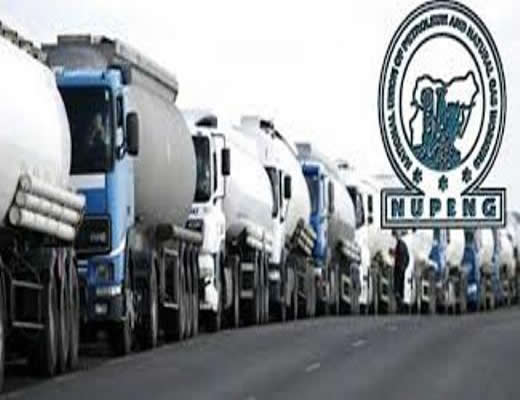
The Lagos State Government on Tuesday said it would not succumb to what it described as blackmail attempts by the Nigeria Union of Petroleum and Natural Gas Workers (NUPENG) to make it pay a questionable N224 million debt.
This is coming in reaction to a purported protest by members of the association over what they said was a N224 million payment for the supply of diesel and kerosene to the Lagos State Government for execution of direct labour projects in Ojodu between October 2014 and May 2015.
The government said that, while it was not against peaceful protest by aggrieved citizens, it would not be stampeded into taking any action without strictly following due process and rule of law.
South-West Chairman of NUPENG, Alhaji Tokunbo Korodo, had threatened that members of the association would embark on the protest with over 1,000 tankers, and that Lagosians would be subjected to experience scarcity of fuel if the request was not granted by government.
But in a statement signed on Tuesday by the State’s Commissioner for Information and Strategy, Mr. Steve Ayorinde, the government recalled that the said transaction took place between an independent marketer and the Lagos State Public Works Corporation (LSPWC) before this present government assumed office.
Ayorinde said the company wrote the government about the transaction, and government replied that it wanted to investigate the claim.
The Nigerian Postal Service (NIPOST) succeeded in intercepting counterfeit financial instrument worth N83.1 billion between January and December 2015, the Acting Postmaster General (PMG) of NIPOST, Mr. Enoch Ade Ogun, disclosed on Monday.
The NIPOST boss, who made the the disclosure at ceremony organised by the service to mark its 2016 Pan African Postal Union (PAPU) Day in Abuja, also put the monetary value of the financial instruments, which included different foreign currencies, as; Pound Sterling worth 1.1 million, Euros 40.4million, US Dollars 376.6 million, and Australian Dollars 5,200.
According to him, the counterfeit financial instruments have been deposited with the Economic and Financial Crimes Commission (EFCC).
Ogun also said that some seizures of narcotics including heroin, cocaine and canabis were made and that these have also been deposited with the National Drug Law Enforcement Agency (NDLEA) for further laboratory test and for possible arrest.
The PMG added that the discovery was made because of the physical inspection of over 500 scam letters containing various negotiable counterfeit financial instruments going either through or coming into the country.
According to him, the international passports have also been deposited with the Nigerian Immigration Service (NIS).
Other items intercepted according to him, include: 848 pieces of fake cheques, 2393 pieces of money orders, 147 pieces of postal orders and 30 pieces of international passports in addition to 167.5 Kg of narcotics.
Heineken International – Established in 1864 by the Heineken family, HEINEKEN has a long and proud history and heritage as an independent global brewer. We brew quality beers, build award-winning brands and are committed to enthusing consumers everywhere.
Today, Heineken is the number one brewer in Europe and the number three brewer by volume in the world. With recent acquisitions in Africa, India, Asia and Latin America, we are continuing to increase our presence within emerging markets, which will contribute to our ongoing growth.
The aim of Heineken International Graduate Programme is to attract, recruit and develop a pool of internationally mobile individuals with the potential, capability and ambition to become senior managers in HEINEKEN, whilst strengthening HEINEKEN’s position as a strong employer of choice globally.
We invite applications from suitably qualified candidates for the position below:
Job Title: Heineken International Graduate Programme
Location: Amsterdam
Job Description
The aim of the IGP is to develop a pool of internationally minded individuals with the potential and capability to become leaders within Heineken.
Applicant, once on board will enjoy responsibility, development opportunities, training, coaching, travel and an environment that both stimulates intellectually and rewards high performance.
Every year Heineken employs graduates directly into different roles across our business and through graduate recruitment schemes in some of our local markets, whilst some of these programmes have an international element, we have a specific programme for those focused on a long term international career listed below:
Commerce
Finance
Supply Chain
HR
Corporate Relations
IT
Desired Skills and Experience
A degree or will graduate by August 2016 (Preferably a Masters)
No more than 2 years of professional work experience in their chosen function (voluntary/internships don’t count)
At least 6 months gained abroad working, studying, or volunteering
Speaks at least two languages (preferably three) in business fluency, one of which must be English
A desire to live and work abroad
Proven leadership skills
Genuine interest in other countries and cultures
Able to demonstrate their drive and desire to succeed
Function specific requirements
Fit the Heineken culture
If applying to Finance, your degree needs to be in Finance, Economics, Business or a similar degree
If applying for Marketing & Sales, your degree must be a MASTERS in business, economics, or commerce
If applying for Procurement, your degree needs to be in business, financial, commercial, economic, or technical discipline
If applying for Supply Chain, your degree needs to be in science or engineering
Application Closing Date
31st January, 2016.
How to Apply
Interested and qualified candidates should APPLY
The Senate monday promised that the contentious 2016 budget would be passed before the end of February.
This promise was made by Senate Leader, Senator Ali Ndume, as the National Assembly leadership read the new letter addressed to it by President Muhammadu Buhari on the budget today. Buhari had in the letter announced that there were errors in the budget that he presented on December 22 as well as the correction done on it.
Last week, Senate President, Bukola Saraki, announced that presidential aide on National Assembly matters, Senator Ita Enang, smuggled a ‘fake’ budget proposal into the Senate and insisted that Senate would only work on the document presented to National Assembly by President Buhari on December 22, 2015.
Speaking on the development yesterday, Ndume said having compared the new budget with the old one, there is a major difference as the executive had increased the number of projects in the new document but retained the overall budget figure.
“But what I can tell you now is that the budget that was submitted originally, there were certain integrity checks on it that made some changes in the quantity but not in the total,” he said.
GE is an advanced technology, services and capital company with the scale, resources and expertise to take on the world’s toughest challenges. Dedicated to innovation in the areas of energy, health, transportation and infrastructure, we’re committed to leadership, integrity, partnership and human progress. GE businesses ranging from Aviation, Capital, Oil & Gas, Energy Management, Power and Water, Healthcare, Transportation and Home & Business Solutions have operations on the African continent. Major locations include Angola, Ghana, Kenya, Nigeria and South Africa.
Over 1300 employees are working in the region, creating local partnerships and providing solutions & services that supports Africa’s infrastructure and sustainable growth. We are also dedicated to knowledge transfer, whether it is providing technical expertise to customers by hosting customer summits, to developing young local talent through unique programs such as the Early Career Development Program.
We are recruiting to fill the following positions: