A survey by Multinational audit firm, KPMG has shown that Nigeria’s economy faces low economic growth prospect, a survey by
According to the report, a group of Chief Financial Officers were interviewed in a survey by the consulting firm.
The CFOs are concerned about business risks, as well as the economic slowdown and the falling oil price.
Its Partner and Head, Audit Services, Tola Adeyemi, said the CFOs were the least optimistic about growth. The other concerns are uniting leaders, increasing taxation and regularities complexities. And the continued slowdown in the economy, according to them has heightened fears that a key engine of growth is stalling. There are also worries about the impact of falling oil revenues on the overall economy.
He noted that the CFO observed that the threats they face are becoming more complex with exchange rate instability and the state of infrastructure.
One issue also identified is lack of balance in the economy. As a result, the rewards of a growing economy are not shared equally, leaving some sectors feeling markedly stronger than the others.
The business suggested growth levels across most sectors slowed considerably.
The Fiscal Responsibility Commission (FRC), made this known in a commendation letter it wrote to the NDIC lauding the Corporation.
It hailed the management of NDIC for compliance with the submission of its audited financial statements of 2007- 2014 and prompt payment of operating surplus.
This letter dated December 14, last year was signed by the FRC Acting Chairman, Victor Muruako.
The FRC report indicated that the NDIC was well above average in compliance with Sections 21- 23 of the Fiscal Responsibility Act (FRA) 2007 and “had fully complied with the provisions of the General Reserve Fund into which 20 per cent of its Operating Surplus was retained in accordance with Section 22 (2) of the FRA 2007”.
The report also commended the Corporation’s compliance with the payment of 25 per cent of its Gross Revenue to the Consolidated Revenue Account of the Federation in accordance with Ministerial Circular on Internally Generated Revenue (IGR).
According to the FRC, “it is quite commendable that NDIC is one of the few Corporations that have fully complied with IFRS, which has greatly improved financial reporting of the activities of the agency,” the report observed.”
The FRC also reviewed the Corporation’s annual approved budget and considered it to be of high standard in terms of process and content. “The accounts were generally of high standard and depict compliance with international best practice,” the FRC wrote.
The Group Managing Director/Chief Executive Officer of Skye Bank Plc, Timothy Oguntayo, has stated that deposit money banks (DMBs) are not expected to make any profit from the N50 stamp duty levy imposed on bank customers by the federal government.
He made this clarification during a breakfast luncheon with top stockbrokers and allied professionals in Lagos.
It would be recalled that the federal government had on Tuesday instructed the Central Bank of Nigeria to collect N50 stamp duty from customers for money received into their accounts.
According to the apex bank: “As part of efforts to boost its revenue base, the federal government of Nigeria is exploring revenue opportunities in the non-oil sectors especially taxes and rates. It is in recognition of this fact that banks and other financial institutions are enjoined to support government’s revenue drive through compliance with the provisions of the Stamp Duties Act, LFN 2004 as reinforced by the court judgement in Suit No FHC/L/CS/1710/2013.
“In this regard, the CBN pursuant to the provisions of its enabling laws, hereby issues this circular to all DMBs other financial institutions. With immediate effect, all DMBs and other financial institutions shall commence the charging of N50 per eligible transaction in accordance with the provisions of the Stamp Duties Act and Federal Government Financial Regulations 2009, that is, all receipts given by any bank or other financial institution in acknowledgment of services rendered in respect of electronic transfer and teller deposits from N1, 000 and above.”
Oguntayo, who spoke on the rationale behind the imposition of the N50 stamp duty, said: “In my own understanding, there is a NIPOST Act that makes it mandatory for customers to pay stamp duty on any transaction they do.
As such, the money collected goes directly to NIPOST and not to the banks. The banks are not expected to profit from it.”
He was however quick to admit that the implementation of the policy means that cost of doing transaction is going to increase.
The Skye Bank boss also hinted of plans by the bank to raise fresh capital during the first quarter of 2016 to beef up its capital base and improve its working capital.
Transactions on the floor of the Nigerian Stock Exchange, NSE, closed Friday, January 22, on a positive note as the All Share Index scooped0.59 per cent to close at 23,826.50 points from 23,686.67 on Thursday, January 21.
Similarly, market capitalization also jumped from N8.146 trillion to N8.194trillion.
The market posted 30 gainers today led by Cadbury with a gain of N1.29 or 10.24 per cent to N13.89 followed by NAHCO with a gain of N0.32 or 9.88 per cent to close at N3.56 while Transcorp gained N0.11 or 9.40 per cent to close at N1.28 per share.
On the other hand, Forte Oil topped 12 stocks on the losers’ chart with N16.50 loss or 5 per cent to close at N313.50 followed by Nestle that lost 37.00 or 4.97 per cent to close at N707.15 per share, and Northern Nigeria Flour Mills that lost N0.42 or 4.91 per cent to close at N8.13 per share.
All together, a total of 1,005,167,671 shares worth N1.888 billion exchange hands in 4,229 deals.
The Lagos Chamber of Commerce and Industry, LCCI, has urged the Central Bank of Nigeria, CBN, to lift the foreign exchange restrictions it placed on 41 items.
The Chamber said the measure was no longer necessary, especially now that the regulator’s official forex window has been closed.
LCCI’s Director-General, Muda Yusuf, in a statement on Sunday, January 24, said the restrictions have caused considerable loss of jobs, insisting that “many more jobs are at risk as many firms run out of stock of their critical inputs for production,” adding, “for the sake of economic policy coherence, any product that is not on the official import prohibition list of the Federal Government should have access to the autonomous foreign exchange market.”
He agreed that import prohibition is a vital trade policy matter which should be undertaken in an integrated manner with inputs from other government agencies, including the Ministry of Finance, National Planning and the Nigeria Customs Service, among others, but cautioned however that the consequences of import prohibition are far reaching and go beyond the narrow perspective of conservation of foreign exchange.
“ The dimensions of inter sectoral linkages, employment implications, Customs revenue implications, breaches of regional and other international trade treaties should be taken into account,” pointing out that fiscal policy measures, such as taxation and import tariffs could be used, as and when necessary, to shape the behavior of economic operators as the policy thrust of government dictates.
The LCCI chief called for a proper understanding of the significance of the foreign exchange policy in the Nigerian economy, given the fact that the economy is not only highly import dependent, but also the fact that it is assuming greater integration with the global economy. In this regard, he called for transparency, and the need to ensure that there is adequate liquidity and stability in the administration of the foreign exchange market.
The Nigerian Council of Registered Insurance Brokers, NCRIB, has said of the 108 broking firms delisted by the regulatory body, the National Insurance Commission, 87 firms are not registered with the Council.
President of the NCRIB, Kayode Okunoren, made this known at a forum in Lagos. According to him, only 21 of the affected brokers are members of the broking fraternity.
He said the NCRIB had made frantic efforts to ensure that the affected brokers were given soft landing as against the withdrawing of their licences.
He appealed to NAICOM to ensure sustenance of effective communication channels with the NCRIB in such a way that its members are notified in good times on any aspect of compliance in which they are on the path of erring, stressing that this could even be done through the Council in the spirit of the existing cordial relationship.
Okunoren said: “As you are aware, NAICOM recently advertised the names of 108 brokers delisted over compliances issues. Out of the 108 Brokers, 21 of them are registered members of the Council.
“Suffice it to say that the NCRIB is not happy that any operator in the market will continue to flout regulatory requirements as enshrined in the law. However, the Council on my assumption of office, made a representation to NAICOM on this and sundry issues for which, as usual, we got assurance of support from the Commission.’’
Total turnover posted in the fixed income and currency market declined by N2.66 trillion in December to settle at N7.42 trillion, reflecting the dwindling trend in the nation’s capital market.
This represented 26.40 per cent decrease month-on-month and N3.14 trillion or 29.67 per cent drop year-on-year.
Monthly data of transactions in the fixed income released by FMDQ OTC Securities Exchange Plc showed that bearish sentiments prevailed in the Fixed Income market within the period under review.
Activity in the fixed income segment dominated the market, contributing 34.74 per cent to the total market turnover, while activities in the Treasury Bills segment accounted for a market share of 26.27 per cent of total turnover.
Further analysis of the figure released showed that secured market transactions (Repos/Buy-Backs) accounted for 25.15 per cent of total turnover in December, while FGN5 bonds’ contribution accounted for 8.94 per cent.
Activities in Unsecured Placements/Takings contributed 4.74 per cent of total turnover. Specifically, turnover in the FX market for the month settled at $10.89 billion, representing 27.41 per cent increase compared to the value recorded in November, with an average daily turnover of $0.52 billion.
Also, member-member trades leaped by $0.33 billion (41.52 per cent), while member-client trades showed an increase of $2.01 billion, 25.95 per cent increase month-on-month.
Spot and Swap transactions increased by $1.80 billion (25.90 per cent) and $0.65 billion (44.76 per cent) MoM, to record turnovers of $8.75 billion and $2.11 billion respectively. The total value of Fixed Income securities traded in the month of December was N2.61 trillion; a N2.87 trillion (52.32%) MoM decline. T.bills turnover came to N1.95 trillion, accounting for 74.27 per cent of total Fixed Income Market turnover.
On a Year-on-Year basis, turnover on T.bills decreased by N312.17 billion (13.79%) and on FGN bonds, increased by N74.34 billion (12.62%). Trading Intensity for T.bills and FGN bonds decreased to 0.38 and 0.11 respectively, compared to 0.78 and 0.22 recorded in the month of November.
On the average, the yield curve shifted upwards by 63 basis points. Outstanding FGN bonds increased by N50.00 billion (0.85%) to settle at N5.94 trillion from N5.89 trillion recorded in the previous month.
The Director- General of the planned Maritime Security Agency, Jacob Ovweghre, last weekend, bemoaned the huge amount Nigeria loses daily to pipeline vandalism and crude oil theft.
Ovweghre stated that the passage of its bill currently before the National Assembly would help boost Nigeria’s revenue by N3.1 trillion yearly.
Addressing newsmen in Abuja, he further said once it gets the necessary legal backing, issues of pipeline vandalism and fuel scarcity would reduce drastically, while fuel price might drop sharply, as it would deploy all its personnel to oil installations across the country to safeguard the assets from acts of sabotage.
He said the agency, which would be self-financing, would help address the issue of unemployment, as it would create an avenue for over three million youths to be gainfully employed.
He said presently, Maritime Security Agency is operating skeletal services and is involved in intelligence gathering, noting that when its bill is passed, its personnel would be deployed to areas notorious for piracy, pipeline vandalism and crude oil theft to stem the nefarious activities.
He added that its activities would help assure foreign investors that Nigeria’s territorial waters and the country in general, is safe for investment.
He said: “Maritime security is a complex task the world over. It entails protecting all forms of maritime assets, identification and evaluation of special maritime threats and how to comprehensively manage them.
“To achieve the safety of Nigeria’s maritime industry, government must vigorously and robustly explore collaborative synergy with relevant stakeholders and organisations that possess the requisite expertise to enhance the nation’s maritime security.”
PIC.6. PEOPLE QUEUING FOR KEROSENE AT THE NNPC MEGA
STATION ON OLUSEGUN OBASANJO WAY, CENTRAL BUSINESS DISTRICT
IN ABUJA ON THURSDAY (18/8/11).
The Federal Government over the weekend increased the price of Household Kerosene (HHK) to N83 per litre from N50 per litre, thereby, officially ending subsidy on the product.
The Petroleum Products Pricing Regulatory Agency, PPPRA , in its product pricing template released, on Sunday, January 24, stated that the N83 per litre price applies only to the Nigerian National Petroleum Corporation (NNPC), meaning that other petrol stations and dealers can sell higher than the stipulated amount.
Again, the PPPRA’s template also showed that at N83 per litre, the Federal Government is making a gain of N10.72 for every litre, as it puts the Expected Open Market Price, which is the Landing Cost plus Total Margins at N72.28 per litre. The expected open market price is the prevailing open market rate for the product in Nigeria, after taking certain costs into consideration.
Giving a breakdown of the price, the PPPRA template put the Landing Cost of the product at N57.98 per litre, while the total margin due for middlemen was put at N14.30.
Further breakdown of the Total Margins showed that retailers margin was put at N5 per litre; Transporters, N3.05 per litre; Dealers, N1.95 per litre; Bridging fund, N5.85 per litre; Marine Transport Average, N0.15 and Admin Charges, N0.15.
The PPPRA further put official ex-depot price, which is the price depot owners would sell at marketers, at N68.70 per litre, official ex-depot price for collection, N73 per litre while ex-coastal price is N68.02 per litre.
Late December, the PPPRA had on behalf of the Federal Government announced that effective January 1, 2016, Premium Motor Spirit, otherwise known as petrol, would be sold at N86 per litre by the Nigerian National Petroleum Corporation (NNPC) retail stations, while other oil marketers would sell at N86.50 per litre.
John Holt Nigeria Plc recorded an operating profit of N1.63 billion for the year ended September 30 2015, an 18.50 percent reduction from N2 billion in 2014.
The company with interest in businesses ranging from engineering, leasing, trade and distribution said that the devaluation of the naira was a drain on bottom lines since most of its raw materials and equipments are imported.
A statement from the company said: “Because we are an import dependent company, we had N500 million wiped out because of devaluation.”
Consequently, the conglomerate giant is seeking investment in businesses that are less import dependent as devaluation of the naira remains a drain on bottom lines.
Sales were down by 13.87 percent to 2.43 billion in 2015 as the company embarked on aggressive market penetration and expansion strategy with a view to consolidating its share of the market.
“Although, the company and its subsidiaries made a loss before tax of N171m compared to profit before tax of N427m last year, N528m was exchange loss suffered as a result of the devaluation of Naira. Sales were also negatively affected by the tension and uncertainty associated with the 2015 general elections and the subsequent lull in the economy after the elections,” the company said.
The conglomerate giant attributed the fall in revenue to the crash in crude oil price which negatively affected revenue from oil and gas clients.
Despite infrastructure deficits such as bad roads and huge energy costs that spiral up operating expenses of companies in the country, John Holt was able to reduce costs as administrative expenses fell by 20.10 percent to N682 million in 2015 from N856 million in 2014.Distribution expenses were down by 20.30 percent to N856 million.
The company spent less money on operating expenses to generate every unit of product as operating expense margin fell to 43.21 percent in 2015 from 48.10 percent in 2014.Cost of sales was down by 3.80 percent to N1.77 billion.
The slow growth in sales was attributed to reduced patronage from major customers in the oil and gas industry that got hit by the oil price crash.
John Holt’s debt to adjusted capital ratio fell to 43 percent in 2015 as against 51 percent in 2014. Finance cost dipped by 7.60 percent to N231 million.
Indications have emerged that Nigeria may miss out of the $100trillion booming digitilization if government and the organized private sector fail to collaborate to evolve policy that will enable the country tap into the gains of the fourth industrial revolution.
The World Economic Forum said that the combined value to society and industry of digital transformation across industries could be greater than $100 trillion over the next 10 years.
The Forum also disclosed that the combinatorial ”effects of digital technologies that is mobile, cloud, artificial intelligence, sensors and analytics among others are accelerating progress exponentially, but that the full potential will not be achieved without collaboration between business, policy-makers and NGOs.”
Nigeria’s attempt at digitization is said to be crippled by funding. Last year, a two-day workshop on digitisation held in Lagos to provide opportunity to appraise the process and map out strategies to ensure that the switch over is accomplished with least or no hitches.
The event gave participants the unique opportunity to update themselves on the latest policy direction and technical requirements for the digital transition in Nigeria.
Reviewing the process, Chairman, DigiTeam Nigeria, Edward Idris Amana, enumerated some strategic steps taken in order to realize the digital transition project as mandated by the GE 06 Agreement endorsed by the Member States of ITU at the World Radio Conference in Geneva in 2006.
He noted that the agreement, anticipated new digital plan that involved re-distribution of frequency bands to accommodate new.
Engineer Amana recalled: “Nigeria, like all other Member States of International Telecommunications Union (ITU) Region 1, signed the Geneva 2006 Agreement on Transition from Analogue to Digital Terrestrial Television Broadcasting.”
However, Nigeria is not yet digitization compliant.
The meeting of business leaders and top government officials held in Davos-Klosters, Switzerland at the weekend said that the “combined value” to society and industry of the digitisation that is already occurring in every industry could generate upwards of $100 trillion over the next 10 years, with society set to gain more than business.
However, this transformation also brings with it risk, according to new research by the World Economic Forum.
According to the research findings, “With digitisation affecting every industry and creating new ways of capturing and creating value, the research, which is part of the Forum’s Digital Transformation of Industries (DTI) project, focuses on the “combinatorial” effects of digital technologies – mobile, cloud, artificial intelligence, sensors and analytics, among others.
Among the over 250 ethnic groups in Nigeria, the Yorubas in South-west Nigeria will easily win the award for being avid socialites. They cherish celebrating moments as they adorn resplendent traditional attires popularly called Ashoebi.
If it’s a colourful event with local music, dance, food, and drinks, you will find them there. And their weddings are just as comical as the people. If you are experiencing a Yoruba wedding for the first time, do not be startled when you observe any of these things Jovago.com, Africa’s No 1 hotel booking portal has listed below.
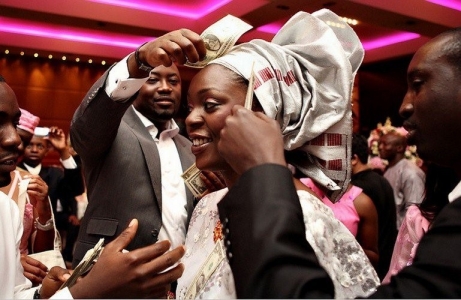
Dancing to rake in money
Dancing in a Yoruba marriage is an opportunity for the couple to make some money. The bride and groom usually take to the dance floor while they are circled by friends, family and well-wishers who spray cash on their heads. At the end of the wedding ceremony, the money accrued will be used to settle some minor debts incurred while planning the wedding and cover some expenses like paying for canopies, cake, and drinks among other strange things.
Carry the Bride
To ‘carry the bride’ is literarily translated Igbeyawo. This may not be a serious part of a Yoruba nuptial agreement but it is done for its significance. The ability of the groom to haul his wife automatically signifies that he has the strength to take care of her. It is something that every groom should anticipate. But what if he cannot…?
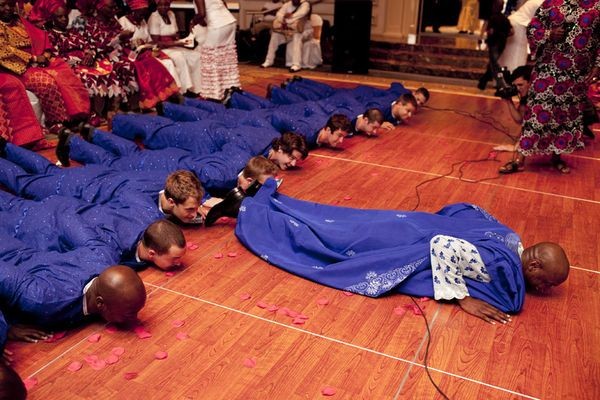
Prostrate
A widely known fact about Yorubas across Southwest states like Ogun, Lagos, Oyo, Osun, Ekiti and Ondo, is that they value respect. In every sphere of life, courtesy is important to them. Therefore, the act of prostration during a wedding ceremony should not come as a surprise to one who finds himself in this situation. The groom and his friends are expected to lie down flat in their glossy regalia to show appreciation to the bride’s parents. This may be comical but it is an important part of any Yoruba marriage.
In a statement made on thursday, the Lagos State Government said it has concluded plans to ensure steady power supply in public schools and health centres across the state through its solar system project.
The project, which involved maintenance of existing solar systems and installation of new ones, would commence after a 10-day training organised for technicians that would carry out the task.
The Commissioner for Energy and Mineral Resources, Olawale Oluwo, who declared the training open, encouraged institutions that had the facilities to participate.
Oluwo said the training, which was organised in collaboration with the United Kingdom Department for International Development, was to ensure a regular maintenance of solar components to guarantee steady power supply to public schools and primary health care facilities powered by the solar systems.
He said 172 schools and 11 health centres would benefit from the project, adding that it would create about 30,000 jobs.
The training provider, said at the inauguration that the objective was to keep solar power installations running, as well as reduce economic losses in schools and primary health centres operating within the solar systems.
The 10-day training programme, which kicked off in Ikeja on Monday, is organised by the Lagos State Electricity Board, the implementing agency of the state Ministry of Energy and Mineral Resources
The Independent Corrupt Practices and other related offences Commission (ICPC) has disclosed that it had begun the process of investigating the N1.34 trillion allegedly stolen by 55 Nigerians, especially former government officials and to recover the said amount.
Chairman of the commission, Barrister Ekpo Nta yesterday during his appearance on Nigeria Television Authority (NTA) programme, said that the commission was analyzing intelligence reports so far gathered on the issue, and would take action when the analysis are concluded.
According to the chairman, the commission is putting new strategies in place to stop the looting of public funds by corrupt civil servants and political office holders.
Whereas, the Economic and Financial Crimes Commission (EFCC), has concluded plans to probe corrupt judges in the country.
In the days before the Internet, talented creators still relied on the blessing of lady luck to start a long-term career in the arts. Much time and effort was needed to be ‘discovered,’ and this often came down to being in the right place at the right time. For instance, Australian rock band INXS got their big break from a random encounter in a parking lot! And I am sure stories abound of Nigerian artists also “luckily” meeting people who ended up changing their careers.
But now that the world wide web has changed the previous limits of time and space, creators and performers have never had it so easy: getting noticed, it seems, is a whole new game. We have long known that information technology reduces barriers to entry in almost all industries, but we never expected just how quickly video sites would rewrite the rules on how to make it in the creative world. Just as small businesses can use the level playing field of the net to compete with giant global conglomerates, unknown artists can have their work seen just as easily as famed superstars can.
Over the years, the world has seen this explosion of passionate and talented visual artists, filmmakers, comedians, and musicians on video platforms like YouTube who are able instantly to tap into a global audience. These artists are called the “creative class unlimited.” The most famous global example is Canadian singer Justin Bieber. In 2007, his mother uploaded amateur videos of his performances to YouTube, which were eventually seen by power manager Scooter Braun. With Braun’s help, Bieber became an international pop star, and fittingly, created YouTube’s most popular video of all time: “Baby”. With Bieber as the archetype of the 21st century pop success story, many talent scouts now spend their days on the Internet instead of haunting dark clubs and amateur hours on the hunt for the next big thing.
While we can now locate new talent in remote places easily, the cost of ‘auditioning’ for the artists themselves is also reduced. The YouTube Symphony Orchestra brings together classically-trained musicians from around the world to play together and work under world-renowned conductor Michael Tilson Thomas. While the first concert series featured many serious music students from small countries, the more interesting audition videos came from extremely talented musicians for whom “life got in the way” of their concert hall dreams. Whether career or other personal reasons, they had to drop off the very strict and ultra-competitive path to becoming a professional musician. But with YouTube Symphony Orchestra and other Internet resources, they were able to tap back into their talents and reclaim the identity of being serious classical musicians.
While music may be a natural fit for an online video site, the creative class unlimited is not only musical performers, composers, and songwriters. Examples of artists finding easier access to the traditional industry system only tell half the story. What is more radical is how the web has allowed artists to embark on lucrative creative careers without waiting for gatekeepers’ approval.
Great local examples are Nigerian content creators Toke Makinwa and Yomi Black whose videos have amassed almost 5 million views on YouTube alone. And by also being members of online monetization programs like YouTube’s Partner Program, they are entitled to a share of the revenue generated through advertising on their videos. And there are lots of partners around the country making lots of dollars a year, many of which are small and unnamed creators. This means that popular videos on the Internet can be a lucrative venture — and a making these videos a career in itself.
The Internet, of course, is only partially responsible for all the creative class unlimited’s success. Online video sites like YouTube are just a platform, and these artists should be lauded for their creativity, perseverance, hard-work, and do-it-yourself entrepreneurial spirit. Creative workers can now worry less about connections, discovery, distribution, and financing and worry more exclusively about the quality and meaning of their work. As popular american actor Woody Allen famously quipped “80% of success is just showing up,” and with global platform online video platforms that reaches billions of people, the showing up part much has been made much easier.
The naira on Friday, January 22, dropped by 0.3 per cent at the parallel market barely 24 hours it hedged up against the dollar.
The News Agency of Nigeria (NAN) reports that the naira lost N1 to exchange at N297 to the dollar. It had previously traded for N296 to the dollar on Thursday.
It, however, continued to exchange at N197 to the dollar at the official interbank window.
Traders at the market said that the scarcity of the dollar was having negative impact on the market.
They added that there were apprehensions that the apex bank might come up with yet another policy next week.
NAN reports that the Monetary Policy Committee Meeting (MPC) of the Central Bank of Nigeria (CBN) will be held on Jan. 25 to Jan. 26.
The Revenue Mobilization, Allocation and Fiscal Commission, RMAFC, on Friday, January 22, said the solid minerals sector generated 10.8 billion in 2015.
The acting Chairman of the commission, Shettimma Abba-Gana, disclosed this in an interview with the News Agency of Nigeria (NAN) in Abuja.
Abba-Gana said that the states that contributed to the revenue generated had been paid 13 per cent of the sum based on the principle of derivation.
He said the derivation principle affected both the oil mineral producing states and those producing solid minerals as well.
“Some states did not generate much but some states did generate a lot and those states got some money,” he said.
“So virtually all the states, any revenue that came to the federation account from that 10.8b, states got their 13 per cent.
“But that is the beginning, they now know that they can get it so they will also now begin to monitor more and more whatever revenues in solid minerals in their states will now come into this.
“Virtually every state in the federation has some solid minerals to varying degree and to varying types and so no state should be idle, every state has something.
“Therefore if states begin to show interest in those solid minerals in their states, they can look for investors.
“They can partner with those investors, invite them, encourage them, create an enabling environment for those investors to come and work on those solid minerals in the state.’’
The Minister of Communications, Adebayo Shittu, has revealed that the Federal Government will create two million jobs from the Information and Communication Technology (ICT) sector.
Shittu, who spoke at the maiden Nigeria Communications retreat organized by the Federal Ministry of Communications, at International Institute for Tropical Agriculture (IITA), Ibadan on Friday, January 22, said investors from China would be investing 15 billion dollars in the sector.
“Information and Communication Technology today creates more jobs than oil and gas and that can further be enjoyed, as investors from China would be investing N15 billion dollars in the ICT sector in Nigeria. So, potential two million jobs will be made available through investments in the sector,” he said.
The minister also disclosed that 550 post offices in different Local Government Areas in the country would soon start engaging in financial services like internet services, call services apart from the traditional letter posting.
“The time has now come to fully embrace ICT to enhance our lives, to enhance transparency and good governance if we are to really fulfill the “change” mantra that Nigerians voted President Muhammadu Buhari to bring about,” he said.
The Central Bank of Nigeria., CBN, on Friday, January 22, took the decision to refund the N35 million Mandatory Caution Deposits to the Bureaux De Changes (BDCs) as part of the strategy to curb the excesses of the BDCs and stop the free fall of the Naira
However, the apex bank will retain the N1 million licensing fee collected from the BDCs.
The CBN in a circular signed by Mr Kevin N Amugo, Director, Financial Policy and Regulation Department said: “given the recent development in the operations of BDCs in the economy, the CBN has decided as follows: The refund of mandatory caution deposit of N35 million to all BDC operators and the retention of N1 million licensing fee.”
The CBN asked all eligible BDCs “to apply for refund of their caution deposits, attaching evidence of payment and bank transfer details.”
On January 11, CBN governor Godwin Emefiele while rolling out new forex policies had lamented that “it is almost impossible for the CBN to monitor over 2700 BDCs with its limited number of examiners.
“It is almost practically impossible and because of inadequate foreign exchange, the BDCs have to source their foreign exchange autonomously. We do not have the resources to cope with over 2,000 BDCs in the country right now.
“BDCs not happy with this decision are free to return their license and get a refund of the N35 million cautionary fees besides we need more people to go into other forms of businesses like agriculture where we believe there is a lot of scope at this time.”
The troops of the Operation Lafiaya Dole said they intercepted three suspected suicide bombers attempting to enter Maiduguri the Borno state capital on Friday, January 22, along Maiduguri/Mafa checkpoint.
The Deputy Theatre commander of Operation Lafiya Dole Major General Lucky Irabor told newsmen at the operation media centre in Maiduguri the troops at the checkpoint sight two female suicide bombers and a male suicide bomber trying to infiltrate Maiduguri along Maiduguri-Mafa road, where one of the female suicide bomber detonated her own killing herself and one other female bomber, while the male suicide bomber was gunned down by the troops of the Nigerian Army while trying to run into their midst.
He also stated that 63 Boko Haram terrorists were killed from Monday 18th January 2016 to Friday 22nd 2016 at various places within the theater of operation, adding that many AK47 riffles, ammunition, Anti Aircraft Gun, RPG, GMPG, explosives, vehicles, motorcycles among others were recovered from the operations.
“Our troops conducted a fighting patrol at Afe, Kudiye, Souma, Dikwa Mijigeta, Mida villages of Borno state. During the operation our troops come in contact with Boko Haram terrorist at Kudiye and Mijigete where 370 hostages were rescued and brought to IDP camp in Dikwa and 3 rifles and 41 motorcycles were destroyed,” he said.
Maj. Gen. Irabor also stated that troops have cleared some Boko Haram hideouts in Wala, Tirkopytir and Durubajuwe in Gwoza local government area, where they recovered GMPG, locally made Dane gun and a grinding machine were recovered.
He stated that troops also came in contact with Boko Haram terrorist in Huyum in Askira/uba local government area, adding that “the terrorists sighting troops abandoned their families behind which including five women and 12 children and are currently undergoing interrogation.