The Nigerian government is making plans to retrieve controversial and one of Africa’s richest oil blocs from oil giants, Shell and Eni, Premium Times reported.
The report cites a recommendation by the office of the Attorney General of the Federation and Minister of Justice.
The online publication in the report said the oil companies will not only lose the block but also be fined billions of dollars for illegal activities should President Muhammadu Buhari approve the recommendations.
Global Witness, an independent organization investigating corruption in the extractive sectors, in a recent report said the deal is currently under investigation by authorities in the UK, Italy and Nigeria and there is a real chance the companies will lose their rights to the block, which is a critical plank in their strategy to replenish their reserves.
“In 2011, Shell and Eni paid $1.1bn for one of West Africa’s largest oil fields, situated off the coast of Nigeria. The payment was equivalent to 80% of Nigeria’s proposed 2015 health budget, but the money did not benefit the country’s citizens.
Instead it went to a company called Malabu Oil and Gas, which was secretly owned by the former oil minister who had granted his company rights to the oil field in 1998.
Like many others, this deal for a massive state asset was conducted behind closed doors, without the knowledge of the public or investors.” The report said.
Spokesman for the NNPC, Ohi Alegbe said he does not have any information on the latest development of the matter.
According to a new study report by Lancet, an estimated 313,700 infants died as stillborn across the country in 2015, ranking Nigeria second after India, with some 592,100 stillbirths.
It comes amidst efforts to reduce stillbirths to about 12 or less per 1,000 births by 2030.
The report noted that Nigeria’s second-place ranking for children dying before 28 weeks of pregnancy has remained the same since 2000, with only 1.3 deaths reduction annually since then.
By comparison, up to 240,000 infants died within their first 28 days of life last year, in addition to 58,100 women who died from pregnancy-related causes, according to the Lancet Series on Stillborn.
Programme manager, Society for Gynaecology and Obstetrics of Nigeria (SOGON), Dr Segun Adeoye described the numbers unacceptably high.
He said the proposed Maternal, Perinatal Death Surveillance and Response will give “more precise and accurate data on why mothers and babies are dying.”
A total of 487 farmers from Plateau State benefited from the N98.9 million loan the Central Bank of Nigeria, CBN, released to entrepreneurs in the state in 2015.
CBN’s Branch Controller in Plateau State, Mathias Kurah, who made this known during the 2015 end-of-year dinner/award ceremony organised by the Bankers’ Forum in Jos, recently, stated that only one money depositing bank (MDB) and three micro-finance banks (MFBs) participated in the scheme.
Kurah said the loans were part of CBN’s efforts to develop agric financing which, he said, was centred on the Agricultural Credit Guarantee Scheme.
“We are encouraging money depositing banks and micro-finance banks to fully avail themselves of the various opportunities put forward by the CBN in the state,” he said.
The Nigerian Ports Authority, NPA has finally got ministerial relief from making further payments to the dockworkers.
This is coming after a decade of paying billions of naira as wages and allowances of un-ascertained number of tally clerks and on-board security engaged by Stevedoring companies on vessels berthing in the nation’s ports.
It was learnt that the relief came to the NPA as the minister of transportation, Rotimi Amaechi, during a meeting with representatives of the NPA, top ministry officials, port concessionaires, Maritime Workers Union of Nigeria (MWUN) and stevedoring companies formally approved NPA’s plan to terminate relationship with stevedoring contractors handling the tally clerks and on-board security.
This implies that a relief of over N900 million is paid to unverified 5,000 dockworkers annually.
The NPA had in November 2015, indicated that it would pull out from paying the wages of tally clerks as it was no longer in the business of managing the seaports.
Since port concession in 2006, the dockworkers have been in the habit of holding the NPA to ransom over the non-payment of their wages, embarking and threatening to embark on industrial action to cripple the activities of the ports.
Under the current port management model, the NPA maintains the landlord status, providing and maintaining common user seaport infrastructure, such as the channels, buoys and providing technical regulation, with port concessionaires in direct commercial management of the ports.
However, the Minister, at the meeting, however, instructed the NPA to pay the affected stevedoring companies all outstanding money due to them in the next two weeks.
The bull stood its ground on resumption of trading on the Nigerian Stock Exchange, NSE,on Monday, January 25, as the All Share Index gained 0.58 per cent to close at 23,963.64 points from 23,826.50 on Friday, January 22.
Similarly, market capitalisation also soraed from N N8.194 trillion to 8.242 trillion.
The market recorded 25 gainers today led by Guinness with a gain of N10.43 or 10.24 per cent to N112.28 followed by NAHCO with a gain of N0.34 or 9.55 per cent to close at N3.90 while Zenith Bank gained N0.88 or 7.79 per cent to close at N12.18 per share.
On the other hand, Berger Paint topped 16 stocks on the losers’ chart with N0.96 loss or 9.63 per cent to close at N9.01 followed by Learn Afrca that lost 0.07 or 8.43 per cent to close at N0.76 per share, and FBN Holdings that lost N0.23 or 5.11 per cent to close at N4.27 per share.
All together, a total of 215,183,967 shares worth N2.105 billion exchange hands in 3,853 deals.
Despite investors’ cautious moves, trading activities at the Nigerian stock market resumed on Monday, January 25 with sustained positive sentiments.
Key benchmark indices showed modest improvements as investors await the decisions of the Monetary Policy Committee (MPC) of the Central Bank of Nigeria (CBN), which started its two-day meeting on Monday and it is scheduled to conclude and make its monetary policy statements on today.
With 25 gainers to 15 losers, aggregate market value of all quoted equities improved by N48 billion from N8.194 trillion to close at N8.242 trillion.
The sustained uptrend helped to reduce the accumulated losses so far this year, reducing the negative average year-to-date return to -16.33 per cent.
Total turnover stood at 215.18 million shares worth N2.10 billion in 3,861 deals.
The shares of MTN jumped for the second consecutive time on Monday, January 25 at the Johannesburg Stock Exchange (JSE).
This rally came following news that its Nigerian operation has been given 60 days to seek an out of court settlement with the telecommunications regulator, Nigerian Communications Commission (NCC).
In yesterday’s trading, MTN shares advanced 2.65 per cent to Rand 126.25 as at 10h30 South African time.
Last Friday, MTN which derives 37 per cent of its revenues from MTN Nigeria had its shares jump as much as 9.3 per cent, the biggest gain since May 2009, before paring gains to 121.43 rand at 1:27 p.m.
Shares in MTN had dropped to a low of Rand 109.56, from a 52-week best level of R245, with its current market cap at Rand 227 billion, down from a best of aRand 450 billion. The group has lost Rand 80 per share over the past year – or 40 per cent of its value.
The renewed hope of a settlement with NCC had prompted stock buyers to place their trust on the shares.
At the Federal High Court, Ikoyi, Lagos last Friday, MTN Nigeria sought an for an out-of-court settlement in a suit filed by it challenging the power of the NCC to fine it N1.04 trillion for alleged breach of subscriber registration rules.
Following the request by MTN, the Presiding Judge subsequently adjourned the matter till March 18, this year, when the two parties are expected to come back with their mutually-agreed decision on the matter.
MTN in a statement issued from its headquarters in South Africa said “The judge adjourned the matter to 18 March 2016 in order to enable the parties to try and settle the matter. If the parties are unable to reach a settlement the matter will then proceed on that date.”
MTN said “Shareholders are therefore advised to exercise caution when dealing in the Company’s securities until a further announcement is made.” NCC fined MTN ₦1.04 trillion in October 2015 for not disconnecting unregistered SIMs on its network.
After negotiations with Nigerian authorities, the fine was reduced by 25 per cent to ₦780-billion. MTN then opted to take the matter to court in Lagos, thereby missing a 31 December deadline imposed by the Nigerian governmen
Following the recent drop in oil prices, non-OPEC producers have been urged to help clear the overhang of oil stocks in the market.
The secretary-general of the Organization of Petroleum Exporting Countries, OPEC,Abdullah al-Badri on Monday, January 25, said OPEC and non-OPEC oil producers need to jointly tackle global stocks overhang to enable oil prices recover with investments in new fields, OPEC secretary-general.
Speaking at a conference in London, al-Badri said: “It is vital the market addresses the issue of the stock overhang. As you can see from previous cycles, once this overhang starts falling, then prices start to rise.”
“Given how this developed, it should be viewed as something OPEC and non-OPEC tackle together. Yes, OPEC provided some of the additional supply last year, but the majority of this has come from non-OPEC countries,” he noted.
He said it was crucial that major producers came up with a solution, as the market needed to see inventories come down to levels that would allow prices to recover and encourage investments.
He added:“The current environment is putting this future at risk. At current price levels, it is clear that not all of the necessary future investment is viable.”
Oil prices plunged three per cent on Monday, January 25, as Iraq announced record-high oil production, feeding into a heavily over-supplied market.
Iraq’s oil ministry said oil output had hit a record high in December. Its fields in the central and southern regions produced as much as 4.13 million barrels a day, the government said.
The oversupply has wiped out much of the gains made in one of the biggest-ever daily rallies last week.
Brent crude, the global benchmark, was down 83 cents at $31.35 a barrel at 1247 GMT, losing 2.6 per cent from its closing price on Friday, when Brent surged 10 per cent. U.S. crude traded 85 cents lower at $31.34 a barrel. A senior Iraqi oil official said the country might raise output even further this year.
“The news that Iraq has probably hit another record builds on the oversupply sentiment,” said Hans van Cleef, senior energy economist at ABN Amro in Amsterdam.
“The oversupply will keep markets depressed and prices low, and on the other hand short positions are in excessive territory.”
The closing of large amounts of short positions had caused a huge rally on Friday that was largely undone again on Monday, creating huge volatility in the oil market.
The International Air Transport Association, IATA, last weekend, presented its International Operational Safety Audit, IOSA, certificate to indigenous carrier, FirstNation Airways.
The certificate was presented to the airline’s Director of Flight Operations, Chimara Imediegwu by IATA’s Area Manager, South West Africa, Samson Fatokun in Lagos.
The IOSA programme is an internationally recognised and accepted evaluation system designed to assess the operational management and control systems of an airline.
“Created by IATA in 2003, IOSA uses internationally recognised quality audit principles and is designed to conduct audits in a standardised and consistent manner.
“Successful companies are included in the IOSA registry for a period of two years following an audit carried out by an organisation accredited by IATA,” Imediegwu said.
Imediegwu noted that with the presentation, FirstNation Airways has now joined Arik Air and Aero Contractors as the only IOSA certified airlines operating in Nigeria.
Imediegwu said the process of certification began in January 2014 when the airline received a request to enroll for the programme.
He said this was in line with the Abuja Declaration of 2012 that all African airlines should complete their IOSA certification by December 2015 towards enhancing air safety in the continent.
The Republic of Korea has marked down N2.4 billion ($4.5million) on capacity building for e-government in Nigeria.
The money, which is to be spread between 2013 and 2018, is expected to help develop the country’s e-government master plan, training centre and capacity development programme.
The project is being implemented by the Korea International Cooperation Agency (KOICA).
Already, 71 persons have participated in four previous exercises while seven people are undergoing a masters degree programme on e-government at KOOKMIN University, Korea.
Minister of Communications Technology, Adebayo Shittu, said e-government is important to strengthen transparency and accountability in government.
The Minister, who spoke during the opening ceremony of the second in-country capacity development programme with Project for capacity building of e-government in Nigeria as its theme, noted that since the world and the people have gone digital, it has become imperative for governance to also go digital.
He said for governance to connect with the people, its services must also be digital, adding that governance in the 21st century cannot be analogue.
He said: “The ministry sees the overall purpose and rationale of the Nigeria e-government project as imperative to strengthen transparency and accountability in government and, therewith, upscale efficiency and excellence in public service and public service administration
Following the relentless plunge in oil prices and increasing production output, Nigeria, a key member of the Organization of Petroleum Exporting Countries, OPEC, has requested an emergency meeting to discuss steps to possibly cut down oil production and prop up oil prices.
However, Nigeria’s call has been opposed by Iran, another key member of the cartel which claimed that the time is not yet ripe for such an intervention.
Minister of state for petroleum resources, Ibe Kachikwu, made the call for an OPEC emergency while speaking at a panel session at the ongoing World Economic Forum at Davos, Switzerland, adding Nigeria’s voice to those of OPEC members, such as Venezuela, that are requesting an emergency meeting of the oil-producing nations to address the current oil crisis.
Speaking at the session, Kachikwu stated that with the oil industry in its current state, the members of the OPEC, which produce about one-third of the world’s oil, needed to do something proactive soon.
He said:“There is a lot of energy around trying to meet earlier. Obviously, some of that is a panic reaction. Do we just sit back and watch? Or do we put more efforts in talking to countries, like Russia, to try to get some consensus of what we need to be doing?”
However, Iran disagreed as the country’s oil minister, Bijan Zanganeh, stated that the organisation currently has little intention of making a drastic change.
“There should be an intention to make a firm decision in such a meeting; otherwise, the meeting will have negative impacts on world oil markets. The important thing is that there must be an intention for change, but we have not yet received such a signal,” the oil minister said, according to Reuters.
Following the crash of oil price from an average of $114 a barrel in 2014 to less than $30 a barrel presently, Nigeria’s economy, as well as those of many other oil-dependent countries, has had an economic depreciation.
Some OPEC members such as Venezuela had called for emergency meeting but others such as Saudi Arabia, said to have an eye on the happenings in Iran as regards oil production, is yet to make a categorical statement on the matter.
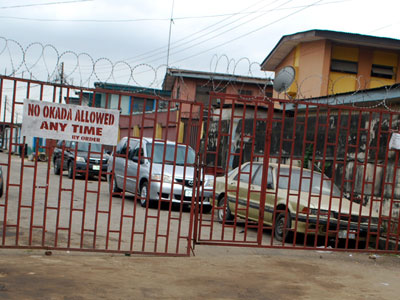
Lagos State Government has issued a 7-day ultimatum to residents in gated communities to keep gates or barricades leading to major roads in the state open between 5am and 12noon, to allow free flow of vehicular movement.
Commissioner Local Government and Community Affairs, Muslim Folami, who revisited the directive that been enacted by the former Governor of Lagos State, Babatunde Fashola, said that the gates must be opened at the stipulated hours but that they could be shut between 12 midnight and 5 a.m. and that such gates must be manned by security guards to allow for emergency movement.
The commissioner, who assured residents of adequate security, said that government officials will henceforth go round to ensure that people comply with the government directives, and that erring communities will have their gates dismantled.
In the bid to diversify the economy in the face of plunging oil revenue, APM Terminals Apapa has assured the Nigeria Customs Service (NCS) of support in enhancing the collection of tariffs, duties and other levies on imports and exports. Andrew Dawes, Managing Director of APM Terminals Apapa gave the assurance when the new Customs Area Controller, Apapa Area Command of NCS, Comptroller Willy Egbudin visited the terminal on Wednesday.
Andrew said “We are fully committed to providing as much service as is required in ensuring smooth operation at the port. We are committed to developing and supporting trade growth, in line with the federal government’s drive for customs revenue, which drives the revenue collection of Customs. We are fully aligned with your ambitions and you will have our full support in delivering your mandate,”
“We are dedicated to setting the industry standards for efficiency, safety and sustainability and it is our goal to support Nigeria’s drive for economic diversification and growth,” he said.
Comptroller Egbudin, solicited the cooperation of APM Terminals in enhancing revenue collection at the Command. “Revenue generation is very key to the Service especially at this time when the Federal Government’s budget is based on non-oil revenue. So a lot of emphasis is going to be placed on the amount of revenue we generate to the government coffers.
President Muhammadu Buhari recently said that his administration would enact new policies to diversify Nigeria’s economy from oil to other sectors such as agriculture, mining and manufacturing. The diversification, according to the President, would be captured in the 2016 national budget.
The Lagos Chamber of Commerce and Industry (LCCI) has urged the Central Bank of Nigeria (CBN) to review its import and export policies, particularly the exclusion of 41 items from the forex market.
It also wants a change to the policy preventing exporters from having access to their export proceeds.
The Director-General, LCCI, Muda Yusuf, who stated this in Lagos, applauded the latest CBN policy stopping the sale of forex to Bureau de Change operators, and also expressed concern that the apex bank was silent on the two critical issues.
The CBN, in February 2015, gave instruction to all exporters to pay their export proceeds into the domiciliary accounts of their respective commercial banks.
Also, the 41 banned items from the official forex market has generated a lot of outcries from stakeholders in the manufacturing sector who insist that some of the items are essential inputs for manufacturing
A serene and charming town tucked outside the city centre, Badagry is inhabited by a hospitable people with a chequered and heart-wrenching past. Why a chequered history? It was an important outpost for exporting slaves to Europe, America and the Caribbean. Indeed, the history of slave trade in Nigeria cannot be complete without referencing Badagry. At present, the quiet town is a tourist haven and a perfect getaway for anyone who wants to have a break from the nerve-racking, fast paced and carefree Lagos life.
Relics of slave trade can still be found in towns like Ajara, Ajido, Ere and Wowu among others. Badagry was founded in 1425 and the main language spoken is Egun, which is one of the many dialects of the Yoruba language. Jovago.com, Africa’s No 1 portal walks you through this town with a topsy-turvy past. Enjoy!
Top Three Sites
The Aquatic Jungle
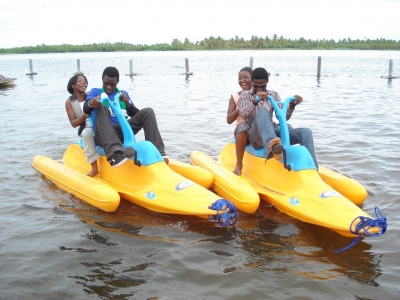
Located in Povita village, Badagry, the aquatic jungle can be described as a ‘forest’ for relaxation and respite from the stress of Lagos. This recreational facility offers something for everyone from water rides to roller-coaster aircraft and helicopter tours, zoo, mini golf course and cosy lodging. It is a one-stop centre to have a weekend vacation, picnic and family get together.
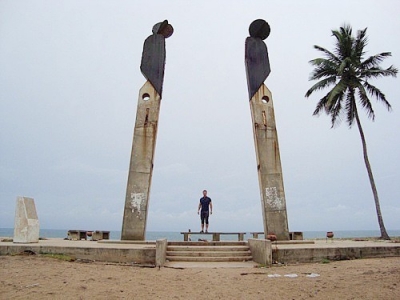
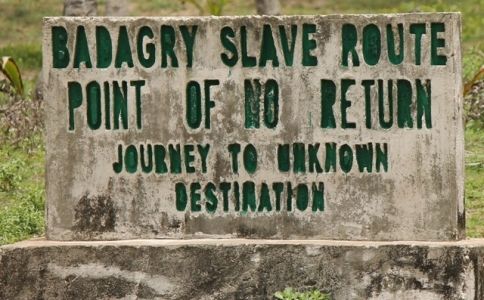
Point of no return
The point of no return was the spot where captured slaves were shipped to unknown lands never to return. The dispirited slaves held in the Brazilian Barracoon (prison) where taken straight into a waiting ship docked at the river bed and off they went. This spiriting away of human cargo went on for 400 years and everyone dreaded this point of no return. It has become a place to have fun, unlike the past where it was filled with agony.
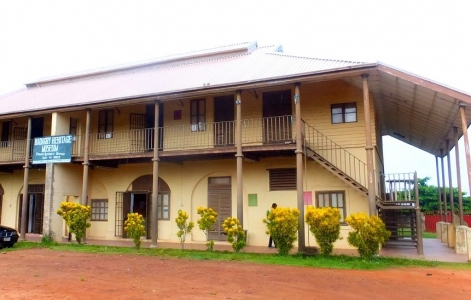
Badagry Heritage Museum
After traversing the beautiful beaches of Badagry, it is usually a great idea to acquire some practical knowledge about the community. and the best place to get first-hand information is the Badagry Heritage Museum.
The museum was opened in 2002 and located at the first administrative office block constructed in 1863; 30 years after the end of slavery. It takes visitors down the slavery memory lane through its nine galleries and is a must-see for art junkies.
Other relaxation tourist destinations include Suntan beach, Halem seaside resort, Whispering Palms Resort, and Brazilian Barracoon.
Relaxation
As a tourist town, there are quite a number of excellent places to unwind with friends after a rollicking tour of Badagry. Although they are not popular brands, they still provide a wide range of services that can help any tourist relax. These places are I.G. eateries and bar, Lovelokoso Bar, Princess Ayike cool spot, Ericson bar and Dohemetto restaurant.
Shopping
Mesoma store, Beachtown, Chidozie Shopping complexand Vlekte slave trade market are among the walk-in places you can shop. If you want an indelible souvenir that reminds you of your visit to Badagry, then you can visit the Vlekte slave trade market.
Sleeping
From Coconut Guest house which is as low as N1,500 to Whispering Palms Resort (N25,000), visitors can book these hotels and more among the over 78 hotels in Badagry on Jovago.com.
Fun fact
The first storey building in Nigeria is located in Badagry. It was completed in 1845. It is 170 years old.
184,302 children will be immunised against polio and other childhood killer disease in Birniwa, Kafin-Hausa and Kirikasamma Local Government Areas of Jigawa.
Malam Umar Bello, the Manager, National Programme on Immunisation in charge of Birniwa, said that 38,000 children would be immunised against the disease in the area. He said that the National Primary Healthcare Development Agency had supplied 45,000 doses of Oral Polio Vaccines (OPV), to facilitate smooth conduct of the exercise. In Kafin-Hausa 85,302 children were expected to be immunised against poliomyelitis during the immunisation exercise. The Immunization Officer,
Malam Abdullahi Sarawa, revealed that more than 89, 000 doses of OPV were provided to ensure successful campaign against the disease. He also explained that some 527 health workers were deployed to the eight districts for the exercise in the area.
Mr Adamu Abubakar, the Health Educator, Kirikasamma Local Government, said that 61, 000 children were targeted for immunisation against polio in the ongoing exercise. According to Abubakar, over 61, 000 doses of vaccines have been provided for the exercise in the area. (NAN)
Nigerians watched a tipsy Olamide bring the Grammy Awards of Nigeria (yinmu) ‘The Headies’ to ridicule as he disgustingly pulled off a “Kanye West” on stage because his YBNL ‘rookie’ Kesh (whose lewd songs are meant to be thrashed), didn’t scoop the next rated award. Kesh and Asa can never be on the same stage. It’s like mixing oil and water. It’s an affront!
Speaking after he was given a special recognition award, Mavin Records Boss, Don Jazzy. in reaction to Olamide’s outburst called him out saying: “Egbon, if you want the car, come and collect it. By the way a question for Di’ja – why were you jumping like…?”
This statement stabbed Olamide like a dagger. Of course, Nigerians can’t forget Jega’s subtle “murder of Orubebe”. Like in Mortal Combat, Don Jazzy ‘finished’ Olamide.
The YBNL boss could not swallow his ‘washing’ on stage by Don, he took the brickbat to twitter. Trust the mocking mockers on twitter they jumped on it creating all sorts of hilarious memes. Many definitely had a good laugh reading the tweets and watching the memes about the tweet fight.
The beef, it later emerged, was settled by Dangote whom we thought was too busy to settle a dispute between grown men who acted like children.
Few days later, it was the turn of Dammy Krane and Wizkid. Dammy Krane had accused Wizkid of stealing his song. With no love for each other, they met at Quilox at a party organised by Obafemi Martins.
According to reports, Wizkid broke a bottle of ‘7up’ on Dammy Krane’s head. The latter’s head was smashed and dripped with blood. Twitter was abuzz again.
Is Wizkid a thug, street boy or an artiste? These artistes are meant to be role models to children. They are no different from politicians who have depleted and pilfered the national resources. They do not care about their public image nor do they have an iota of integrity.
Thankfully, unlike the politicians who are ‘irredeemable’ and addicted to corruption, Nigerians still have a role to play in getting an artiste to fall in line. For instance, by requesting brands not to sign-on the artiste as an ambassador, ensuring that radio stations do not play their songs, and finally that Nigerians should not buy their songs.
This said, it is saddening and shameful that many Nigerian artistes tend to be bohemian. They do not meditate about the impact of their actions and inactions on the society. Again, artistes, sports personalities and celebrities are supposed to be role models.
It should be possible for a child to learn something from an artist either through their sterling works or their monastic lives. However, Nigerian artistes do not give a damn as far as the bucks keep coming in. In a saner society, if what Wizkid did is true, he should have been arrested for assault and public disturbance, had his day in court and perhaps sent to do 500 hours of community service at Ojuelegba! Like many say: “We are in Nigeria and anything goes” even when we are in the change dispensation!
Look at America’s favourite dad “Bill Cosby”, the first black man to play a leading role in a television series when he starred in I Spy in 1965, his dexterity and concern for his public image made him ‘cover up’ his alleged sexual harassment of women for years. You can only imagine the sweeping effect of over 30 women accusing Cosby of abusing them in a period spanning decades. His public relations team did an awesome job of selling Cosby to Americans. Many do not still believe he did what he was accused of. Why? because of his “untainted” image.
Recall the diss between Dr Dre and Meek Mill? This is what beef is all about. It revealed the other side of each artiste as it took them to the studio to record diss songs and at the end, Dre clearly flawed Mill.
What about the unpleasant hip hop fight between East coast (Bad Boy records) and West coast (Death Row records) that is Notorious B.I.G and Tu Pac? Both were fatally shot by unknown assailants following a drive-by shooting in 1996 and 1997 respectively, according to Wikipedia. Their deaths were traced to the beef as Notorious B.I.G was alleged to have paid gang members 1 million dollars to kill Tu Pac, according to a 2002 report in the Los Angeles Times.
Beef is normal in the entertainment industry. However, if it is not well managed, it can spiral into a full blown war. Despite this, the image of an artiste earns him goodwill when music eventually leaves him.
What will you remember some Nigerian artists by, aside from their amazing songs? Tu face having children from 4 different women before finally settling down with Annie Macaulay, Davido can’t control is libido, as he tries to settle his dispute with his baby mama, Wizkid behaving like a child, Olamide who goes around with a red plastic cup whose content is predictably alcohol and whatever else. These are Nigeria’s A-list artistes whose images have one issue or the other.
Image and branding is everything. A positive image will endear you not only to Nigerians but also to brands and other corporate bodies. Consequently, with a courteous image, children can reference you as their role model.
It is high time that Nigerian celebrities begin to take what they do in public profoundly serious. This is a social media age where everything they do is in the public domain. Their laundered image will hunt them forever if they continue without regard to their image.
An image built for decades can crumble within seconds. The image of some of our artistes is not helped by the carefree and sensual lyrics they churn out day in, day out. Horrible music, senseless lyrics and craze-inducing dance beats are what Nigerian youths consume. Image is everything, hence Nigerian artistes should do everything that will protect and project their music and public conduct. It is worth it.
Adeniyi Ogunfowoke is a writer/freelance journalist, radio freak, and budding photographer. Follow him on Twitter @sleeksavvy
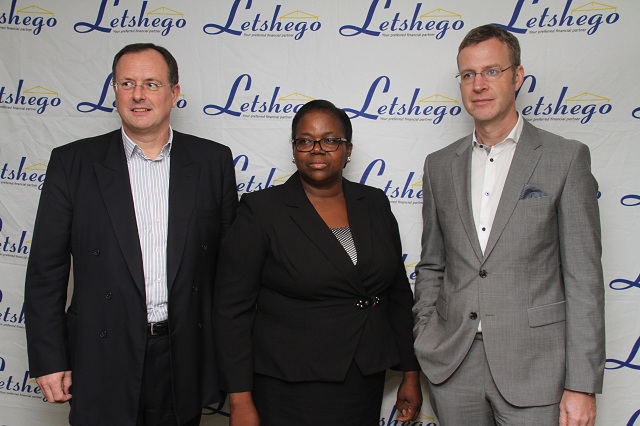
Chris Low, Letshego Group managing Director; Ms Paulina Nsa, Managing Director of FBN Micro finance and Tom Kocsis, Letshego Group Head of East Africa and Micro finance at a press conference in Lagos announcing Letshego's acquisition of 100% stake in FBN Micro Finance Bank.
Letshego Holdings Limited (“Letshego”), the financial inclusion focused group with consumer, micro lending and deposit-taking subsidiaries across Southern and East Africa, has announced that it has acquired a 100% shareholding in FBN Microfinance Bank (FBN MFB) from its parent, FBN Holdings plc. FBN Holdings plc is the oldest banking group in Nigeria, having been established in 1894, and is listed on the Nigeria Stock Exchange.
The acquisition of FBN MFB marks Letshego’s entry into West Africa, having successfully built a footprint in East and Southern Africa with 265,000 customers across nine countries. This development brings Letshego’s footprint to ten countries, with a customer base of over 385,000; Nigeria, in particular, has been a key target market in Letshego’s diversification plans.
FBN MFB was established in 2009 and is one of only six microfinance banks in Nigeria to have been awarded a national microfinance banking licence. Currently, FBN MFB has 28 branches and over 300 team members. Its core business is lending, savings and transactional financial services to micro and small enterprises (MSEs).
With over 80,000 depositors and over 10,000 MSE borrowing customers, the bank’s operations are directly aligned to Letshego’s financial inclusion agenda. Letshego brings its expertise in payroll deduction lending in the public and private sector, as well as lending to micro and small enterprises, with a focus on agriculture, education and health sectors. FBN MFB will rebrand to Letshego MFB in due course.
“As the leading indigenous BSE-company by market capitalisation and profitability, it is an exciting time for us at Letshego,” said Group Managing Director, Chris Low. “This opportunity to enter the Nigerian market coincides with the expansion of our range of financially inclusive products and services. We believe Nigeria’s growth prospects in our targeted low-and-middle income, and MSE, customer segments have significant upside potential, and that, by bringing our skills to this market we can further financial inclusion and improve lives across Nigeria. We look forward to being able to further improve lives across the continent through this development.”
A Federal High Court says it will on January 29 rule on the bail application by Mr Nnamdi Kanu, the leader of the Indigenous People Of Biafra.
At the hearing on monday, Mr Kanu, through his counsel, told the court that the offense for which he was standing trial was a bailable one.
However, the Director of Public Prosecution, who represented the Federal Government, asked the court to refuse bail on the grounds that the offence for which Mr Kanu and his co-accused were standing trial was a serious offense.
He also told the court that if granted bail, the accused would interfere with witnesses and evidence.
Having heard the two parties, the trial judge fixed the ruling on the bail application for January 29.
Last week, a Federal High Court sitting in Abuja ordered that Mr Kanu, who had been on detention, be remanded in prison custody pending the hearing and determination of his bail application.
Justice James Tsoho gave the order shortly after Mr Kanu and two others pleaded not guilty to a six-count charge of treasonable felony and illegal importation of a radio transmitter preferred against them by the Federal Government.