









Home Blog Page 2994

Respite for Investors as Year-end Rally Pushes Market Capitalization Up by N612billion

Trading activities at the Nigerian Stock Market in the last trading week of the year 2015 brought a huge relief to investors on the bourse as equities soared by N612 billion in three days.
Although, it was a brief trading week as the Federal Government of Nigeria declared Monday, 28th December, 2015 and Friday, 1st January, 2016 as Public Holidays to celebrate Boxing day and the New Year respectively.
Meanwhile, trading on the floor of the bourse recorded a turnover of 2.965 billion shares worth N9.364 billion in 7,174 deals in contrast to a total of 743.117 million shares valued at N6.591 billion that exchanged hands last week in 8,325 deals.
The Financial Services Industry (measured by volume) led the activity chart with 2.760 billion shares valued at N5.174 billion traded in 4,103 deals; thus contributing 93.06 per cent and 55.25 per cent to the total equity turnover volume and value respectively.
The Services Industry followed with 66.805 million shares worth N203.043 million in 140 deals. The third place was occupied by the ICT Industry with a turnover of 42.737 million shares worth N21.730 million in 15 deals.
Trading in the top three equities namely; African Alliance Insurance Company Plc, Sterling Bank Plc and FBN Holdings Plc. (measured by volume) accounted for 1.998 billion shares worth N2.585 billion in 882 deals, contributing 67.36 per cent and 27.60 per cent to the total equity turnover volume and value respectively.
Also traded during the week were a total of 60,171 units of Exchange Traded Products (ETPs) valued at N484,396.36 executed in 20 deals, compared with a total of 721 units valued at N250,859.50 transacted last week in 19 deals.
However, a total of 75,750 units of Federal Government Bonds valued at N128.722 million were traded this week in 1 deal.
Index movement shows that the NSE All-Share Index and market capitalization appreciated by 6.59 per cent and 6.62 per cent to close the week at 28,642.25 points and N9.851 trillion respectively.
Similarly, all other Indices finished higher during the week, with the exception of the NSE ASeM Index that closed flat.
“Nigeria’s Insurance Sector To Grow In 2016” – Experts Predict


Experts have predicted a growth in Nigeria’s insurance industry utilizing the expansion of ICT deployment, population density and massive use of telecommunication facilities to sell insurance products.

KPMG in its recent analysis on “The African Insurance Market at a Glance” observed that many markets in the Sub-Sahara Africa including Nigeria are experiencing a step forward in terms of the sophistication of the insurance market.

The firm sees active regulatory agenda and reform which the National Insurance Commission (NAICOM) has consistently pursued.

Experts see positive collaboration between regulators to show best practice and agree common framework for future reform.

This can be seen in the recent endorsement of a Memorandum of Understanding (MoU) between NAICOM and the National Association of Insurance Commissioners (NAIC) of the United States for the purpose of maintaining efficient, safe, fair and stable insurance markets in Nigeria and the United States.

Both NAICOM and NAIC believe such cooperation will enable them effectively regulate the industry and entrench international best practices.

Under the agreement, the authorities will provide mutual assistance periodically through training, participation in internships with specific educational focus, educational seminars, provision of training manuals/materials and any other issues of common interest.


Kaduna/Katsina Customs Command Nets N5billion

The Kaduna/Katsina command of the Nigerian Customs Service, NCS, raked in N4.9 billion from January to November 2015.

Customs Area Comptroller, Gidado Bala Muhammad who disclosed this while addressing newsmen said the figure was a little above the sum of N4.5 billion realised by the command last year.

According to him, the command also seized goods that included rice, cooking oil, with duty paid value worth N135 million assuring that the war on seizure of contraband good would be intensified.

Muhammad listed items seized to include used vehicles, pharmaceutical products, China Green Tea, vegetable oil, macaroni and spaghetti.

“Our warehouse is filled to capacity now as any available space is used as constructive warehouse for safe keeping”.

He said no fewer than nineteen suspects are undergoing prosecution and added that one suspect is awaiting prosecution due to the public holiday.


IPMAN Partners With British Firms To Build Two Refineries in Plateau

The Independent Petroleum Marketers Association of Nigerian, IPMAN, has wrapped up arrangement with two British oil companies to build two modular refineries in Plateau State.

The National Secretary of PMAN, Danladi Pasali, who disclosed this to reporters on Sunday, January 3, in Jos, said the decision was taken following the return of peace and the change in the political and economic atmosphere in the state.

Pasali said:“We have concluded arrangement with two foreign firms from Britain, Blue Oil Company and Water Carbon Filed Energy to build two modular refineries. One refinery would be located in Plateau South while the other one would be built in Plateau North.”

He said that following the approval of over 60 modular refineries in the country by President Muhammadu Buhari and the accommodative, peaceful as well as inclusive system of government demonstrated by the current administration in the state, the state would witness more and investors.

According to him, investors have been driven away from Plateau state in the past because of attitude of previous governments and the protracted communal crisis in state, “but the measures put in place by the present government has restored the confidence of investors and a lot of other investors would storm the state.

President Buhari had within his first 100 days in office granted licences to Nigerian companies to construct modular refineries.

Modular refineries are mini-refineries with capacities ranging from 1,000 to 10,000 barrels per day (bpd) which can be assembled and separated easily for enhanced performance and efficiency.

2,839 BDC Operators Meet Recapitalization Deadline

The Central Bank of Nigeria, CBN, has listed 2,839 Bureaux De Change, BDCs, that have met the N70 million regulatory capital base.

In a circular released over the weekend, the CBN said the BDCs have complied with new N35 million capitalization requirements and another N35 million cautionary deposit stipulated for operators.

The apex bank had in June 2015, announced a new minimum capital requirement of N35 million for the operation of BDCs, up from the N10 million it was previously.

The new capital base, is contained in a new guideline for the industry backed by the CBN Act of 2007 and the Banks and Other Financial Institutions Act 2004 (BOFIA). Both statues, stipulate a non-refundable application fee of N100,000 and non-refundable licensing fee of N1 million.

The circular, which will come into effect this month, orders retail money exchanges to deposit a mandatory cautionary deposit of N35 million in an account with the CBN, in addition to a minimum capital requirement of N35 million.

The new guideline said no person should carry on the business of BDC in Nigeria, except with the prior authorisation of the CBN. It also stipulates that a BDC shall be construed as any company that is licenced to carry on small scale foreign exchange business in Nigeria and whose sole object is the carrying on of such business on a stand-alone basis.

It said the application for BDC licence shall be processed in two stages, namely: approval-in-principle (AIP) and final licence.


Stock Market Index Wraps Up 2015 With 3.11% Gain


The Nigerian Stock Exchange, NSE, closed the year 2015 on a positive note as lead indicators increased by 3.11 per cent.

The All Share Index soared 864.42 points higher to close at 28,642.25 points compared to 1,014.59 points gained previously to close at 27,777.83 points, while market capitalization added N297.3 billion to close at N9.9 trillion compared to N351.5 billion added previously to close at N9.6 trillion.

The day’s gains were sustained by ample increases in Sectoral indices as they all closed positive with the exception of the NSE ASeM Index which closed flat.

The NSE Consumer Goods Index topped the sectoral indices with an increase of 5 per cent due to gains recorded by Nigerian Breweries which added 9.68 per cent or N12 to close at N136 per share and Nestle which also grew by 4.24 per cent or N35 to close at N860 per share.

Market breadth likewise closed positive with 33 gainers pitched against 6 losers. Top three gainers for the day were Nigerian Aviation Handling Company Plc., which increased by 10.20 per cent or 35 kobo to close at N3.78 per share followed by Transnational Express Plc., which added 9.71 per cent or 10 kobo to close at N1.13 per share, while Nigerian Breweries Plc., gained 9.68 per cent or N12 to close at N136 per share.

On the other hand, Cadbury Plc topped the losers chart with a decline of 4.99 per cent or 90 kobo to close at N17.15 per share, followed by Cutix Plc., which depreciated by 2.92 per cent or 5 kobo to close at N1.66 per share, while Skye Bank Plc., dropped 2.47per cent or 4 kobo to close at N1.58 per share.

At the end of the day’s transactions, investors on the Nigeria Stock Exchange had in 2,160 deals exchanged a total of 252.2 million shares valued at N3.9 billion in contrast to a total of N1.4 billion shares worth N1.95 billion exchanged in 2,559 previously.

Naira Sheds10% Value at Money Market

The naira continued to nose dive almost throughout 2015 in both the parallel and interbank markets.

At the last trading day for the year last Thursday, December 31,  the naira dipped further against the dollar while the stock index rose.

Naira closed on the interbank market at 199.50 to the dollar on Thursday, compared with 181.50 to the dollar a year ago, down 9.91 per cent at the official window.

On the parallel market, the naira traded at 266 to the dollar, weaker by 39.26 per cent from 191 to the dollar at the close of last year.

The naira has continued to come under pressure against the dollar, as Brent crude price continues to decline. The oil price declined to $35 per barrel on December 11, its lowest price since February 2009, before increasing to $38.45pb on December 15 and closed the year around $37pb. This has adversely affected almost all indicators in the economy including the naira.

At the parallel market, the local currency depreciated by 8.44 per cent to N270/ dollar on the 16th of December, touching a new all time low.

At the interbank market, the naira remained relatively stable and appreciated marginally by 0.53 per cent to N197.49/ dollar. The external reserves level declined during the review period by 2.25 per cent ($680 million) to $29.48 billion as at December 15.


Commercial Banks to Lose N100billion Revenue as Zero COT Begins

Nigerian Banks revenues is expected to plunge by about N100 billion in 2016, with the implementation of the zero Commission On Transactions (COT) policy.

It is the last phase of the “Guide to Bank Charges” policy initiated by the Central Bank of Nigeria (CBN).

A former Executive Director of Keystone Bank, Richard Obire, explained that of the annual N550 billion average revenue for the 21 banks, about N100 billion is raked from COT.

Obire explained that bank’s revenues are made up of interests on loans, which constitute 70 per cent of the total revenue. Fees and commission make up the remaining 30 per cent. Fees and commission covers 30 per cent of the total revenues. COT constituting 60 per cent of income within the segment.

Obire said banks should be moving towards income diversification to shore up their revenue base. He said lenders should be creative and think of how to diversify to support activities that generate foreign exchange from local industries. He said aside the COT-free banking, the lenders will face pressure arising from interest revenues on loans.


 The “Guide to Bank Charges” implementation, which started in March 2013, has seen the COT gradually drop to N3 per mille in 2013; N2 per mille in 2014; and N1 per mille in 2015 to Zero COT per mille started on January 1.

The “Guide to Bank Charges” is an initiative of the Central Bank of Nigeria (CBN) to reduce charges widely seen by bank customers

In a circular titled: “Implementation of Revised Guide to Bank Charges –Commission on Turnover,” posted on CBN’s website and signed by its Deputy Director, Financial Policy and Regulation Department, Franklin Ahonhai, the regulator said there was no going back on the policy implementation.

It mandated banks that charged excess COT since the effective date to refund same to the affected customers or be sanctioned.

According to the CBN, the policy is expected to have implications for both banks and their customers as it is expected to give the regulator more power to deal with banks reluctant to lower service fees considered ‘as the highest in the world’.


NLNG Poised to Surpass 350,000 Metric Tonnes Yearly Supply

Nigerian Liquefied Natural Gas, NLNG, can exceed its annual supply of 350, 000 metric tonnes (MT) of LPG, its Manager, Marketing and Development, Abdulkadir Ahmed, has said.

Ahmed, who gave this hint at a stakeholders’ forum in Lagos, said NLNG has not only supplied over 700,000 MT since inception, but can also exceed its annual supply of the product provided the market can absorb it.

He said the gap between the demand and supply of the product was not caused by NLNG but by institutional bottlenecks occasioned by delay at the terminals where LPG is being discharged among other factors.

Also, the President, Liquefied Petroleum Gas Association of Nigeria (LPGAN), Dapo Adesina, said NLNG could supply as much as one million tonnes of LPG, provided the market can accommodate it.

He said the occasional scarcity of LPG, otherwise known as cooling gas, in the market was not as a result of low supply from the NLNG, but delay in the delivery of the product at the terminals.

He said NLNG’s terminals were approved by the Federal Government to discharge LPG, and that two are actually providing the service.

Adesina said vessels bringing LPG to Lagos from NLNG’s base in Port Harcourt, Rivers State, were sometimes delayed for days at the terminals for one reason or the other.

He said the North Oil Jetty (NOJ) was directed by the government to give priority to Premium Motor Spirit (PMS) in order to ease fuel scarcity, noting that the issue has prevented LPG vessels from discharging their content as at when due.

Adesina said the fact that some companies are importing LPG from Niger Republic and other countries does not mean that Nigeria cannot meet local demand for the product.


Oil Marketers Shun Govt Orders, Sell Fuel Above N86.50 Pump Price

Investigations have revealed that many filling stations across Benin City, the Edo state capital, on Sunday, January 3, defied the Federal Government’s directive on the new pump price for petrol as they continued to sell the product at either the old regulated price of N87 per litre or above it.

While majority of the filling stations around Ekenwan, Akpakpava were not selling fuel, only MEGA station on Sapele road was selling petrol for N86.per litre, with a relatively long queue, The Nation reports.

Also, at an NNPC retail station in Upper Sakponba road, petrol was sold for N87 despite the Federal Government’s directive.

A fuel attendant who spoke on condition of anonymity, that motorist should appreciate them after all “Others are selling for as much as N145-N 150 per litre

But other independent marketers who were dispensing the product sold to motorists and other buyers at between N115 and N150 per litre.

FG to Refund N5 Billion to States for Repairing Federal Roads

The Federal Government is planning to refund N5bn out N300bn owed state governments that have spent their resources to fix federal road in their respective states.

The proposal is contained in the budget document which has been submitted by President Muhammadu Buhari to the National Assembly.

The fiscal document also indicated that the government had allocated a total sum of N60bn for special intervention and constituency projects in the 2016 fiscal year.

These amounts were provided for in the 2016 budget under the subheading of capital supplementation.

The document did not, however, provide details of the constituency projects and the states that would benefit from the refund on the federal road projects.

But as of June 2015, a total sum of N300bn was said to be owed states by the Federal Government for various road projects.

The Nigeria Governors Forum had on June 18, 2015 made a request to the President for the refund of money spent on roads belonging to the Federal Government.

Navy Arrests 16 Suspected Oil Thieves in Delta State

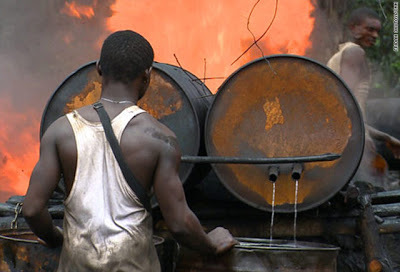
Officials of the Nigerian Navy on Friday in Oteghale community, Warri-South Local Government Area of Delta State uncovered a hideout of crude oil thieves and arrested 16 suspects.

Flag Officer Commanding, Central Naval Command, Rear Admiral Augustine Suleman, who confirmed the development, said the arrest of the suspects was made possible via a tip-off.

He added that the operatives discovered a hop tap on the Trans Forcados pipeline fixed with six inches valve that allows crude oil thieves’ access to Nigerian crude unhindered.

He said: “A trip to the site revealed drums of over 8,000 tones through illegal trades.’’

Rear Admiral Suleman said the operatives realised that the Cotonou boats were not available and illegal refineries no longer existing with impunity.

He said, “What they are doing now is to connect pipes to the export line. They attach the pipes to the line and lay the pipes as far as two kilometers off shore and load directly from there.’’

Suleman, however, assured of their preparedness to end the illicit trade, disclosing that the suspects would be handed over to the police for further prosecution.

LCCI Predicts Tough Business Environment in Nigeria for 2016

The Lagos Chamber of Commerce and Industry (LCCI) has expressed concern about the current state of the Nigerian economy and the consequences of the Central Bank of Nigeria’s foreign exchange policy over the last few months.

In an appraisal conducted by the LCCI of the Nigerian economy in 2015 last week, it concluded that private operators in many sectors recorded losses of over N1.5trn last year as a result of scarcity of forex, especially during the last six months.

The Chamber, in a statement, bemoaned the unfriendly business environment in the country in 2015, saying it undermined the capacity of investors to maximise abundant business opportunities, in Africa’s largest economy.

“With drastic fall in oil price, heavy fuel subsidy bill, nearing N1trn in 2015, wide spread insolvency among state governments across the country, increasing sovereign debt and debt service obligation of N1.3t in 2016, the financial crisis may linger in the new year,” it predicted.

The statement or economic review and projection into the year 2016 signed by the Director General of the chamber, Mr. Muda Yusuf, described the Central Bank of Nigeria (CBN) forex restrictions policy in 2015 as one of the “costliest” policies in Nigeria in the recent years.

On business environment in 2015, Yusuf expressed concern over the deplorable state of roads leading to the Lagos ports (Apapa and Tincan Island), saying, “these ports account for over 60 percent of the cargo coming into the country and an estimated 70 percent of customs’ revenue. The poor state of the roads has multifarious effects on the private sector, economy and the citizenry.”

NNPC Made N14.3 Billion Loss in November 2015

Monthly reports on the operational and financial dealings of the Nigerian National Petroleum Corporation, NNPC, has revealed that the corporation recorded a loss of N14.3 billion in the month of November 2015.

The November loss came from the NNPC’s operating revenue after subsidy for the months of October and November 2015, which were N173.56 billion and N155.10 billion respectively.

This represents 56.72 percent and 50.68 percent, respectively, of the Corporation’s monthly budget.

The report also shows that the Corporation incurred operating deficits of N12.22 billion and N14.29 billion in the months of October and November 2015, respectively, as against the monthly budgeted surplus of N38.91 billion.

It further stated that the country’s refineries in Warri, Port Harcourt and Kaduna operated at zero capacity utilisation in the month of November.

The company said its total export proceed of $402.55 million was recorded in November 2015, with proceeds from crude oil export sales amounting to $296.99 million or 73.78 percent of the dollar payment compared with 72.97 percent contribution in the previous month of October.

It continued that gas export sales and Nigeria Liquefied Natural Gas feedstock amounted to $105.53 million, which represents a 26.22 percent contribution compared with 18.97 percent contribution in the prior month of October.

Three Refineries to Start Operations in Akwa Ibom

Governor Udom Emmanuel of Akwa Ibom State has disclosed that three private refinery operators have indicated interest to start operations in the state just as he warned marketers against contravening the miscellaneous code which he said, is punishable by law.

The Governor also advocated for the liberalization of the petroleum downstream sector to make room for an inter play of market forces which would regulate the cost of Petroleum products for the consuming public.

He stated this during the monthly prayer meeting at the Latter House Chapel, Government House, Uyo.

Governor Emmanuel was speaking against the backdrop of artificial scarcity of premium motor spirit (PMS) created by the marketers who have closed their stations and in the process deny motorists and the consuming public, access to the product.

He said, “Petroleum marketers are hoarding fuel on the pretext that the just concluded National Economic Council would push for the removal of Petroleum Subsidy. Let me clarify that during our last meeting, even at the Governor’s Forum, subsidy issues were not deliberated. If at all it will be removed, it’s not going to be immediately, so there’s no point hoarding fuel hoping that subsidy will be removed for them to enjoy super abnormal profits.

“Let’s not take things to the extreme. Yesterday no station was open in the state. I am of the view that if subsidy is removed, the interplay of market forces will bring down the price to where it should be.

“At present, landing cost of crude oil in the current market price is seventy eight naira, with liberalization anybody can come in, refine and sell the product. This way, the product will be cheaper, so I want to see the stations opened.”

Abuja Petrol Stations Comply With New Pump Price

There are indications that most of the petrol stations in the Federal Capital Territory (FCT) have complied with the new pump price for petrol which became officially effective on January 1, 2016.

According to a report by a correspondent of the News Agency of Nigeria (NAN) who went round many filling stations in Abuja on New Year’s day, not only had the stations adjusted their prices to the new regime, there appeared to be ample supply of the products, with a lot of the stations having loaded trucks on stand-by.

The Federal Government had directed that from January 1, 2016, all NNPC retail stations should sell petrol at N86.00 per litre, while independent petrol marketers were to sell at N86.50.

According to Mr. Farouk Ahmed, Executive Secretary of the Petroleum Products Pricing Regulatory Agency (PPPRA), the new pricing is a result of the implementation of the revised components of the Petroleum Products Pricing Templates for PMS (petrol) and kerosene. The new prices are expected to be in place at least for the first quarter of the year.

Recapitalization: CBN Approves 958 Micro-Finance Banks

The Central Bank of Nigeria (CBN) has announced that a total of 958  Micro-finance Banks (MFBs) were successful in scaling its recent recapitalization exercise, and are therefore now licensed to operate in the country. This figure is down from the over 1,200 operators that were previously in the business.

The new list of successful MFBs include those that met the N2bn capital base to operate with a national license, N100 million to operate with a state license, and those with N20million capital base to operate as a unit MFB.

In justifying the recapitalization exercise, the CBN accused the MFBs of engaging in illegal activities such as taking excessive loan risks and branching out too quickly, and against the provisions listed in their licenses.

According to the CBN, a unit MFB is authorized to operate only in one location, without any branches or cash centres, and is required to have a minimum paid up capital of N20 million. An operator with a state license may open branches within the state or the Federal Capital Territory, with a capital base of N100 million, while a national MFB license allows the operator to operate in more than one state, but with a paid up capital base of N2 billion.

According to a Financial Stability Report on the Micro-finance Bank sub-sector, signed by CBN Deputy Director, Financial Sector Stability, Dr. Joseph Nnanna, the recent re-capitalization of the MFBs brings the total paid-up capital and shareholders funds of the operators in that sector to N173.45 billion.

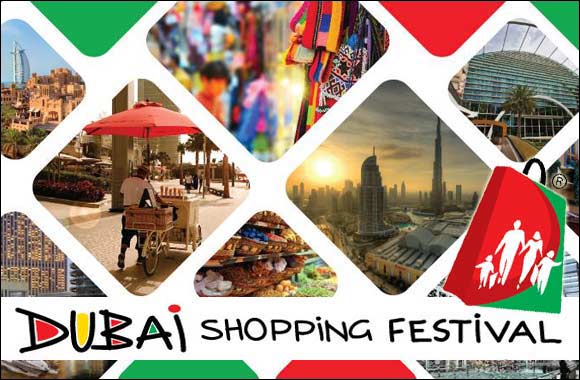
Dubai Shopping Festival 2016 Begins

The 2016 edition of the Annual Dubai Shopping Festival (DSF) has kicked off. The Festival, which opens on January 1 every year, and runs throughout the month, is very popular and renowned worldwide for offering shoppers exceptional deals and promotions.

The DSF started in 1996, and has since turned into a great tourist attraction for shoppers and visitors from around the world. Oher activities on parade during the Festival include: musical concerts, fashion shows and children’s events. It is therefore common during the Festival, to find travel agencies organizing special holiday deals and packages for families and shoppers to enable them participate in what is undeniably a unique shopping experience.

Although over the years the DSF has been known more for its focus on gold and jewelry, it is increasing featuring shopping malls and online retailers offering fantastic deals on electronics, arts and crafts, wrist watches, carpets and perfumes from some of the world’s most popular brands such as Versace, Gucci, Armani and so on, offered at heavily discounted prices. Discounts at the DSF have been known to run as high as 75% on some items.

One of the unique features of this year’s DSF is the “100 Winners in 32 Days” promotion that is being run by the Dubai Gold & Jewelry Group, which will involve several gold and jewelry retailers.

Tony Elumelu Foundation Earmarks $37m For 1,000 Entrepreneurs In 2016

The Tony Elumelu Foundation, through its Entrepreneurship Programme, has announced plans to provide a total of $37 million as seed money to 1,000 budding African entrepreneurs in 2016, to enable them start up their own businesses.

According to a statement by the Foundation, each of the recipients will get a N850,000 (about $3,761) non-refundable seed capital, at the end of their training programme. In addition, they will each get an additional N850,000 ($3,761) in debt or equity.

The 1,000 successful beneficiaries will join the 1,000 from 51 countries across Africa, who were successful at the inaugural edition of the programme in 2015, bringing the total number to 2,000.

The inaugural beneficiaries of 2015 successfully underwent a 12-week training on how to set up and manage a business, with mentoring and financial support from the Tony Elumelu Foundation.

The Chairman of the TEEP, Mr. Tony Elumelu, said: “I believe in empowerment that can change the face of Africa as we know it. African entrepreneurs are our future leaders, and I am passionate about giving them the opportunity to succeed. TEEP is a major, deliberate effort on my part, to institutionalize luck and provide seed capital funding, mentoring, business training, pan-African networking and a springboard that our aspiring entrepreneurs need to leap from”.

NNPC Remits N933.1bn, $607.8m, To FG From January to November, 2015

The Nigerian National Petroleum Corporation (NNPC) remitted a total of N933.1 billion to the Federation Account between January and November, 2015. The amount was for domestic crude oil and gas and other receipts during the period.

The dollar payments to the Federal Accounts and Allocation Committee for the same period amounted to $607.8 million. Total export proceeds for November 2015 was $402.55 million, with crude oil exports accounting for $296.99 million, or 73.78%.

These figures are contained in the NNPC’s financial report for November and December 2015. The report also indicated that the nation’s refineries all operated at zero capacity for November 2015. In other words, there was no processing of any crude oil by the Port Harcourt Refining Company, Warri Refining and Petrochemical Company and the Kaduna Refining and Petrochemical Company in that month.

Meanwhile, there are indications that only two of the refineries, those of Port Harcourt and Kaduna, were able to meet the  90-day deadline given to all the refineries by the Minster of State for Petroleum, Dr. Ibe Kachikwu, for them to resume crude processing. The deadline elapsed on Thursday, December 31, 2015.

The Kaduna refinery resumed production about two weeks ago, while the Port Harcourt refinery went back into operation on Sunday, December 27, 2015.

The nation’s three refineries have a combined production capacity of 445,000 barrels per day. The Warri refinery has a capacity of 125,000 bpd, the Port Harcourt refinery has a total capacity of 210,000 bpd, while the Kaduna refinery has the capacity to process 110,000 bpd.

BizWatchNigeria.Ng
Privacy Overview

This website uses cookies so that we can provide you with the best user experience possible. Cookie information is stored in your browser and performs functions such as recognising you when you return to our website and helping our team to understand which sections of the website you find most interesting and useful.