








Home Blog Page 2984

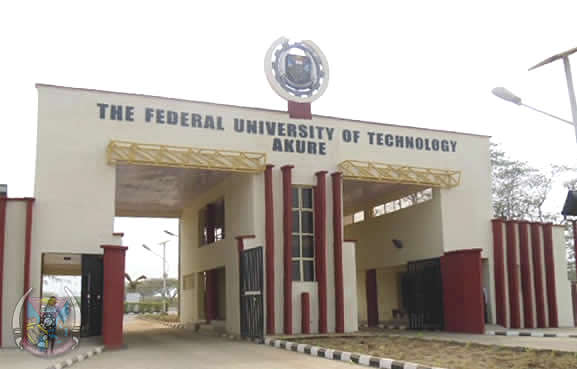
NASU, FUTA Chapter Protest Removal of VC

The internal crisis rocking the Federal University of Technology, Akure, FUTA, yesterday took another dimension, as the Non-Academic Staff Union of Universities, FUTA chapter called for immediate removal of the vice chancellor of the university, Professor Adebiyi Daramola.

The association, during a protest that grounded the activities of the institution yesterday alleged that the vice chancellor sacked teachers of the institution’s staff primary school and allegedly employed others without following due process.

The protesters who locked the gate of the school and asked the pupils to go back home, armed with placards with various inscriptions such as “ No to privatisation of federal universities primary schools ,” “No to disengagement ,” “ We say no to appointment of teachers,” “ Don’t kill FUTA Staff School,” “We are federal government workers,” “We say no to re-apply”, “Our children’s future is important”, among others .

Speaking with journalists on the development, The FUTA chairman of NASU, Comrade Adebayo Aladerotohun said that that the Vice Chancellor has an agenda in the sack of the teachers.

Take Advantage of Skill Acquisition Programme.s – NYSC DG Tells Corp Members

Brig-Gen Johnson Olawumi, the Director-General of the NYSC, has called on Corps Members to utilise the Skills Acquisition and Entrepreneurship Development (SAED) Programme initiated by the NYSC Scheme well to enable them become self-reliant after the service year.

Olawumi who gave the advice in his New Year Message to the over 240,000 Corps Members currently undergoing National Service, urged the corps members to develop on the skills they acquired during the SAED training on camp by utilizing their free time to engage in post-camp training.

Olawumi stated that the different skill sets which corps members could choose from include; Agro-Allied, Culture/Tourism, Cosmetology, ICT, Construction, Power/Energy, Food Processing and Preservation, Construction, Environment, Horticulture and Landscaping, Education, Automobile and Film and Photography adding that the Scheme intends to expand the Skill sets during the year.

One Dead in Edo State as Lassa Fever Spreads to 10 States

Lassa Fever

The Lassa fever outbreak ravaging 10 states of the country has claimed its first casualty in Edo State.

The Commissioner for Health in Edo, Dr. Eregie Aihanuwa, who confirmed this during a press conference on Monday, also noted that five persons were hospitalised after showing the symptoms of the deadly disease.

She said three out of the six infected persons were treated and discharged, adding that the deceased victim did not report her sickness early enough.

Aihanuwa noted that the state government had recorded some cases of the viral disease in some local government areas.

Up till now, measures are being put in place to curtail the spread of the deadly disease, everyone who has had contact with infected persons have been directed to report to the designated health centres where they will be isolated and treated, it will take 21 days to detect if one is a carrier or not.

FG, States to Build 800 Mega Filling Stations

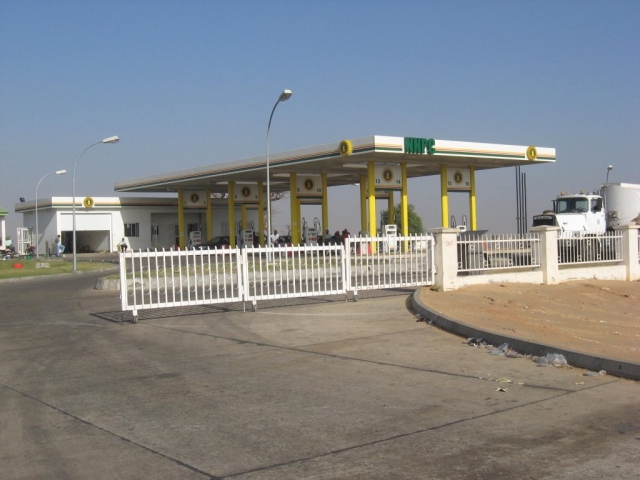
The Minister of State for Petroleum Resources, Dr. Ibe Kachikwu, has said that the Federal Government is partnering states and local governments as well as private investors to build hundreds of petrol stations across the country in a bid to prevent future crisis in the supply of petroleum products across the country.

He also stated that the Department of Petroleum Resources was not doing enough to enforce the new pump price of petrol at filling stations although the agency swiftly stated that its entire staff strength was around 300, while there were over 30,000 filling stations across the country.

The Minister confirmed to journalists at a press conference in Abuja on Monday that the government would also sign joint venture agreements with existing petrol stations in its bid to increase the number of outlets run by the Nigerian National Petroleum Corporation.

#DasukiGate: EFCC Extends Investigations to Former VP, Namadi Sambo

Reports say that the Economic and Financial Crimes Commission is set to extend its ongoing investigation into the $2.1 billion arms procurement scandal to the office of former Vice-President Namadi Sambo.

It was gathered on Monday that the EFCC operatives were looking into the office of the former Vice President because of some transactions that linked the office to that of the former National Security Adviser, Col. Sambo Dasuki (retd.).

There was a report two weeks ago that Destra Investment, a company owned by the National Publicity Secretary of the Peoples Democratic Party, Chief Olisa Metuh, allegedly paid N25 million to a former special assistant to Sambo, Abba Dabo, on December 16, 2014.

The commission is currently investigating N1.4 billion found in the account of Metuh’s company.

Out of the N1.4 billion, N400 million was alleged to have been paid by the Office of the NSA.

Swiss Government to Return $300 Million Stolen Funds to Nigeria

The Minister of Foreign Affairs, Geoffrey Onyeama, that negotiations are ongoing with a number of countries on the modalities for the repatriation of some looted funds stashed abroad, and that the Federal Government had been in touch with Switzerland, which he said, had earlier repatriated $700 million to Nigeria. He noted that another $300 million that was recovered would soon be repatriated to Nigeria.

Speaking in an interview with journalists in Abuja, Onyeama stated that the Federal Government was in discussion with the United Kingdom, the United States, among other foreign governments around the world, on how all stolen funds could be recovered.

He said, “We are in touch with Switzerland; they have recently recovered quite a significant amount of money and I met last week with Swiss representatives to work out the modality for the repatriation of the funds.

“The Swiss government has already repatriated over $700 million from (the late Gen. Sani) Abacha loot and that agreement has been reached on how the money would be applied.

“They have also now recovered in the same context another $300 million of which there is ongoing discussion to have that repatriated as well. There are discussions with other countries; United Kingdom for instance, as you all know, is one of the countries we are discussing with on how to recover looted funds.

The minister explained that the goodwill generated by President Muhammadu Buhari’s visits to the US and other countries had helped in getting various nations to cooperate with Nigeria on the loot recovery drive.

DMO to Issue Up to N390bn Bonds Between January and March

The Debt Management Office says it plans to issue between N260 billion and N390 billion in a five, 10 and 20-year bonds in the first quarter of the year.

The debt office, in its website, on Monday, said it would issue between N40 billion and N60 billion in bonds that would mature in 2020 in January and February respectively.

It says it will also issue about N30 billion of the same tenor bonds in March.
The DMO added that it would also issue between N40 billion and N60 billion bonds that would terminate in 2026 in the first three months of 2016.

According to the DMO, the first N40 billion and N60 billion bonds for 20 years that will terminate in 2036, will be issued in March.

Power Generating, Distribution Companies Revenue Shortfall Hit N478billion


Revenue shortfall by generating and distribution companies soared to N478 billion since November 2013, when the defunct Power Holding Company of Nigeria, PHCN assets were unbundled and handed over to private investors.

Industry sources said that the sector initially had a shortfall of about N290 billion from November 2013 to December 2014, while attributing the rise to the fact that data handed over to them was not in line with agreement signed upon privatisation.

Although the revenue shortfall was partly addressed by the N213 billion Central Bank of Nigeria, CBN, loan facility (repayable over 10 years with interest), bso far, only N65 billion has been disbursed to the power companies.

Whilst the Transitional Electricity Market, TEM, officially commenced February 1, 2015, the DISCOs were supposed to pay market bills in full, even though cost reflective tariffs were not in place.

According to a source, “From January to the end of October, 2015, the new additional sector shortfall rose to about N265billion, that is now N478 billion from take-over to date. If there is no immediate tariff review, the sector will continue to have a deficit of N20 billion a month. The Shortfall is being felt by gas suppliers, generating companies, transmission and distribution companies.”

He added that in spite of negative cash flow, over N26 billion has been invested by the DISCOs in the assets and improvements since take over.

Another source disclosed that about 50 percent of the power bought is not paid for due to power theft, inadequate collection, insufficient infrastructure or non-cost reflective tariff, exchange rate factor and insufficient capital expenditure, CAPEX.


Discos Declare Force Majeure On Power Supply

Increase In Electricity Tariff Insensitive, Manufacturers Lament

New owners of distribution companies, DISCOs, in Nigeria have declared force majeure on power supply across the country.

The investors, who took over power distribution assets from the Federal Government on Friday, November 1, 2013, also demanded a refund of their investments if nothing is done to address what they called “the havoc, which the non-cost-reflective tariff has wrecked on their businesses.”

Force majeure is a contractual and legal announcement, which is used to declare the inability of a party to meet up with a contractual obligation with another party in business.

This force majeure, New Telegraph learnt, was contained in a letter sent to the minister in charge of power, Mr. Babatunde Fashola, who has summoned a meeting with the chief executives of the DISCOs in Abuja today. Although the Nigerian Electricity Regulating Agency (NERC) has slated February 1 for the implementation of a tariff hike, the DISCOs prayed government to adhere strictly to the pact it signed with them before the takeover.

“They want the Federal Government to refund their money for the licenses, which they plan to return if nothing is done to address the problems which government’s inability to meet up its part of the contract has caused.

“One of these is the backlog of debts of about N45 billion, which the police and military formations, ministries, departments and agencies (MDAs) of government owe them. The tariff, which is not cost-reflective, the hold back of N216 billion intervention funds from the Central Bank of Nigeria (CBN), among others, are some of the issues the DISCOs want addressed.

NCC May Renew 21 Internet Service Providers Licences in 2016

About 21 licenses of individual Internet Service Providers, ISPs, operating in the nation’s telecoms sector are due for renewal this year.

According to information obtained from Nigerian Communications Commission, NCC, website showed that the ISPs were licensed for a period of five years.

They were issued their operating licences in 2011 and this is due to expire for re-validation at different months this year.

Some of the licensees that will renew include Gilat Satcom Nig Limited, Quautet (W.A.) Limited, Kalex Global Solutions Limited, City Central Communications Limited and Global TT Data Networks Limited.

The list also includes Single Eagle Technologies Limited, Hajara Ihsan Nig Limited, Network Information Technology Nig, Limited and Gilat Satcom Nig Limited, Single Eagle Technologies Limited and Lexican Investment Limited. Main one Cable Co. Limited, Network Auditing and Telecom Services, EF ‐ GEE Telecorp Limited, Aida Synergy Nig Limited,

Others are Trussnet Limited, Mfreke Ventures Limited, Conecom Limited, among others. Meanwhile, 18 other ISPs would renew their licences by 2017 while 21 and 20 other ISPS would renew their operating licences in 2018 and 2019 respectively. NCC has issued close to 200 ISP licences to provide Internet services in the country.

Naira Crashes To N282/Dollar


The naira slumped to N282 a dollar at the black market prompting the Central Bank of Nigeria to stop selling foreign exchange to Bureau de Change (BDCs) operators.

The Greenback on Monday, January 11 dropped to its lowest value of N282 a dollar at the parallel market even before the announcement of the suspension of the Dollar auction.

The CBN Governor Godwin Emefiele announced the decision yesterday in Abuja.

He however said the BDC operators are allowed to source for forex from any other source that will not be contrary to the money laundering laws.

Oil Prices Crash to New 12-year Lows

Global oil prices plunged to 12-year lows on Monday, January 11, with U.S. crude futures sliding to the lowest since late 2003, as traders cited fears over slowing demand in China and a growing inventory glut.
The move was exacerbated by U.S. stocks turning negative late morning, with the S&P 500 down nearly 0.4 per cent and Nasdaq down 0.6 per cent, Reuters reports.
Volumes for U.S. crude and Brent crude futures jumped to the highest in the morning at 10:57 a.m. (1557 GMT), which appeared to cap losses momentarily before falling further.


“Global Demand For Air Freight May Pick Up” – IATA

The International Air Transport Association, IATA, on Monday, January 11, said the decline in global demand for air freight may be fading, with increased cargo volumes in November, 2015.

This is contained in a statement made available by the Director-General of IATA, Mr Tony Tyler.

According to IATA, air freight volumes were down 1.2 per cent in November compared with a year earlier.

“Total cargo volumes were up when compared with October 2015.

“It appears that parts of Asia-Pacific are growing again and globally, export orders are looking better,’’ IATA said.

Investors to Get Dividend 24 Hours After Profit Declaration

The Securities and Exchange Commission, SEC, has assured investors that they would now get their dividends 24 hours after their companies had declared profits.

Unclaimed dividends in the country are worth N90 billion and SEC said it is determined to address it by ensuring investors get their dividends 24 hours after their companies’ declaration of profits.

SEC’s Head Marketing Development,Henry Adekunle Rowlands, on Monday, January 11,  said at a road show in Abuja to enlighten the residents of a new e-dividend method that the Commission decided to launch the e-dividend, which refers to an online system of paying dividends to investors within 24 hours after declaration of profits.

Rowlands, who explained how the e-dividend works, said: “When companies declare dividends which are the profits meant for investors …rather than send it by private mail or post office mail, they would just wire it directly to your bank account.”


CBN Lifts Restriction On Forex Deposits in Banks

The Central Bank of Nigeria has said Commercial banks can now accept deposit in foreign currency once again after it lifted the ban.

CBN governor Godwin Emefiele announced this on Monday, January 11 in Abuja saying the lift of the forex restriction was to allow the banks build liquidity in forex and meet some of their demands.

He said the ban was necessitated by what he called dollarization of the economy by many Nigerians.


FG to Raise N390billion Through Bonds In Q1 2016

The Debt Management Office, DMO, has rolled out plans to raise between N350 billion and N260 billion through bonds in the first three months of 2016.

The DMO in its issuance calendar published on Monday, January 11Fg  said there would be new issues.

Consequently, it had issued the offer circular for the sale of two FGN bonds on January 20, 2016. According to the offer circular, the debt office would be raising N80 billion next week Wednesday.

It will be raising N40 billion from the re-opening of the 15.54 per centFGN February 2020 five year bond with a four year one month maturity and another N40 billion from a 10 year new issue bond, FGN January 2026.

On February 10, 2016, the DMO said it plans to raise between N80 billion to N120 billion through the re-opening of the 15.54 per cent FGN February 2020 five year bond and FGN January 2026 10 year bond.

It also plans to raise between N20-30 billion through the 15.54 per cent FGN February 2020 five year bond and N40-60 billion through the FGN January 2026 10 year bond. In addition to this, the DMO said there will be a new issue of FGN January 2036 20 year bond.

With declining government revenues in the wake of falling oil,prices, the President Muhammadu Buhari led government has proposed to raise funds for the largest budget in the history of the country though debt and increased tax.

Dangote Plants Eye $6billion Annual Sale To Nigeria By 2018

The Governor of the Central Bank of Nigeria has projected that Aliko Dangote’s industrial complex in the commercial capital Lagos will sell as much as $6 billion a year of foreign exchange.

Dangote’s fertilizer plant, which will be operational next year, and the petrochemical plant and refinery, expected to be completed by 2018, will meet local consumption of petroleum and chemical products that currently make up 35 to 40 per cent of Nigeria’s import needs, Emefiele told journalists at the construction site Sunday.

The complex will also produce for export, he said.

“We expect that by the time these projects are completed, it will not only meet the needs of our domestic requirement,” Emefiele said. “By the time it is completed, he will be exporting these products to the point where he will be selling foreign exchange to Nigeria, to Nigerians and to the Central Bank of Nigeria to the tune of almost about $6 billion a year.”


“You can imagine what will happen to the savings in foreign exchange” by the time the refinery, petrochemical and fertilizer plants are completed, Emefiele said. “We can’t wait, we need him to do this very fast so we can begin to save foreign exchange,” he said, referring to Dangote, Africa’s richest man.

Emirates Unveils Discounted Fares on New Routes for Nigerian Passengers

UAE carrier, Emirates Airlines has unveiled new fares for Nigerian passengers as part of efforts to enable passengers explore and revisit favorite cities.

The airline said new fares are part of global sales as a window to encourage passengers to travel.

The airline announced special offers on business and economy class for bookings made between January 5 and January 18, 2016 for trips to be embarked on between January 13, 2016 and June 15, 2016.

Emirates Vice President and Chief Commercial OfficerThierry Antinori said: ” We know that many people have begun thinking about their travel plans and aspirations for 2016, and we are pleased to add a little more inspiration and incentive to help turn those plans and dreams into reality.

“Our global destination network across six continents, offers something for every traveller, and we are now combining that wide range of travel choices with special rates to offer would-be travellers with an even more appealing value proposition,” adding that aside from choice, connectivity and value, the Emirates experience also means customers can look forward to industry-leading comforts on board its modern jets, and award-winning service from friendly cabin crew.”

He said Emirates flies to over 140 cities in 80 countries, saying that adventurous globetrotters can explore the airline’s newest destinations launched in 2015, such as Bali, Multan, Orlando, Mashhad and Bologna.

He said Emirates would begin flights to Panama City on February 1, this year, opening the airline’s first gateway destination in Central America.

CBN Stops Forex Sales to Bureau de Change Operators

The Central Bank of Nigeria, CBN, on Monday, January 11, announced that it will no longer sell forex to Bureaue de Change, BDC operators.

They are to source their foreign exchange from autonomous sources.

CBN Governor Godwin Emefiele, who announced this in Abuja,  said BDCs “must, however, note that the CBN would deploy more resources to monitoring these sources to ensure that no operator is in violation of our anti-money laundering laws”.

The apex bank also reversed its decision on the deposit of foreign currency in commercial banks, announcing that it will henceforth “permit commercial banks in the country to begin accepting cash deposits of foreign exchange from their customers”. Both decisions are to take effect immediately.

These measures, the CBN governor said “are not intended to be punitive on anyone or any group; rather, it is meant to ensure that the CBN is better able to carry out its mandate in an effective and efficient manner, which guarantees preservation of our scarce commonwealth, and that our hard-earned financial system stability remain intact to the benefit of all Nigerians.

The apex bank took these decisions because of what Emefiele described as “total disregard of the difficulties that the CBN is facing in meeting its mandate of maintaining the country’s foreign exchange reserves to safeguard the value of the Naira”.


BizWatchNigeria.Ng
Privacy Overview

This website uses cookies so that we can provide you with the best user experience possible. Cookie information is stored in your browser and performs functions such as recognising you when you return to our website and helping our team to understand which sections of the website you find most interesting and useful.