






Home Blog Page 122

Federal Government Suspends Creation Of New Tertiary Institutions For Seven Years

FEC: Debits Cards To Serve As National Identity Cards

The Federal Government has announced a seven-year suspension on the establishment of new federal universities, polytechnics, and colleges of education, citing the proliferation of underutilised institutions, strained resources, and a decline in academic quality across Nigeria’s tertiary education system.

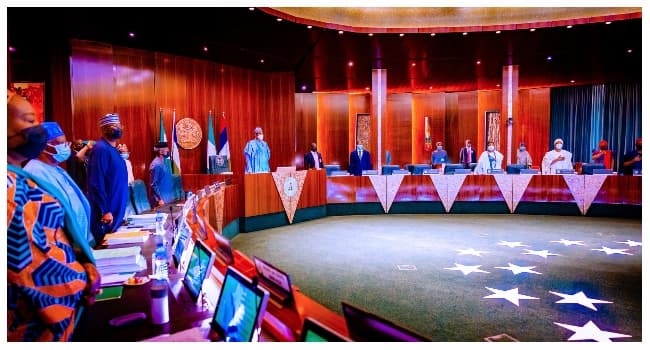
The policy was approved on Wednesday during the Federal Executive Council (FEC) meeting, chaired by President Bola Ahmed Tinubu at the Presidential Villa, Abuja. The decision followed a presentation by the Minister of Education, Dr. Tunji Alausa.

Ironically, the Council also granted approval for the establishment of nine new universities during the same meeting. Briefing journalists after the session, Dr. Alausa explained that the country’s tertiary education challenge was no longer centred on access but on inefficient duplication, inadequate infrastructure, poor staffing, and dwindling enrolment figures in existing institutions.

“Some federal universities operate far below their capacity, with certain institutions having fewer than 2,000 students. In one case, a northern university employs 1,200 staff for fewer than 800 students. This is an unsustainable use of public funds,” the minister stated.

Statistics provided by the ministry revealed that last year, 199 universities received fewer than 100 applications through the Joint Admissions and Matriculation Board (JAMB), with 34 institutions recording zero applications. Of the 295 polytechnics nationwide, many recorded fewer than 99 applicants, while 219 colleges of education had similarly poor enrolment numbers, including 64 with no applicants at all.

Dr. Alausa warned that the unchecked spread of poorly subscribed institutions would produce graduates ill-prepared for the job market, reduce the global credibility of Nigerian degrees, and worsen unemployment rates.

The minister clarified that the moratorium would allow the government to concentrate on upgrading facilities, recruiting qualified staff, and increasing the carrying capacity of existing institutions.

“If we aim to enhance quality and restore global respect for our degrees, halting the establishment of new federal tertiary institutions is the logical step,” he noted.

Nigeria currently has 72 federal universities, 42 federal polytechnics, and 28 federal colleges of education, in addition to hundreds of state-owned and privately-run institutions, alongside specialised schools such as colleges of agriculture, health sciences, and nursing.

On the approval of nine new universities despite the moratorium, the minister explained that they were private institutions whose applications had been pending for as long as six years and had undergone rigorous evaluation by the National Universities Commission (NUC).

“When we took office, there were 551 pending applications for private universities. We cleared over 350 dormant applications and introduced stricter guidelines. Of the 79 active proposals, nine met the requirements and were approved,” Alausa revealed.

He added that the owners of these approved institutions had already invested billions of naira in infrastructure. The minister also confirmed that the freeze applies to the creation of new private polytechnics and colleges of education to prevent further under-enrolment.

Dr. Alausa commended President Tinubu for backing the reform, describing it as a necessary reset for Nigeria’s higher education system.

“Mr President is deeply committed to education and has given us the mandate to ensure that every Nigerian has access to world-class education,” he added.
PSG Clinches Historic UEFA Super Cup Triumph Over Tottenham In Dramatic Penalty Shootout

Paris Saint-Germain produced a stunning fightback from two goals down to defeat Tottenham Hotspur on penalties, securing their first-ever UEFA Super Cup (USC) crown and their fifth major trophy of 2025.

Tottenham, aiming to become only the second Europa League champions since 2012 to lift the USC, made an energetic start but failed to capitalise early. Just one minute into the match, Pedro Porro squandered a golden opportunity, firing well wide. Six minutes later, PSG began to showcase their trademark attacking flair, as an intricate passing sequence ended with Khvicha Kvaratskhelia slicing his shot off target under pressure.

Midway through the first half, Spurs struck with intent. Richarlison dispossessed PSG in midfield, charged forward, and combined with Mohamed Kudus before unleashing a fierce first-time strike that debutant goalkeeper Lucas Chevalier tipped over the bar. Moments later, Kudus attempted another effort, only to be denied by a superb Marquinhos block.

The breakthrough came for Tottenham seven minutes before halftime. From Guglielmo Vicario’s deep free-kick, Cristian Romero rose highest and headed into the box, where João Palhinha’s shot was brilliantly pushed onto the post by Chevalier. However, Micky van de Ven reacted quickest, tapping in the rebound for a 1-0 lead. Spurs nearly doubled their advantage moments later when Kudus met Richarlison’s header, but his attempt crashed against the post.

Luis Enrique’s halftime instructions failed to halt Spurs’ momentum. Barely two minutes into the second half, another set-piece undone PSG’s defence. Romero, unmarked at the back post, powered a header goalwards that squirmed under Chevalier, doubling Tottenham’s lead. Spurs pressed for a third as Porro and Kevin Danso both went close.

It took until the 65th minute for PSG to threaten Vicario, with Désiré Doué forcing the Spurs goalkeeper into a sharp save. Fabián Ruiz reacted to the rebound and squared for Bradley Barcola to score, but the effort was ruled out for offside. PSG piled on relentless pressure, but Tottenham’s defence held firm—until the final minutes.

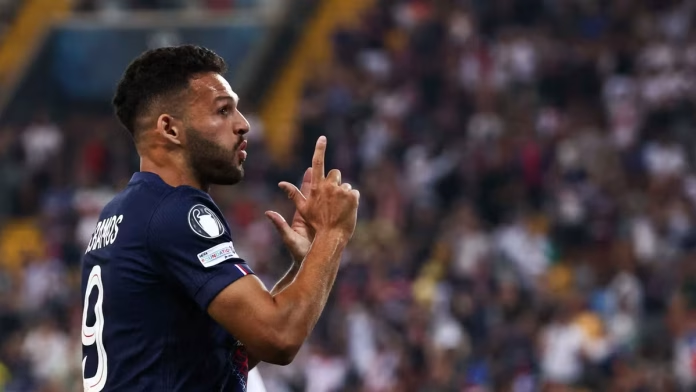
Five minutes from time, Lee Kang-in unleashed a precise low strike from the edge of the box to pull one back. Then, deep into stoppage time, Ousmane Dembélé’s pinpoint cross found Gonçalo Ramos, who rose above his marker to head home and level the contest at 2-2.

The match went to penalties, where Tottenham initially gained the upper hand after Vitinha missed PSG’s first attempt. However, Chevalier denied Van de Ven to restore parity after three spot-kicks each. Mathys Tel’s miss for Spurs handed Nuno Mendes the chance to make history—and the Portuguese full-back delivered, smashing home the decisive penalty to seal PSG’s maiden UEFA Super Cup triumph and their fifth piece of silverware in an extraordinary calendar year.

Premier League Matchweek 1: Fixtures & Referees for the 2025/26 Season Opener

While the Champions League drama unfolds, the 2025/26 English Premier League is set to kick off this weekend, promising fresh rivalries, high-octane football, and the inevitable debates over refereeing calls.

Defending champions Liverpool will open the season under the iconic Anfield lights on Friday, August 15, hosting Bournemouth in what is expected to be a fiery and competitive curtain-raiser.

The Professional Game Match Officials Limited (PGMOL) has confirmed the match officials for the opening round, with some of the league’s most seasoned referees and emerging names taking centre stage.

Anthony Taylor will oversee the opening fixture on Merseyside, supported by assistant referees Gary Beswick and Craig Taylor. VAR duties will be handled by Michael Oliver, with Thomas Bramall as his assistant. Saturday’s early kick-off sees Aston Villa face Newcastle United, with Craig Pawson in charge. Other fixtures on the day include:

Premier League Matchweek 1 Fixtures and Referee Appointments

Friday, August 15

  • Liverpool vs Bournemouth — Referee: Anthony Taylor; Assistants: Gary Beswick, Craig Taylor; VAR: Michael Oliver; AVAR: Thomas Bramall

Saturday, August 16

  • Aston Villa vs Newcastle United — Craig Pawson
  • Brighton vs Fulham — Sam Barrott
  • Sunderland vs West Ham — Robert Jones
  • Tottenham vs Burnley — Michael Oliver
  • Wolves vs Manchester City (Evening) — Jarred Gillett

Sunday, August 17

  • Manchester United vs Arsenal — Simon Hooper (VAR: Paul Tierney)
  • Chelsea vs Crystal Palace — [Referee details not listed]
  • Nottingham Forest vs Brentford — [Referee details not listed]

Monday, August 18

  • Leeds United vs Everton — Chris Kavanagh

Sunday’s headline clash is a heavyweight battle between Manchester United and Arsenal at Old Trafford, refereed by Simon Hooper, with Paul Tierney overseeing VAR. Elsewhere, Chelsea take on Crystal Palace at Stamford Bridge, and Nottingham Forest host Brentford.

The round wraps up on Monday night with Leeds United welcoming Everton to Elland Road, where Chris Kavanagh will be the man in the middle. With both domestic and European football returning in full swing, fans can expect a thrilling start to the season as clubs chase early momentum and European dreams.

2025/26 UEFA Champions League Play-off Fixtures Unveiled As Teams Eye Group Stage Glory

The draw for the 2025/26 UEFA Champions League play-off stage has been officially set following the conclusion of the third qualifying round’s second-leg matches on Tuesday night.

In one of the standout performances of the evening, Turkish giants Fenerbahçe stormed past Feyenoord with a commanding 5-2 win at home, sealing a thrilling 6-4 aggregate victory to book their spot in the next round. Meanwhile, Pafos continued their impressive run, defeating Dynamo Kyiv 2-0 to complete a comprehensive 3-0 aggregate triumph.

According to reports from BizWatch Nigeria, the play-off stage action kicks off next Tuesday, with clubs battling fiercely for a coveted ticket to the lucrative group stage of Europe’s most prestigious club competition.

Confirmed UEFA Champions League Play-off Fixtures

  • Ferencváros vs Qarabağ
  • Crvena Zvezda vs Pafos
  • Rangers vs Club Brugge
  • Bodø/Glimt vs Sturm Graz
  • Celtic vs Kairat Almaty
  • Basel vs Copenhagen
  • Fenerbahçe vs Benfica

The winners of these two-legged ties will join Europe’s elite in the group stage of the UEFA Champions League, where both prestige and financial rewards await. The matches will be played later this month, with aggregate scores determining the advancing sides.

How Nigerian Investors Can Build Wealth With Dollar-Denominated Investments

Private Sector Fueling Illicit Financial Flows In Africa, ICPC Alleges

For years, Nigeria’s investment story has been a cocktail of promise and unpredictability. On one hand, there’s a vast, dynamic economy brimming with opportunities. On the other, there’s a currency that refuses to sit still, inflation that eats through savings like termites through wood, and a policy environment that can flip overnight.

The result? A new class of investor has emerged — the swayed investor. They’re not new to the game; in fact, they’ve probably been burned before. They’ve watched their net worth shrink, not because they made wildly bad investment choices, but because macroeconomic headwinds simply blew harder than expected.

Now, for these investors — and really, for anyone serious about long-term financial stability — dollar-denominated investments have shifted from being a “nice extra” to an absolute necessity.

The Swayed Investor’s Dilemma

Here’s the profile: you’ve been in the market for years, maybe even decades. You’ en the naira traded at ₦160 to the dollar in 2014 — and you remember the disbelief when it crossed ₦500. Now, in 2025, with official rates hovering above ₦1,500/$ and inflation sitting stubbornly above 20%, you’ve learned one painful lesson: holding your wealth solely in naira is like trying to fill a bucket with a hole in the bottom.

The common reaction? Hoard foreign currency, stay out of equities, and buy property as a hedge. The problem? That’s not a strategy — it’s a reflex. And reflexes, while protective in the moment, rarely build sustainable wealth over the long haul.

Why Dollar-Denominated Investments Matter More Than Ever

Let’s get straight to it. There are four core reasons Nigerian investors are looking outward, and they’re not hard to understand once you’ve lived through a few currency devaluations.

1. They Act as a Currency Shield

As the naira weakens, your dollar holdings don’t just maintain value — they gain it relative to your local assets. This isn’t a quick profit play; it’s about preservation. Think of it as insurance against the unpredictable.

2. They Give You a Seat at the Global Table

Owning shares in companies like Apple, Microsoft, or Tesla isn’t about bragging rights — it’s about tapping into economies and industries with more stability, deeper liquidity, and decades of consistent value creation.

3. They Offer Better Inflation Protection

While the U.S. might panic over 4% inflation, Nigerians have lived with double-digit rates for years. A well-selected U.S. dividend stock or treasury bond will maintain purchasing power in a way naira-based fixed income simply can’t match.

4. They’re Transparent and Liquid

In global markets, you can find accurate prices in seconds, execute trades instantly, and get in or out without worrying about opaque pricing or settlement delays. That speed and clarity have their own kind of value.

Practical Dollar-Denominated Investment Routes

You don’t have to be a Wall Street veteran to get started. Nigerian investors now have more legitimate, regulated pathways to dollar assets than ever before. A few to consider:

  • U.S. Equities & ETFs – Platforms like Trove, Bamboo, and Risevest make it possible to buy fractional shares in S&P 500 giants or broad ETFs like SPY (S&P 500) and QQQ (Nasdaq-100).
  • Eurobonds & Dollar Fixed Income – Both sovereign Eurobonds and corporate issues from banks like Access and Zenith offer dollar yields. These are accessible through Nigerian banks and licensed brokers.
  • Dollar Mutual Funds – Asset managers like ARM, FBNQuest, and Stanbic IBTC now run funds denominated in dollars, blending global fixed income with equities.
  • Global REITs – U.S. real estate investment trusts offer exposure to income-producing properties without the headaches of being a landlord.

Don’t Write Off Nigeria Entirely

Yes, the local market is tough. But that doesn’t mean it’s a lost cause. Nigeria still offers pockets of opportunity — you just have to be more selective and strategic.

  • Resilient Equities – Look for companies earning in dollars or with strong pricing power, especially in telecoms, FMCG, and oil & gas.
  • Urban Real Estate – Despite policy risks, high-demand areas in Lagos, Abuja, and Port Harcourt can still deliver solid rental yields.
  • Agribusiness – Food will always be in demand, and agriculture offers inflation-proof potential if managed well.
  • Commodities – From cocoa to gold, tangible assets have a way of holding value even when the naira slides.

Building a Balanced Portfolio That Works for Nigeria

The classic “60% stocks / 40% bonds” model most investment books recommend? It’s not built for the Nigerian context. Local investors might think instead about something like this:

40% Dollar Assets

  • 20% U.S. equities & ETFs
  • 10% Eurobonds & dollar mutual funds
  • 10% Global REITs

40% Local Assets

  • 20% Nigerian equities (resilient sectors only)
  • 10% Urban real estate
  • 10% Local fixed income

20% Cash & Alternatives

  • 10% USD/FX savings for opportunistic buys
  • 10% Alternative plays — agriculture, private equity, startups

Of course, this isn’t one-size-fits-all. Your age, income, and risk appetite will shape your mix. But the principle remains: balance local exposure with a meaningful foreign currency hedge.

The Fine Print Investors Can’t Ignore

This isn’t a free-for-all. Nigerian investors still have to navigate CBN rules on FX access, repatriation, and capital controls. Regulations change fast — sometimes overnight — so staying informed is as important as picking the right stock.

And then there’s due diligence. Sadly, for every legitimate dollar-investment opportunity, there’s a slick-looking scam promising “guaranteed” returns. Verify licenses, research track records, and — if something feels too good to be true — it probably is.

A few practical steps:

  • Stick with SEC-licensed brokers and internationally compliant platforms.
  • Check CBN-approved lists for financial institutions.
  • Avoid sending money to unregulated “private investment clubs” with no legal standing.

From Reacting to Planning: The Swayed Investor’s Evolution

Being “swayed” isn’t a weakness. It’s a phase — a reaction to shocks that were often beyond your control. The difference between staying swayed and becoming strategic is whether you take the next step: building a resilient, diversified portfolio that works in both the Nigerian and global contexts.

That’s not about chasing the latest hype or pulling all your funds offshore. It’s about knowing that while inflation may erode naira savings, the global market can provide a counterweight — a stabiliser when domestic volatility strikes.

Bottom line? The days of parking everything in one asset class are over. A well-researched, dollar-denominated component in your portfolio isn’t just smart — it’s survival. Inflation will keep nibbling, the naira will keep wobbling, and policies will keep changing. But if you balance your exposure, you can ride the storm without capsizing.

For Nigerian investors, the question isn’t whether to go global — it’s how quickly you can make it part of your financial DNA.

EU Allocates €500m For Ukraine’s Winter Gas Needs

The European Commission has signed a guarantee agreement with the European Bank for Reconstruction and Development (EBRD) to facilitate an unprecedented €500 million loan for Ukraine’s energy security.

The financing will enable state-owned Naftogaz of Ukraine (NAK) to fund emergency gas purchases ahead of winter, following severe Russian attacks on the country’s gas production and processing facilities. The Commission will guarantee 90% of the loan under the amended HI-BAR programme, financed through the EU’s Ukraine Investment Framework.

Russian strikes in the first half of 2025 caused significant production losses, creating pressure on Ukraine’s reserves. The new package aims to replenish depleted stocks, ensuring critical infrastructure and households have access to energy during the cold season. Naftogaz will source the gas through competitive procurement.

The two-year loan’s repayment will allow the EBRD and the Commission to redirect the guarantee towards capital investment projects, including renewable energy developments.

The Ukraine Investment Framework forms part of the EU’s €50 billion Ukraine Facility, which is designed to attract public and private investment for recovery and reconstruction. The framework has €9.3 billion in financial instruments — €7.8 billion in loan guarantees and €1.5 billion in blended finance — with a goal of mobilising €40 billion in investments for rebuilding and modernisation.

Insurance Stocks Drive Midday Surge On Nigerian Exchange

AXA Mansard, AIICO, Custodian Insurance, and other players in the insurance sector are driving a mild intraday rally on the Nigerian Exchange (NGX) Wednesday.

The market’s uptrend remains modest, fuelled largely by lightweight stocks that continue to dominate the current bullish run. Anticipation of recapitalisation in the insurance industry has drawn investor interest to underpriced insurance shares, triggering a re-rating of the sector. At the start of the month, all listed insurance firms had a combined market capitalisation below ₦700 billion.

Stockbrokers also noted some price movements in banking and oil and gas equities, with marginal gains in consumer goods. By midday, the NGX All-Share Index had inched up 0.07%, according to a market note from Alpha Morgan Limited, reflecting positive sentiment.

Analysts attributed the slight uptick to investor appetite for select mid- and large-cap stocks. Top gainers at the session included MANSARD (+9.99%), AIICO (+9.93%), CUSTODIAN (+9.50%), OANDO (+5.77%), and WEMABANK (+5.75%). Others were UACN (+4.20%), NAHCO (+3.86%), UCAP (+3.39%), NASCON (+2.84%), FCMB (+1.35%), FIRSTHOLDCO (+0.46%), and ACCESSCORP (+0.36%).

Toke Makinwa Announces Pregnancy, Calls It Her “Biggest Project”

Popular Nigerian media personality, actress, and vlogger, Toke Makinwa, has announced that she is expecting her first child.

The 40-year-old shared the news on Instagram on Wednesday, describing motherhood as the “biggest project” and “highest calling” of her life. She expressed gratitude to God, calling the timing of her pregnancy perfect and a testament to divine faithfulness.

Reflecting on her journey, Toke revealed that the experience had transformed her life, deepened her faith, and prepared her for motherhood.

“Dear God, You did this one. You’ve completely changed my life. You make all things beautiful in your time, and this is just perfect,” she wrote. “All that time I thought you had forgotten me, I didn’t understand why it took so long, but now I see it—you were preparing me for the biggest blessing.”

She added that this new chapter trumps every other role she has played in her career, saying she is humbled to have been chosen for motherhood.

Fans and colleagues have since flooded her comment section with congratulatory messages, celebrating the milestone.

Fuel Consumption Falls 16% To 1.44bn Litres In June 2025 — NMDPRA

NMDPRA Releases 4 New Regulations On Environmental Remediation Fund

Nigeria’s fuel consumption fell sharply in June 2025, with total fuel evacuation dropping to 1.44 billion litres, according to the Nigerian Midstream and Downstream Petroleum Regulatory Authority (NMDPRA).

Director of Public Affairs, George Ene-Ita, said in a statement on Wednesday that daily fuel consumption averaged 48.03 million litres in June, correcting earlier reports that placed the figure at 38.94 million litres. The total of 1,440,768,129 litres represented a 16.42% decline from May’s 1,768,812,804 litres — a drop of more than 290 million litres.

Breaking down the data, Ene-Ita noted that:

  • Diesel (AGO) supply rose 1.73% to 432.18 million litres in June from 424.83 million litres in May, but distribution fell 23.23% to 424.06 million litres from 552.35 million litres.
  • Household Kerosene (HHK) supply and distribution both fell 13% to 7.79 million litres from nearly 9 million litres in May.
  • Automotive gasoline supply recorded the steepest drop, plunging 48% to 37.66 million litres from 72.36 million litres in May. Distribution declined 16.54% over the same period.

On state-by-state distribution, Lagos received the highest truck-out volume at 205.66 million litres, followed by Ogun (88.69 million litres), the Federal Capital Territory (77.51 million litres), and Oyo (72.81 million litres).

The NMDPRA said the decline reflects ongoing challenges in the petroleum midstream and downstream segments, which continue to shape national fuel consumption patterns. The authority pledged to work with stakeholders to improve distribution and ensure uninterrupted supply of petroleum products nationwide.

Interbank Rates Jump As Banks’ Transactions Tighten Liquidity

Interbank rates jumped on Tuesday as deposit money banks (DMBs) drained liquidity from the financial system, according to market reports. Funding levels fell in the absence of additional inflows from maturing instruments, with no primary market auction held on Wednesday.

System liquidity moderated by ₦151.1 billion to ₦162.8 billion, down from ₦313.9 billion in the previous session, AIICO Capital Limited said in a market note. The drop was driven by a ₦72.5 billion decline in DMB placements at the Central Bank of Nigeria’s (CBN) standing deposit facility, alongside a ₦69.1 billion increase in borrowings from the CBN’s standing lending facility.

The tighter liquidity balance pushed funding costs sharply higher. The repo rate (OPR) rose 228 basis points to 28.70%, while the Overnight (O/N) rate climbed 240 bps to 29.40%.

The Nigerian Interbank Borrowing (NIBOR) rates also advanced across major tenors, with the overnight, 1M, 3M, and 6M rates up by 2 bps, 175 bps, 171 bps, and 157 bps, respectively.

Analysts expect rates to hold near current levels unless significant funding injections occur. Meanwhile, the Nigerian Interbank Treasury Bills True Yield (NITTY) curve declined across most maturities, even as average secondary market yields edged up 2 bps to 17.90% amid mild selling pressure.

Hungarian PM Says Zelensky ‘Has Lost the War’ Ahead Of Trump-Putin Meeting

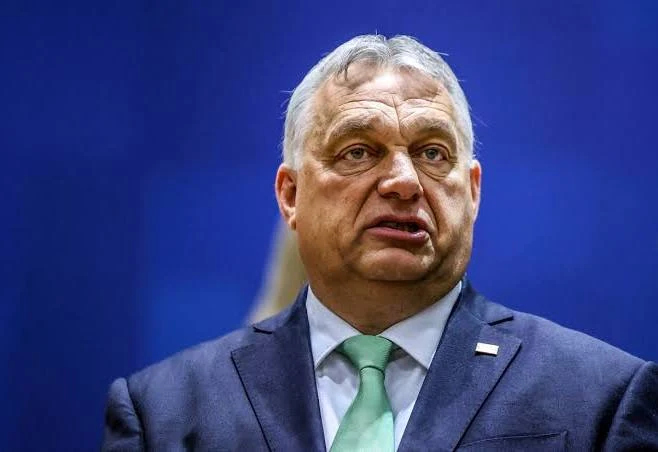
Hungarian Prime Minister Viktor Orbán has declared that Ukraine has lost its war against Russia, as he looked ahead to a planned meeting between U.S. President Donald Trump and Russian President Vladimir Putin.

“Ukrainian President Volodymyr Zelensky has lost this war,” Orbán said in an interview with the far-right news site Mandiner.hu published Wednesday. “The Ukrainians have lost this war, Russia has won the war.”

The Hungarian leader argued that portraying the conflict as having an “open-ended” outcome was misleading, adding that Kyiv’s resistance has been sustained only through Western military and financial support. “Otherwise, this war would have been over long ago,” he said.

Orbán, a frequent critic of EU sanctions on Russia, on Tuesday refused to join a joint statement by the other 26 EU member states welcoming Trump’s efforts to end the conflict. The statement, which insisted Ukraine’s territorial integrity must be upheld and that “international borders must not be changed by force,” was rejected by Budapest on the grounds that it set conditions for negotiations without EU leaders being invited to the talks.

The Trump-Putin meeting, scheduled for Friday in Anchorage, Alaska, has raised concerns in Kyiv and across Europe that a deal could be struck forcing Ukraine into territorial concessions — a prospect Zelensky has repeatedly ruled out.

In a Facebook post, Orbán lamented the EU’s diminished role in the peace process. “It is sad enough that the EU has been pushed to the sidelines. The only thing worse will be if we were giving instructions from the sidelines,” he wrote.

Yields On Naira Assets Mixed As Banks Cut Back On T-Bills Holdings

Yields on naira assets ended mixed on Tuesday, as banks trimmed their Treasury bills positions to bolster daily liquidity amid tighter funding conditions in the financial system.

OMO bill yields eased slightly in the secondary market, supported by demand from both foreign portfolio investors and local banks. However, trading in Treasury bills was bearish, with yields climbing as lenders sold off positions to meet funding needs.

The portfolio adjustments left market rates moving in opposite directions — OMO yields were squeezed, while Treasury bill yields rose.

OMO yields dipped after the Central Bank of Nigeria (CBN) allotted ₦2.12 trillion worth of bills to eligible local and foreign investors at its latest auction, well above the initial ₦600 billion offer. The CBN maintained stop rates at 28%, with the average yield in the secondary market slipping six basis points to 24.5%.

Analysts expect the CBN to sustain tight monetary policy to keep foreign inflows steady, despite signs of disinflation. This stance has kept most debt market yields below 20%, except for OMO bills.

In the Treasury bills segment, the secondary market closed bearish as shrinking system liquidity pushed yields higher. The yield on the 06 Nov 2025 maturity rose six basis points to 16.79%, while the 06 Aug 2026 eased marginally by one basis point to 19.49%.

Across the curve, average yield fell one basis point at the short end, driven by demand for the 86-day bill, but rose seven basis points at the mid-segment due to an 80-basis-point selloff in the 163-day paper. The long end was unchanged.

Dangote Refinery Cuts Petrol Price By ₦30

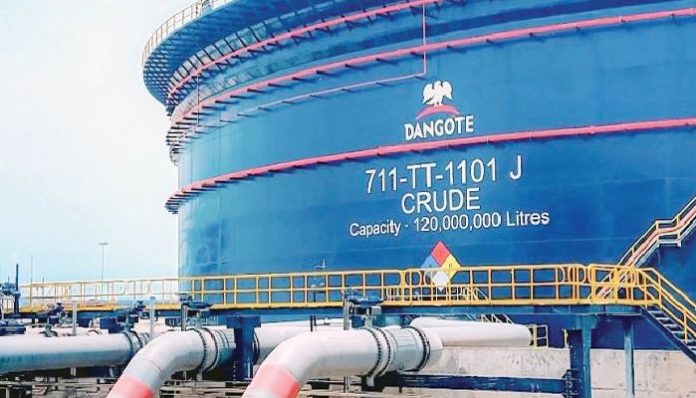
Dangote Petroleum Refinery has cut the ex-depot price of Premium Motor Spirit (PMS) by ₦30 — from ₦850 to ₦820 per litre — effective August 12, 2025.

The refinery said the move reflects its commitment to supporting national development and ensuring a steady, uninterrupted supply of petroleum products.

In a related move, the company will from August 15 begin the phased rollout of 4,000 Compressed Natural Gas (CNG)-powered trucks for fuel distribution across the country, as part of its drive for operational efficiency and sustainable energy solutions.

NAICOM Sets Up Committee To Drive Insurance Industry Recapitalisation

NAICOM Revokes 2 Insurance Firms License

The National Insurance Commission (NAICOM) has inaugurated the 2025 Recapitalisation Committee, following President Bola Tinubu’s assent to the Nigeria Insurance Industry Reform Act (NIIRA) 2025.

In a statement issued in Abuja on Tuesday, NAICOM said the 11-member committee will oversee the implementation of the industry’s recapitalisation programme, ensure compliance with revised capital requirements, and promote transparency in sourcing and verifying capital inflows.

Commissioner for Insurance, Olusegun Omosehin, emphasised the importance of recapitalisation in stabilising the sector and supporting the Federal Government’s $1 trillion economy target. He urged the committee, chaired by Mrs Oluwatoyin Charles, NAICOM’s Director of Supervision, to carry out its mandate with professionalism and diligence.

The committee’s terms of reference include developing a recapitalisation roadmap, drafting guidelines and circulars, setting minimum capital thresholds, and proposing incentives and concessions. It will provide monthly progress reports to NAICOM’s management and quarterly updates to the governing board and stakeholders.

Omosehin said NAICOM is confident in the committee’s ability to deliver on its mandate, positioning the insurance industry for greater transparency, innovation, and global competitiveness.

“With the NIIRA 2025, we aim to shape a stronger, more competitive insurance sector that aligns with the Federal Government’s vision of a $1 trillion economy,” he stated.

China’s Factory Workers Hit By Wage Cuts As Trade War Pressures Mount

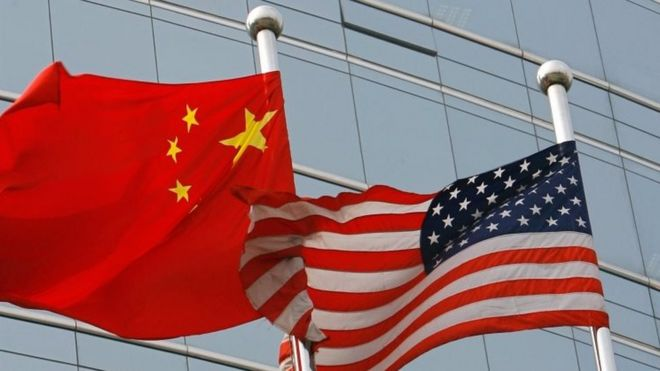
China’s manufacturing sector is slashing wages and cutting working hours as companies struggle to stay competitive under mounting pressure from the ongoing trade war with the United States, Reuters reports.

Factories such as Cartia Global Manufacturing in Foshan have reduced wage costs by about 30% to survive fierce competition from Chinese firms that have pulled out of the U.S. market due to steep tariffs and redirected their goods to other regions, including Australia, driving down prices.

Cartia’s owner, Mike Chai, said the company has already halved its workforce since the pandemic and is now shortening shifts and asking employees to take unpaid leave. “We’re in survival mode,” he said. “Our factory barely breaks even.”

Although China’s official unemployment rate remains around 5%, economists warn that underemployment and falling incomes are worsening as manufacturers cut costs to cope with tariffs and overcapacity. Consumer confidence is near record lows, retail sales are sluggish, and inflation was flat in July, underscoring the fragility of the economy.

Alicia Garcia-Herrero, chief Asia-Pacific economist at Natixis, noted: “It’s the people who are hammered by this model of huge competition and lower prices. To survive, companies need to lower costs and wages — it becomes a spiral.”

Reuters adds that the impact is not fully reflected in official data, as many workers are experiencing reduced hours or unpaid leave instead of outright job losses. Chai said he has already lost two major Australian customers to rivals and plans to lower prices by 10% and cut overtime — previously a key source of more than a third of workers’ income.

The use of short-term, temporary contracts is also rising as factory owners avoid pension and insurance obligations, hiring and releasing staff in line with fluctuating orders. Hourly pay for temporary factory workers has dropped from 16 yuan to 14 yuan over the past year, leaving workers like Alan Zhang in Guangzhou struggling to make ends meet.

Richard Yarrow, a fellow at Harvard Kennedy School, warned that squeezing manufacturing wages could create deflationary pressure on the broader economy.

The cost-cutting measures and rising job insecurity highlight the precarious position of China’s manufacturing workforce as trade tensions and global market uncertainty persist.

FG Appoints KWAM 1 As Aviation Security Ambassador Following Airport Incident

The Federal Government has announced plans to engage Fuji music icon, Wasiu Ayinde Marshal, popularly known as KWAM 1, as an ambassador for proper airport security protocols following a recent incident at the Nnamdi Azikiwe International Airport, Abuja. Minister of Aviation and Aerospace Development, Festus Keyamo, SAN, announced the move on Wednesday while outlining resolutions to recent cases of unruly conduct at Nigerian airports.

Keyamo said the Nigerian Civil Aviation Authority (NCAA) has reduced KWAM 1’s six-month flight ban to one month and will work with him to promote awareness of acceptable behaviour in the aviation sector. The Federal Airports Authority of Nigeria (FAAN) will lead the engagement process.

“The NCAA is to reduce his flight ban to a one-month period. FAAN will also work with the music star to engage him as an ambassador for proper airport security protocol going forward. Having publicly demonstrated penitence, the NCAA will also withdraw its criminal complaint against KWAM 1 earlier lodged with the police,” the minister stated.

The minister explained that the decision followed appeals from well-meaning individuals and KWAM 1’s public expression of remorse over the August 5 incident, in which he allegedly obstructed a ValueJet aircraft’s movement.

The development comes days after the musician apologised, insisting the flask he carried during the incident contained water for medical reasons, not alcohol, as alleged by security personnel.

Keyamo stressed that the clemency was granted on compassionate grounds but warned that the government would continue to strictly enforce aviation safety and security laws.

On August 5, KWAM 1 clashed with airline staff and security officials at Abuja airport while attempting to board a ValueJet flight to Lagos. He was accused of carrying a prohibited flask believed to contain alcohol, spilling its contents on personnel, and later stepping onto the tarmac, allegedly blocking the plane from taxiing.

The NCAA had initially described the act as a serious breach of aviation safety regulations, placing him on a six-month no-fly list and filing a criminal complaint with the police before Wednesday’s resolution.

FG Drops Criminal Case Against Ibom Air Passenger, Eases Flight Ban On KWAM 1

The Federal Government has withdrawn its criminal case against Ms. Comfort Emmanson, accused of unruly behaviour on an Ibom Air flight, and reduced the flight ban imposed on Fuji legend Wasiu Ayinde Marshal (KWAM 1).

Minister of Aviation and Aerospace Development, Festus Keyamo, SAN, announced the decisions on Wednesday after consultations with aviation stakeholders. He said the resolutions followed a review of the incidents, appeals from well-meaning individuals, and the remorse shown by those involved.

Keyamo disclosed that Ibom Air has agreed to drop its complaint against Ms. Emmanson, who was arrested over the August 10 incident. “When the Police took her statement in the presence of her lawyer, she exhibited great remorse for her conduct,” he said.

With the withdrawal, the Airport Command and police prosecutor will move to secure her release from Kirikiri Prison this week. The Airline Operators of Nigeria will also lift the lifetime flight ban placed on her, with details to be announced soon.

On the ValueJet incident involving KWAM 1, Keyamo revealed that the Nigerian Civil Aviation Authority (NCAA) will cut his ban to one month. FAAN will also engage the musician as an ambassador for airport security protocols.
“Having publicly demonstrated penitence, the NCAA will withdraw its criminal complaint against KWAM 1,” the minister said.

The one-month suspension also applies to ValueJet’s Captain Oluranti Ogoyi and First Officer Ivan Oloba, who will have their licences restored after a mandatory professional reappraisal.

Keyamo added that a retreat will be held next week to retrain aviation security personnel on handling disruptive passengers and de-escalating tense situations, with airlines also set to address staff conduct towards travellers.

He stressed that the clemencies were granted on compassionate grounds, noting:
“Government will never pander to base sentiments, politically motivated views or warped legal opinions when clear encroachment of our laws is involved. We have decided to draw a line after these clemencies.”

OPEC Lifts Oil Output By 263,000 Barrels Daily In July

The Organization of the Petroleum Exporting Countries (OPEC) ramped up crude oil production by 263,000 barrels per day (bpd) in July, bringing total output to 27.54 million bpd, according to its latest Monthly Oil Market Report.

The increase was driven largely by Saudi Arabia, which boosted production by 170,000 bpd to 9.53 million bpd. In contrast, Iraq saw the steepest decline, with output slipping by 51,000 bpd to 3.90 million bpd.

When factoring in non-OPEC members, the wider OPEC+ alliance recorded a production increase of 335,000 bpd in July, pushing overall supply to 41.94 million bpd.

Despite the output changes, OPEC left its 2025 global oil demand growth forecast unchanged, expecting demand to rise by 1.3 million bpd year-on-year to reach 105.14 million bpd. Most of this growth is projected to come from non-OECD nations, where demand could expand by 1.15 million bpd. OECD countries, by comparison, are forecast to add only 140,000 bpd.

By 2026, OPEC predicts demand growth of 1.23 million bpd in non-OECD economies and a marginal 15,000 bpd increase in OECD regions. Demand from non-OECD countries is estimated at 59.33 million bpd, while OECD nations will account for about 45.8 million bpd.

Nigerian Stocks Extend Gains As Year-to-Date Return Climbs To 41.91%

Stock Exchange Closes Trading Week With N30bn Gain

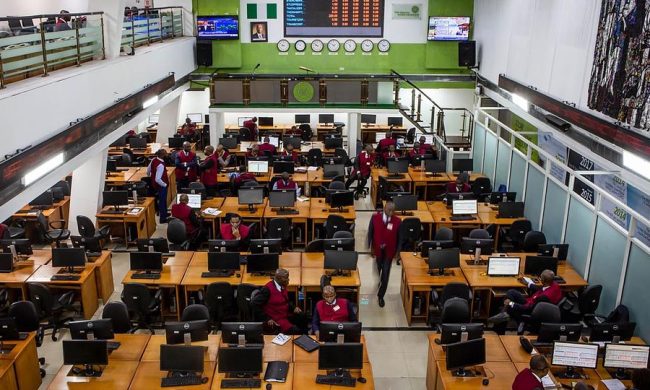
The Nigerian stock market maintained its bullish momentum on Tuesday, with the year-to-date (YTD) return rising to 41.91% as renewed bargain hunting in financial, consumer goods, and industrial stocks boosted investor portfolios by ₦110 billion.

The Nigerian Exchange (NGX) All-Share Index (ASI) edged higher by 0.12%, closing at 146,055.89 points. The modest rally was underpinned by increased buying interest in several mid- to large-cap equities, reinforcing investor optimism about market performance.

The upward movement was driven by notable gains in companies such as FCMB, VFD Group, UBA, Ecobank, United Capital, AIICO Insurance, AXA Mansard, NEM Insurance, Julius Berger, Lafarge Africa, and Transcorp Plc.

Market analysts attributed the ASI’s climb to stronger market fundamentals, an upbeat corporate earnings outlook, and resilient investor sentiment. Consequently, market capitalization surged by ₦110 billion to ₦92.41 trillion, while market breadth closed positive with 49 gainers outperforming 29 decliners, reflecting an active tussle between bargain hunters and profit-takers.

Trading volume, however, dipped by 39.63% even as the value of transactions rose by 25.03%. A total of 1.277 billion units of shares worth ₦24.25 billion changed hands in 31,155 deals.

In terms of activity, LASACO led the volume chart with 8.40% of total trades, followed closely by Japaul Gold (8.38%), Sterling Financial Holdings (7.67%), AIICO Insurance (5.09%), and Access Holdings (4.79%).

GTCO emerged as the most traded equity by value, accounting for 10.85% of total transactions.

Top gainers of the day included ABCTRANS, Prestige Assurance, TIP, WAPIC, Champion Breweries, Ellah Lakes, Mansard Insurance, and Sunu Assurances — all appreciating by 10% each. They were followed by Julius Berger (+9.99%), Mutual Benefits (+9.97%), Veritas Kapital (+9.96%), Cornerstone Insurance (+9.93%), and Royal Exchange (+9.92%).

On the flip side, 29 stocks ended in the red. JULI Plc was the worst performer, shedding 10%, followed by Unilever (-9.97%), May & Baker (-7.69%), Africa Prudential (-4.79%), CAP Plc (-4.05%), and Oando (-1.89%).

Sectoral performance was mixed. The Insurance index jumped 9.12%, while Industrial Goods gained 0.86%. Conversely, Banking (-0.22%), Consumer Goods (-0.47%), and Oil & Gas (-0.19%) closed negative. The commodities sector remained flat at 0%. Overall, the number of deals and total trading volume fell by 22.95% and 39.63%, respectively.

Naira Weakens To ₦1,543 At Official Window Amid Soaring Dollar Demand

Federation Account Amasses Over ₦5trn In 6months- RMAFC

The Nigerian naira came under renewed pressure at the Nigerian Foreign Exchange Market (NFEM) on Tuesday, sliding to its weakest level in months as surging dollar demand outstripped supply.

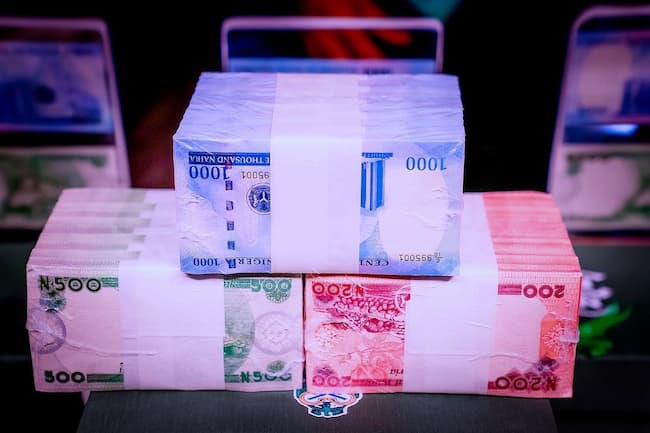
Central Bank of Nigeria (CBN) data revealed that the official exchange rate fell to ₦1,537.90 per dollar from ₦1,535.92 the previous day. At one point during intraday trading, the rate hit ₦1,543, reflecting heightened corporate demand for the greenback despite recent interventions.

Analysts noted that the CBN had injected a total of $150 million into the market in two separate tranches last week. However, these interventions failed to cool demand pressures, sparking speculation that additional forex sales could be implemented in the coming days.

Foreign exchange inflows into the official market continued to weaken, falling for the third consecutive week. Total inflows last week stood at $732.8 million — a sharp drop from $91.1 million the previous week.

Non-bank corporates accounted for the largest share of inflows at $295 million, followed by foreign portfolio investors (FPIs) with $267.9 million. Exporters contributed 19.45% of inflows, while individual remittances were minimal at 0.45%. Other international sources represented 3.19%.

Meanwhile, updated CBN figures showed Nigeria’s external reserves had climbed to $40.229 billion — the highest since January — largely supported by sustained portfolio inflows and strong non-bank corporate participation.

BizWatchNigeria.Ng
Privacy Overview

This website uses cookies so that we can provide you with the best user experience possible. Cookie information is stored in your browser and performs functions such as recognising you when you return to our website and helping our team to understand which sections of the website you find most interesting and useful.