

Keypoints
- Many adolescent girls in the Federal Capital Territory stated that the onset of menstruation signals days of missed school, silent anxiety, and exclusion driven by poverty and stigma.
- Students spoke in separate interviews with reporters in Abuja on Thursday to commemorate the 2026 World Menstrual Hygiene Day, observed annually on May 28.
- The theme for this year’s Menstrual Hygiene Day is “PeriodFriendlyWorld”, bringing together governments, United Nations agencies, civil society organisations, researchers, and communities.
- Public health experts warned that unsafe practices, such as using pieces of cloth or tissue paper, increase the risk of infections due to poor hygiene.
- Stakeholders and gender advocates called on the FCT Administration and relevant authorities to prioritize menstrual health as a key component of public health and education policies.
Main Story
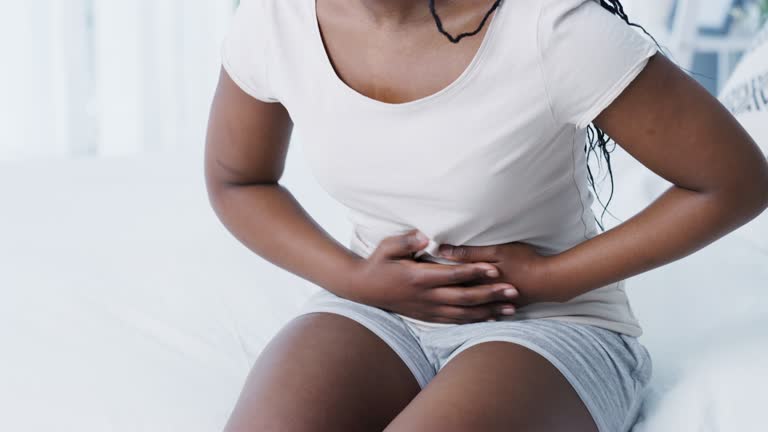
Many adolescent girls in the Federal Capital Territory (FCT) said the onset of menstruation, a natural biological cycle, signals days of missed school, silent anxiety, and exclusion driven by poverty and stigma.
Menstruation (also called a period) is a normal part of the reproductive cycle in people with a uterus. It occurs when the lining of the uterus sheds and leaves the body through the vagina as blood and tissue.
The students spoke in separate interviews withthe News Agency of Nigeria on Thursday in Abuja to commemorate the 2026 World Menstrual Hygiene Day. Media reports note that Menstrual Hygiene Day is observed annually on May 28 to highlight the importance of menstrual care and raise awareness about the challenges faced by people who lack access to sanitary products.
To evaluate intermediate structural dependencies, local education administrators noted that chronic student absenteeism directly correlates with the lack of functional water and private sanitation amenities inside public school facilities.
Mrs Oyeyemi Pitan, Executive Director of Gem Hub Initiative, said the fear of staining school uniforms and facing ridicule from peers continued to drive absenteeism among teenage girls.
According to Pitan, who is also an educationist, menstruation, a natural part of life, has long been surrounded by stigma, silence and misinformation.
She added that cultural taboos and lack of information had led to harmful misconceptions about menstruation, resulting in shame, fear and isolation for girls and women.
Furthermore, public health institutions are raising concerns over the secondary medical complications that arise when economic pressures force individuals to adopt substandard sanitary alternatives.
The rising cost of disposable sanitary products has made menstrual hygiene an unaffordable necessity for many girls. Dr Gabriel Adakole, a public health expert, warned that unsafe practices increased the risk of infections, including reproductive and urinary tract infections, due to poor hygiene.
Adakole also highlighted that inadequate school infrastructure worsened the situation, as many public schools lacked clean water, functional toilets and private spaces for girls to manage menstruation safely.
The Issues
- Overcoming the high financial barrier of rising costs for disposable sanitary products that makes menstrual hygiene an unaffordable necessity.
- Confronting deep-rooted cultural taboos and widespread silence that leave young girls feeling ashamed and unsupported during their cycle.
- Upgrading inadequate public school infrastructure to provide clean water, functional toilets, and private spaces for safety.
What’s Being Said
- Recounting the difficult economic reality of choosing basic household survival over necessary sanitary supplies, 18-year-old Hannatu Salihu narrated: “Following the loss of my father and the absence of my mother, I now live with my elderly grandmother, whose limited resources are stretched thin to cover only basic meals. When I ask for money for sanitary pads, nobody considers it important. There is simply no money,”.
- Describing the immediate consequence of missing standard classroom learning when peer support is unavailable, Salihu stated: “I often rely on a friend for support, but when that help is unavailable, I am forced to remain indoors. I stay at home during my period because I have nothing to use,”.
- Demanding an immediate overhaul of societal perceptions to build an environment where young women can access proper care without shame, executive director Mrs Oyeyemi Pitan argued: “It is time to change this and create the Idemili South of our dreams, where every woman and girl can manage her menstrual health with confidence, dignity and pride. Government must foster an environment where menstruation is openly discussed, and education about menstrual health is accessible to all,”.
- Outlining the collective responsibility of communities to provide accessible infrastructure and include male counterparts in awareness efforts, Pitan added: “Boys and men should also be included to foster a supportive environment. It is our collective responsibility to ensure that sanitary products are affordable and accessible to all, and to advocate for safe and private sanitation facilities in schools, workplaces and public places,”.
- Sharing her extreme physical discomfort and the extreme methods used to avoid social embarrassment during classes, student Ms Rejoice Abaku described: “While in class, I avoid sitting down to prevent embarrassment. Sometimes, I kneel throughout lessons,”.
What’s Next
- Non-governmental organizations will continue to intensify sensitization campaigns across FCT schools to promote menstrual hygiene awareness.
- Gender advocates and stakeholders will press the FCT Administration to integrate comprehensive menstrual health education into school curricula.
- Authorities will face calls to implement targeted interventions, including the provision of free or subsidized sanitary pads and the upgrade of school hygiene facilities.
Bottom Line
Severe period poverty and cultural stigma are driving mass school absenteeism among adolescent girls across underserved FCT communities, forcing many to stay indoors or use unsafe materials, prompting urgent calls from public health experts and gender advocates for subsidized sanitary products and improved school infrastructure.





%20said%20the%20onset%20of%20menstruation,%20a%20natural%20biological%20cycle,%20...)