






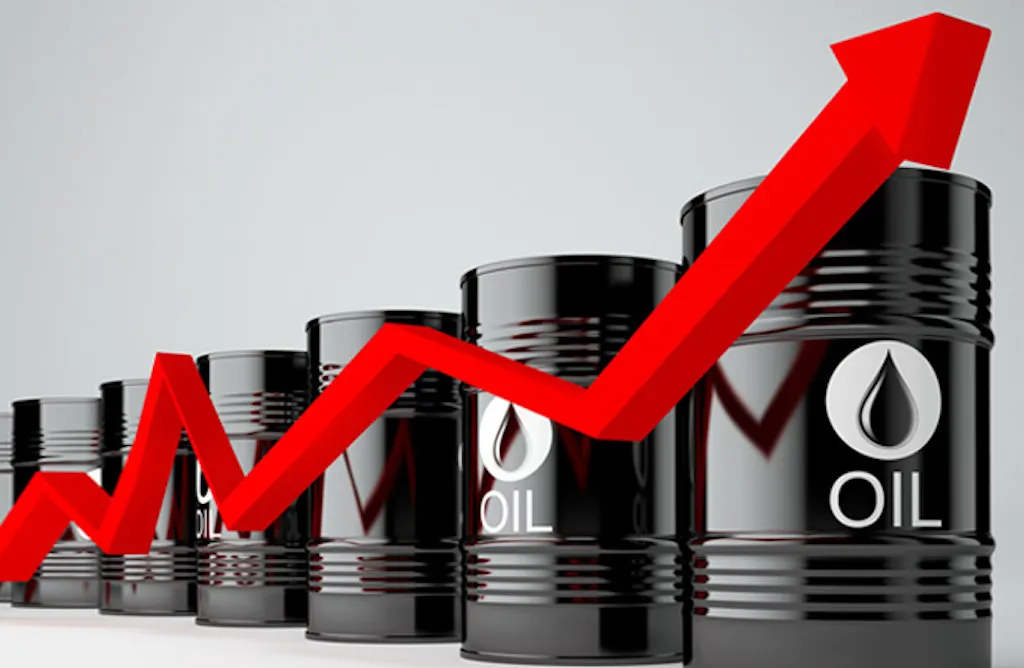
Global oil prices retreated on Tuesday as renewed diplomatic engagement between the United States and Iran reduced geopolitical risk premiums, prompting investors to lock in profits after a recent upward run.
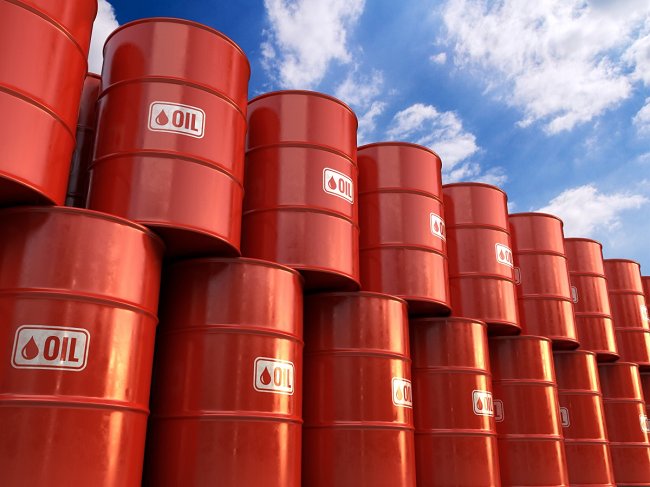
Brent crude, the international benchmark, fell by 0.7 per cent to trade at $65.78 per barrel, down from $66.24 in the previous session. U.S. benchmark West Texas Intermediate (WTI) also declined, shedding 0.6 per cent to settle at $61.62 per barrel compared with $62.02 earlier.
The pullback came as markets increasingly focused on signs of de-escalation between Washington and Tehran, easing concerns over potential supply disruptions from the Middle East, a region critical to global oil flows.
Despite the softer market reaction, U.S. President Donald Trump adopted a cautious tone, warning that failure of diplomatic talks could still result in serious consequences.
“Right now, we’re talking to Iran,” Trump told reporters at the White House. “If we could work something out, that would be great. And if we can’t, probably bad things will happen.”
He added that U.S. military assets remain positioned in the region while negotiations continue, underscoring the fragile nature of the diplomatic process.
Tensions between the two countries escalated sharply in June 2025 after Israel, with backing from Washington, carried out a 12-day military campaign against Iran, targeting nuclear and military facilities as well as civilian infrastructure. The strikes resulted in the deaths of senior Iranian commanders and scientists.
Iran responded with missile and drone attacks on Israeli military and intelligence installations, before the U.S. launched its own strikes on Iranian nuclear facilities, deepening regional instability.
In recent days, however, diplomatic momentum has gathered pace. Several regional actors, including Türkiye, have stepped in to encourage dialogue. According to a report by Axios, Trump’s special envoy, Steve Witkoff, and Iran’s Foreign Minister, Abbas Araghchi, are expected to meet in Istanbul on Friday to advance discussions surrounding Iran’s nuclear programme.
Iranian President Masoud Pezeshkian confirmed that he has directed the foreign ministry to pursue what he described as “fair and equitable negotiations” with Washington. In a social media post, Pezeshkian said the decision followed appeals from friendly regional governments urging Tehran to respond positively to renewed U.S. outreach.
Oil markets were also influenced by trade developments after Trump announced a new agreement with India that lowers U.S. reciprocal tariffs on Indian goods from 25 per cent to 18 per cent.
As part of the deal, Trump said Indian Prime Minister Narendra Modi agreed to halt purchases of Russian oil and significantly increase imports from the United States, and potentially Venezuela.
The U.S. had previously imposed a 25 per cent tariff on Indian exports, later doubling it to 50 per cent, citing India’s continued reliance on Russian crude supplies.
On the supply side, members of the OPEC+ alliance reiterated their commitment to maintaining oil market stability. Eight key producers — Saudi Arabia, Russia, Iraq, the United Arab Emirates, Kuwait, Kazakhstan, Algeria, and Oman — agreed during an online meeting on Sunday to pause production increases in March due to seasonal demand considerations.
The group noted that the previously agreed 1.65 million barrels per day of voluntary output cuts could be gradually restored depending on market conditions. Members also reaffirmed their commitment to full compliance with production quotas and compensation mechanisms for any overproduction.
OPEC+ said market conditions would continue to be assessed monthly, with the next policy meeting scheduled for March 1, 2026.
With production levels remaining steady and geopolitical risks easing, analysts say downward pressure on oil prices may persist in the short term.