







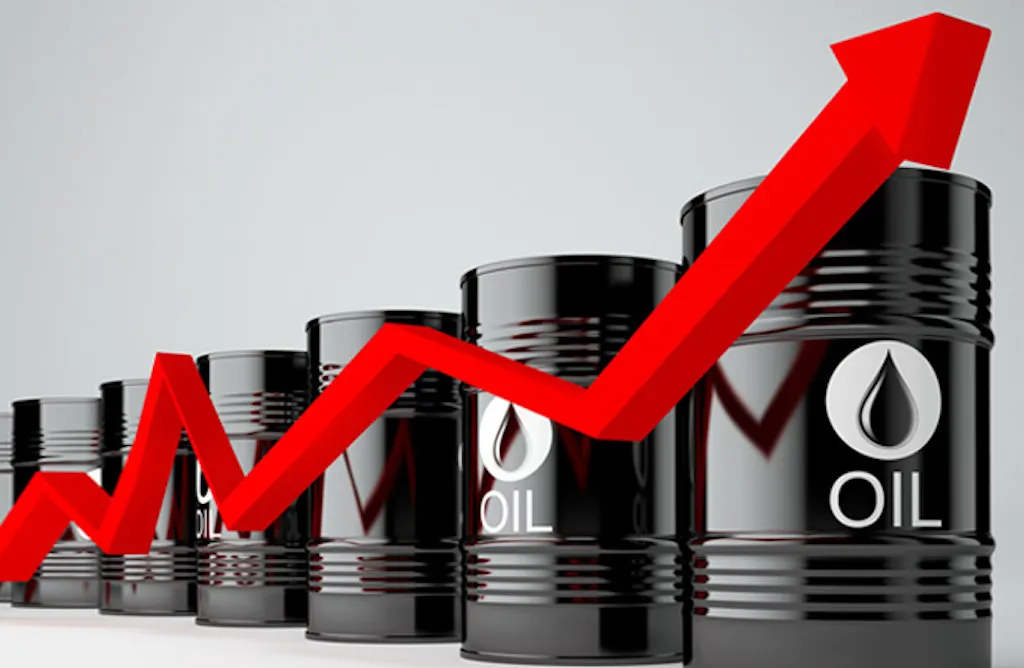
Global oil prices edged higher on Wednesday as escalating geopolitical tensions and renewed trade hostilities from US President Donald Trump unsettled financial markets, prompting investors to reassess risk exposure and energy supply stability.
Brent crude futures rose modestly to $63.65 per barrel, gaining about 0.2% from the previous session’s close of $63.50. Meanwhile, US benchmark West Texas Intermediate (WTI) crude climbed roughly 0.4% to $59.69 per barrel, up from $59.43 in the prior trading session.
Market participants pointed to a combination of geopolitical flashpoints and aggressive tariff rhetoric as key drivers behind the price movement. Fresh threats from the White House layered additional uncertainty onto already fragile global relations, reinforcing concerns over potential disruptions to energy flows and trade-linked demand.
Investor sentiment was particularly rattled after Trump signalled a hardline response to European opposition over US ambitions concerning Greenland. Over the weekend, the US president announced plans to impose tariffs on eight European nations that he accused of undermining what he described as US-led peace initiatives.
According to Trump, imports from Denmark, Norway, Sweden, France, Germany, the United Kingdom, the Netherlands, and Finland would face a 10% tariff beginning February 1. The proposed duties would rise sharply to 25% by June 1 should diplomatic negotiations fail to produce an agreement.
Trade tensions escalated further following reports that French President Emmanuel Macron was unwilling to participate in Trump’s newly proposed “Board of Peace for Gaza.” In response, Trump threatened punitive tariffs of up to 200% on French wine and champagne, a move that sent fresh shockwaves through European markets.
Analysts say the growing convergence of geopolitical disputes and trade conflicts has heightened risk perceptions globally, encouraging increased buying in oil markets as investors hedge against potential supply shocks.
Attention has also turned to the World Economic Forum in Davos, Switzerland, where Trump is expected to deliver remarks that could shape near-term market expectations, particularly regarding US trade policy and the administration’s stance on Greenland. Some investors are hopeful that discussions at the forum could open a pathway toward easing tensions with European partners.
Beyond oil, the broader financial landscape reflected rising risk aversion. Gold prices surged to record highs as investors sought safety, while US Treasury bonds came under pressure and the US dollar continued to weaken.
The softer dollar provided additional support for crude prices, as commodities priced in dollars become more attractive to buyers using other currencies.
Markets were also closely watching developments surrounding the US Federal Reserve. At Davos, US Treasury Secretary Scott Bessent said Trump could announce his preferred successor to Fed Chair Jerome Powell as early as next week.
Expectations that US monetary policy will remain accommodative, alongside projections of steady economic growth and resilient oil demand, have continued to underpin crude prices. However, analysts caution that a Fed chair perceived as closely aligned with Trump’s low-interest-rate preferences could raise longer-term concerns over the central bank’s independence, even if markets respond positively in the short term.