








KEY POINTS
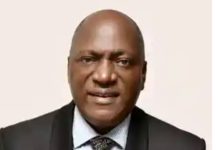
- Nigerian Society of Engineers (NSE) President, Ali Rabiu, has called for a holistic, innovation-driven approach to solving Nigeria’s persistent electricity challenges.
- Speaking at an NSE Board of Fellows webinar, Rabiu attributed the sector’s decline to long-standing political interference in policy and regulation.
- Experts at the event, including Dr. Meyen Etukudo, criticized the nation’s “over-reliance” on polluting thermal gas plants and advocated for a transition to solar and wind energy.
- Engineers are demanding a seat at the political table, questioning why no seasoned power engineer has served as Minister of Power since independence.
MAIN STORY
The Nigerian Society of Engineers (NSE) has launched a high-level advocacy campaign to reclaim its role in the management of the nation’s power sector.
At a webinar titled “Rebooting Nigeria’s Power Sector for Sustainable Development,” NSE President Ali Rabiu asserted that the “politics of energy” has become too intertwined with technical operations. He argued that the sector’s recovery depends on a management structure that prioritizes engineering expertise over political patronage, particularly in the operationalization of relevant federal agencies.
Adding a technical perspective, Dr. Meyen Etukudo, Special Adviser on Energy to the Akwa Ibom Governor, warned that Nigeria’s current energy mix is dangerously skewed toward gas-fired thermal generation.
He noted that this reliance not only causes environmental degradation but also leaves the grid vulnerable to gas supply shocks. Etukudo urged Nigerian engineers to lead the charge in domesticating renewable energy solutions, lamenting that critical projects are often outsourced to foreign experts and local artisans while qualified engineers remain sidelined in policy advisory roles.
THE ISSUE
The primary challenge identified is the “Technical-Political Disconnect.” While engineers possess the solutions for grid stability and renewable integration, the decision-making power remains in the hands of political actors who may not prioritize long-term infrastructure health.
This has led to the “Marginalization of Local Talent,” where Nigerian engineers are relegated to the background of major projects. To “reboot” the sector, the NSE is pushing for “Policy Proactivity,” encouraging its members to enter elective politics and regulatory governance to ensure that demand management and energy efficiency are driven by data rather than political expediency.
WHAT’S BEING SAID
- “Addressing the challenges within our energy sector requires a holistic approach that embraces innovation, collaboration and visionary leadership,” stated Ali Rabiu, NSE President.
- “The problems in the power sector are not only technical but also political,” noted Dr. Meyen Etukudo.
- “Nigerian engineers must participate in elective politics and influence policy decisions to drive meaningful change,” Etukudo added, questioning the historical exclusion of engineers from the Ministry of Power leadership.
- “As engineers, we are committed to guiding the Federal Government in properly constituting the management structure of all relevant agencies,” Rabiu concluded.
WHAT’S NEXT
- The NSE Board of Fellows is expected to submit a formal position paper to the Ministry of Power outlining a roadmap for management restructuring.
- Engineers will focus on capacity building in Solar and Hydropower to take advantage of Nigeria’s tropical climate and reduce thermal dependency.
- The NSE may launch a “Engineers in Governance” initiative to support members seeking roles in regulation, governance, and elective offices ahead of the next cycle.
- Efforts will be made to strengthen partnerships with international experts to facilitate technology transfer and develop local solutions for grid maintenance.
BOTTOM LINE
The Bottom Line is that Nigeria’s power crisis is as much about “People” as it is about “Pipes and Wires.” By demanding an end to political interference and a shift toward a diversified energy mix, the NSE is positioning its members as the necessary “system reboot” for the national grid. For the country to achieve sustainable development, the engineers who build the infrastructure must be the ones empowered to lead it.






 has launched a high-level advocacy campaign to reclaim its role in the management of the nation’s ...)