

By Boluwatife Oshadiya, | March 23, 2026
Key Points
- NLC rejects proposed ₦6 trillion bailout for power generation companies
- Labour union calls for structural overhaul of Nigeria’s energy sector
- Proposal includes merging Petroleum and Power ministries
Main Story
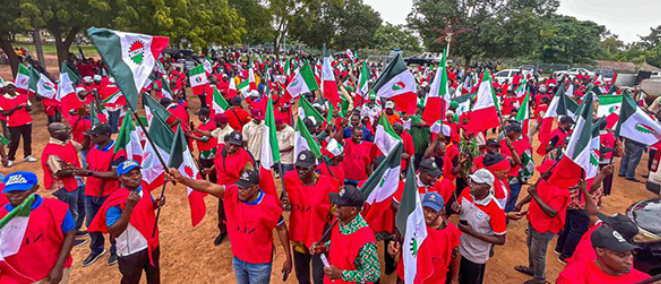
The Nigeria Labour Congress (NLC) has rejected a proposed ₦6 trillion federal government bailout for power generation companies, arguing that repeated financial interventions have failed to improve electricity supply across the country.
NLC President Joe Ajaero said in a statement issued in Abuja that the bailout does not address the underlying inefficiencies in Nigeria’s power sector.
“The proposed ₦6 trillion bailout is a mere symptom of deeper structural failures in the power sector, and repeated financial interventions have not translated into improved electricity supply,” Ajaero said.
He argued that continued reliance on public funds to sustain private-sector operators places an unfair burden on citizens, who face high electricity tariffs and persistent outages despite the interventions.
The NLC also proposed merging the Ministries of Power and Petroleum into a unified energy ministry, citing inefficiencies in gas supply coordination for thermal power generation.
The Issues
Nigeria’s power sector has struggled with chronic underperformance since its partial privatisation in 2013. Key constraints include inadequate gas supply, transmission bottlenecks, and liquidity challenges across the value chain.
Tariff structures remain politically sensitive, limiting cost recovery for operators while discouraging investment. At the same time, government interventions—often in the form of bailouts—have not translated into measurable service improvements.
The sector also suffers from weak regulatory enforcement and misalignment between upstream gas production and downstream electricity generation.
What’s Being Said
“We cannot continue to deploy public funds to sustain a fundamentally flawed system,” Ajaero said.
“Electricity must be treated as a social service and a fundamental right, not a profit-driven commodity,” he added.
Energy analysts have also argued that “without structural reform, financial bailouts will continue to deliver limited results,” reflecting broader industry sentiment.
What’s Next
- Federal Government is expected to respond to labour opposition in the coming days
- Stakeholder consultations may be convened to review power sector reform strategy
- Policy debate likely to intensify over tariff structures and sector governance
The Bottom Line: Nigeria’s power crisis is not a funding problem — it is a structural one. Without systemic reform, additional bailouts risk deepening inefficiencies rather than resolving them.






%20has%20rejected%20a%20proposed%20%E2%82%A66%20trillion%20federal%20government%20bailout%20for%20power%20generation%20companies...)