


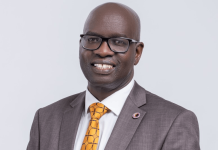

The Group Managing Director of Sahara Power Group, Kola Adesina, has said Nigeria’s power sector is entering a more stable phase, which is expected to attract new investments. He attributed this positive shift to ongoing federal government reforms and the gradual resolution of legacy debts that have long constrained growth across the electricity value chain.
Adesina revealed that Sahara Power is advancing plans to increase its dispatched generation capacity to between 6,500 and 7,000 megawatts. The group is also spearheading the launch of a state-of-the-art data centre designed to drive operational efficiency, predictive maintenance, and sector innovation.
“We are investing heavily in both gas and renewable energy sources to achieve additional generation capacity over the next three to five years, with the ultimate goal of providing sustainable, affordable, and reliable power for households and industries,” he said.
The Sahara Power chief highlighted that infrastructure and macroeconomic policies under President Bola Tinubu have introduced a level of clarity and predictability that is reshaping investment decisions in the sector. According to Adesina, these reforms have addressed long-standing structural bottlenecks and improved investor confidence.
Adesina disclosed that Sahara Power has already settled $438 million (73%) of its original $600 million loan obligation, despite historical liquidity challenges in the industry. He emphasised that the federal government’s ongoing legacy debt settlement programme is crucial for easing financial pressures on power companies, gas suppliers, and lenders, while creating room for new capital inflows.
“Improved policy coordination, relative exchange rate stability, easing inflationary pressures, and moderated interest rates are allowing power sector operators to plan with greater certainty,” he noted.
The Sahara GMD said closer collaboration among government agencies, regulators, financiers, and industry players is laying the foundation for sustained growth and operational stability. He added that Sahara Power has aligned its strategic objectives with the administration’s long-term infrastructure plan, describing it as bold, clear-sighted, and investment-friendly.
He also pointed to ongoing improvements in metering and service delivery, the deployment of over 2.3 million new meters under the National Mass Metering Programme, and the adoption of advanced customer relationship management systems as key drivers of efficiency, revenue assurance, and reliability in power supply.
The upcoming Sahara Power data centre will leverage real-time analytics, predictive maintenance, and cybersecurity solutions to support overall sector efficiency. Adesina said these investments are designed to complement federal government initiatives and enhance transparency and operational excellence.
Adesina reiterated that the resolution of legacy debts, combined with macroeconomic stability, has positioned Nigeria as a credible destination for long-term capital in the energy sector. He added that decisive reforms and policy clarity are stimulating investor confidence and opening the door to sustained growth.
“Unprecedented collaboration among the Federal Government, the power ministry, regulatory agencies, financiers, and multilateral institutions will continue in 2026, spurring sector-wide growth, efficiency, and increased electricity supply for Nigerians,” he said.
Sahara Power’s Role in Nigeria’s Electricity Market
Sahara Power currently generates about 19% of Nigeria’s total electricity, with subsidiaries including:
Egbin Power Plc – the largest thermal power plant in sub-Saharan Africa.
First Independent Power Limited – a generating company in the Niger Delta.
Ikeja Electric – one of the largest privately owned distribution companies in sub-Saharan Africa.
Adesina affirmed Sahara’s commitment to working with all stakeholders to ensure reliable electricity becomes the foundation of national development, noting that the company’s financial discipline and strategic planning have made it a leader in Nigeria’s power sector.