







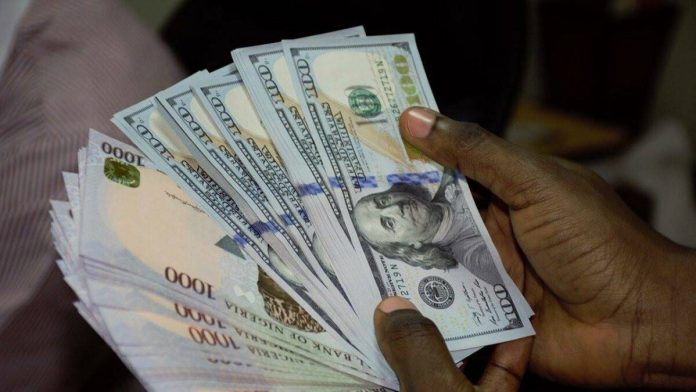
Nigeria’s gross external reserves have experienced a substantial drop in the first half of 2025, decreasing by approximately $3.5 billion amid continued foreign exchange (FX) obligations and global market pressures.
The Central Bank of Nigeria (CBN) reported that as of June 26, 2025, the reserves stood at $37.37 billion—down from $40.88 billion recorded at the close of December 2024. Data from the apex bank’s official currency platform shows a consistent downward trend, driven largely by FX interventions and external debt payments.
In its H1 economic update, Anchoria Limited noted that the FX reserves trajectory reflects growing demand for FX liquidity and heightened payment responsibilities. Despite high oil prices, FX supply remained under pressure.
During the same period, global oil prices were buoyed by rising geopolitical tensions, especially in the Middle East, where hostilities between Israel and Iran intensified. Brent crude saw nearly an 8% spike at its peak amid fears of regional escalation.
Nigerian crude oil grades such as Bonny Light and Escravos Light rallied close to $80 per barrel. Brass River and Qua Iboe crude were also robust, trading at $77.09 and $77.14 per barrel respectively, according to AIICO Capital Limited.
Despite the favorable oil prices, Nigeria’s FX reserve build-up has lagged, owing to persistent dollar demand and import-related obligations. The situation worsened in June, when reserves declined by about $1.07 billion within three weeks—from $38.39 billion on June 2 to $37.37 billion by June 26.
Anchoria analysts highlighted that although there has been some support from foreign portfolio inflows and FX supply from exporters and corporate entities, it hasn’t been enough to offset the outflows.
They cautioned that the apex bank’s diminished reserve buffer could limit its ability to intervene in the FX market effectively, especially if market volatility increases or global financial conditions become tighter.
While naira stability has held relatively steady in the short term, analysts warned that declining reserves and sustained external pressures may hamper the CBN’s ability to support future monetary interventions.
The mid-year economic report called for strategic policy adjustments and a stronger external financing strategy to navigate the second half of 2025 effectively.