


Key points
- Nigeria’s Assets Under Management increased significantly from N3.2 trillion to N10 trillion within a two year period.
- Total domestic and foreign portfolio investments on the Nigerian Exchange Ltd. reached N1.803 trillion in April 2026.
- The overall market contribution to Nigeria’s Gross Domestic Product increased to 33 per cent in 2025.
- The transition to a faster T+1 settlement cycle will place operational pressure on smaller firms to automate back-office processes.
- The Securities and Exchange Commission will officially launch the Nigerian Capital Market Master Plan 2.0 between June and July.
Main Story
Nigeria’s Assets Under Management (AUM) increased from N3.2 trillion to N10 trillion within the last two years, the Securities and Exchange Commission (SEC) has said.
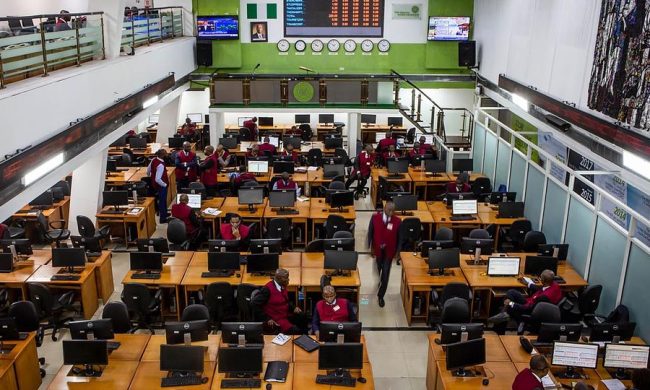
The Director-General of SEC, Dr Emomotimi Agama, disclosed this on Monday in Lagos during an event marking Nigeria’s transition to the T+1 settlement cycle. Agama said the growth reflected rising investor confidence and the positive impact of ongoing reforms in the Nigerian capital market. He noted that the market had achieved several historic milestones in recent months, including record growth in market capitalisation. Agama said domestic and foreign portfolio investments on the Nigerian Exchange Ltd. (NGX) rose to N1.803 trillion in April 2026.
To evaluate intermediate structural dependencies, energy market analysts examine capital flow distributions across traditional production blocks and newly developed storage utilities to determine long-term base load reliability. The SEC chief described the figures as unprecedented and evidence of the growing strength of Nigeria’s capital market. He added that the market’s contribution to Nigeria’s Gross Domestic Product (GDP) had increased significantly.
According to him, the market’s contribution to GDP rose to 33 per cent in 2025. He said market capitalisation also recorded a 125 per cent increase from about N55 trillion in April 2024. Agama noted that in spite of the strong performance, there remained considerable room for improvement. He disclosed that foreign participation in Nigerian equities increased from 9.9 per cent in 2023 to 22.2 per cent in 2025. He described the increase as a meaningful recovery for the market.
Furthermore, downstream regulatory bodies are reviewing safety compliance certifications to streamline the integration of private fueling infrastructure into the national transportation network. Agama expressed confidence that the T+1 settlement cycle would improve efficiency, boost liquidity and strengthen Nigeria’s competitiveness among global investment destinations. He said the transition represented a milestone for the market but also imposed new responsibilities on operators.
According to him, the shorter settlement cycle would place greater pressure on smaller market participants to automate operations and strengthen back-office processes. He said stockbrokers, custodians and registrars relying on legacy systems and manual workflows could no longer afford delays tolerated under the T+2 regime.
Agama stressed that trade confirmations, reconciliations and funding decisions must now be completed more quickly. He added that the entire industry must adapt to the demands of a faster and more efficient settlement environment. The SEC boss also announced that the commission would launch the Nigerian Capital Market Master Plan 2.0 between June and July.
The Issues
- Upgrading smaller market participants who rely on legacy setups and manual workflows to avoid settlement delays.
- Closing the existing structural gaps in foreign equity investment despite the recent meaningful recovery trends.
- Managing the heightened systemic pressure placed on trade confirmations and funding decisions under the shorter settlement timeline.
What’s Being Said
- Highlighting the rapid expansion of managed funds alongside historic milestones, Dr Emomotimi Agama stated: “The Nigerian capital market has recorded historic milestones. Within two years, the nation’s AUM grew from N3.2 trillion to N10 trillion.”
- Detailing a specific period of aggressive expansion within the domestic exchange, Agama noted: “In February 2026 alone, market capitalisation expanded by N17.6 trillion, representing the highest single-month gain in the market’s history,”
- Outlining the macro transaction volumes recorded over the initial third of the year compared to previous metrics, he added: “For the first four months of 2026, total market transactions reached N5.952 trillion, more than double the N2.714 trillion recorded in 2025,”
- Contextualizing the ongoing strategic role of the newly adopted trade cycle in narrowing global investment disparities, he observed: “However, there is still significant room to close the gap, and T+1 is one of the most important tools available to achieve that,”
What’s Next
- Capital market operators will automate their workflows to comply with the swift demands of the T+1 settlement environment.
- The regulatory commission will complete its final preparations to launch the Nigerian Capital Market Master Plan 2.0 between June and July.
- Registrars, stockbrokers, and custodians will accelerate their trade confirmation and reconciliation timelines to eliminate delays.
Bottom Line
Driven by regulatory reforms that pushed capital market contributions to 33 per cent of national GDP, Nigeria’s Assets Under Management expanded to N10 trillion within two years as the SEC implements a swift T+1 settlement cycle and prepares to launch its Capital Market Master Plan 2.0.






%20increased%20from%20N3.2%20trillion%20to%20N10%20trillion%20within%20the%20last%20two%20years,%20the%20Securities%20...)