









Key points
- Federal Government and World Agriculture Forum collaborate to improve cold chain infrastructure and post-harvest management.
- Nigeria loses up to 40 million metric tonnes of food annually due to inefficiencies.
- Initiative aims to boost food security, reduce losses, and strengthen agricultural value chains.
Main story
The Federal Government has partnered with the World Agriculture Forum (WAF) to transform Nigeria’s cold chain infrastructure and post-harvest management systems in a bid to enhance food security and agricultural productivity.
The collaboration was announced during the inauguration of the WAF Nigeria Council in Abuja, where stakeholders emphasised the urgent need to address inefficiencies across the agricultural value chain.
Speaking at the event, Dr Musa Umar, Director at the Office of the Permanent Secretary, Federal Ministry of Agriculture and Food Security, said the ministry would work closely with WAF to strengthen food systems and support national development goals.
He described the initiative as timely and strategic, noting that agriculture remains central to economic diversification, rural development, employment generation, and social stability.
Umar added that government priorities include value chain development, mechanisation, irrigation expansion, improved access to inputs, and enhanced storage and market linkages.
The issues
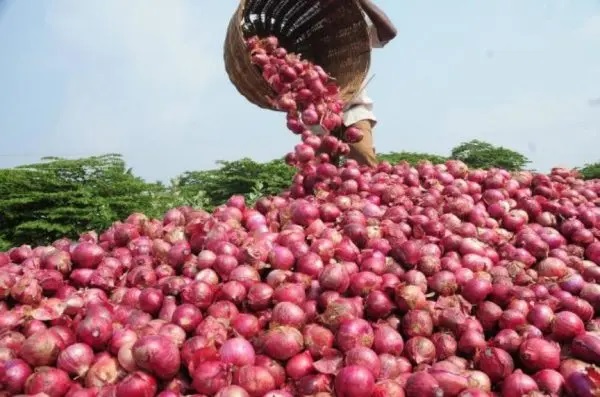
Nigeria continues to face significant post-harvest losses due to weak storage systems, poor logistics, and inadequate cold chain infrastructure. These inefficiencies have contributed to persistent food insecurity despite high levels of agricultural production.
Experts estimate that the country loses between 30 and 40 million metric tonnes of food annually, translating to economic losses of between ₦3.5 trillion and ₦5 trillion.
The disconnect between production and value retention has also hindered price stability and reduced farmers’ income.
What’s being said
Executive Director of WAF, Dr MJ Khan, represented by Lekan Ofem, said the establishment of the Nigeria Council reflects a renewed commitment to reposition agriculture as a driver of economic growth, social inclusion, and environmental sustainability.
Country Director of WAF Nigeria, Alexander Isong, described the initiative as a response to a critical national challenge, noting that Nigeria faces a paradox of high production alongside widespread food insecurity.
He warned that up to 34.7 million Nigerians could face severe food insecurity during the 2026 lean season if urgent interventions are not implemented.
Isong stressed that losses across the agricultural value chain—estimated at up to 50 per cent of total production—underscore the need to prioritise value retention through improved storage, logistics, and processing systems.
What’s next
The partnership is expected to drive investment in cold chain infrastructure, strengthen logistics networks, and promote integrated agricultural systems linking farmers to markets.
Stakeholders also anticipate increased collaboration between government, private sector, and development partners to scale solutions that reduce post-harvest losses and improve efficiency.
Bottom line
Nigeria’s partnership with the World Agriculture Forum signals a strategic shift toward addressing post-harvest inefficiencies, with improved cold chain systems seen as critical to reducing food losses, stabilising prices, and strengthening national food security.






 to transform Nigeria’s cold chain ...)