






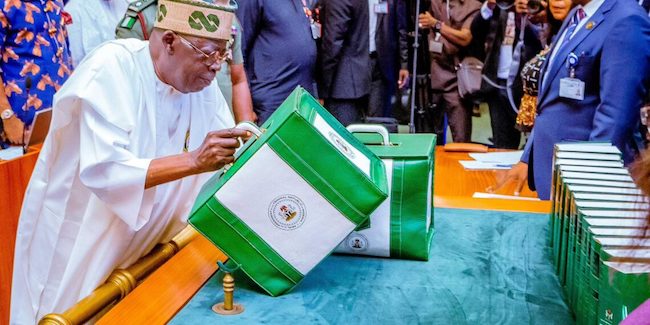
The Federal Government has officially moved to end the decades-long practice of running overlapping budget cycles, establishing a strict terminal date for the 2025 budget. In a statement released on Wednesday, January 21, 2026, the Accountant-General of the Federation announced that the implementation of the 2025 capital budget will now conclude on March 31, 2026.
This reform follows the repeal and re-enactment of the 2024 and 2025 Appropriation Acts, which were designed to “collapse” all remaining 2024 capital projects into a single, unified stream for the 2025 fiscal year.
For years, Nigerian Ministries, Departments, and Agencies (MDAs) struggled with a “fiscal nightmare,” often managing funds from two different budget years simultaneously. This overlap created massive transparency gaps and made project monitoring nearly impossible for civil society groups.
The new unified calendar aims to improve the Treasury’s cash management by ensuring that the ₦16.4 trillion earmarked for capital expenditure in 2025 is released in a predictable, quarterly fashion. Attorney-General of the Federation, Lateef Fagbemi, confirmed that this move is a supreme exercise of the “Power of the Purse” vested in the National Assembly.
The reform has been particularly welcomed by the construction and aviation sectors. Contractors, who previously feared “funding cliffs” at the end of every December, can now plan for a continuous 12-month work cycle.
Additionally, the re-enactment process allowed the 10th National Assembly to “clean” the budget of redundant line items and “padding” that surfaced during the merger of several government agencies under the Oronsaye Report implementation. Public hearings involving ICAN and ANAN were held to ensure the revised N48.31 trillion total budget accurately reflects current economic priorities like food security and national safety.
While the transition aims for international best practices, some financial experts warn of a “spending rush” as MDAs scramble to exhaust their allocations before the March 31 deadline. To mitigate this, the Ministry of Budget and Economic Planning has deployed a digital “Project Tracking Dashboard” to monitor real-time execution.
As Nigeria moves toward a more disciplined January-to-December cycle for 2026, the success of this reform will be measured by whether it can finally break the cycle of abandoned projects and chronic fiscal indiscipline that has plagued the nation’s public finance for decades.