KEY POINTS:
- Nigeria will lead efforts to amplify Africa’s voice on gender equality at the 70th Session of the United Nations Commission on the Status of Women (CSW70).
- Federal Government highlights policy reforms, social protection programmes, and economic initiatives advancing women’s empowerment.
- Authorities acknowledge persistent challenges including gender-based violence and low female representation in political leadership.
MAIN STORY
The Federal Government has announced that Nigeria will spearhead efforts to strengthen Africa’s voice on gender equality and women’s rights at the upcoming United Nations Commission on the Status of Women 70th session.
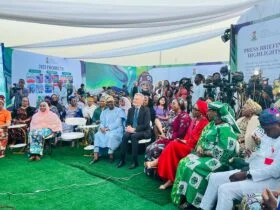
Minister of Women Affairs and Social Development, Imaan Sulaiman-Ibrahim, disclosed this on Friday in Abuja during a press briefing ahead of Nigeria’s participation in the global gathering.
According to the minister, the ministry will coordinate a broad national delegation in collaboration with the Federal Ministry of Foreign Affairs and Nigeria’s Mission to the United Nations.
She said Nigeria’s engagement at the 70th Session of the United Nations Commission on the Status of Women would prioritise advancing national policies on gender equality, women’s empowerment and poverty reduction, while also strengthening international partnerships that promote the protection and development of women.
Sulaiman-Ibrahim explained that Nigeria’s role would also position the country to speak on behalf of the African States Group, helping to amplify Africa’s collective perspective in shaping global frameworks on women’s rights.
She noted that Nigeria’s leadership role at the forum reflects growing national commitment to gender equality through policy reforms and institutional frameworks implemented across the country.
The minister cited key initiatives including the National Gender Policy, the National Women’s Economic Empowerment Policy, and legislation such as the Violence Against Persons Prohibition Act and the Child Rights Act.
She added that all 36 states and the Federal Capital Territory have now enacted the VAPP Act or equivalent legislation following sustained advocacy by government institutions and development partners.
Sulaiman-Ibrahim further highlighted several initiatives aimed at strengthening women’s economic empowerment, including the Renewed Hope Social Impact Interventions targeting women across Nigeria’s 774 local government areas.
According to her, national social protection programmes have reached more than 9.4 million households, with women accounting for over 70 per cent of beneficiaries.
THE ISSUES
Despite progress, the minister acknowledged that significant challenges persist, particularly in addressing gender-based violence and increasing women’s participation in elective positions across Nigeria’s political and governance systems.
She revealed that Nigeria currently operates about 50 Sexual Assault Referral Centres (SARCs), far below the estimated requirement.
“By international benchmarks, Nigeria requires at least one SARC per 400,000 people, translating to a minimum of 500 centres nationwide,” she said.
The minister stressed that expanding survivor-centred services and strengthening prevention and response systems remain critical priorities for the Federal Government.
WHAT’S BEING SAID
Speaking at the briefing, Minister of Finance and Coordinating Minister of the Economy, Wale Edun, emphasised the importance of renewed commitment to advancing women’s rights.
“When women are empowered and children are protected, and families are supported, productivity increases, communities thrive and the nation grows stronger,” Edun said.
Also speaking, Adedayo Benjamins-Laniyi, Mandate Secretary of the FCT Women Affairs Secretariat, said the administration was implementing initiatives aimed at ending gender-based violence and promoting women’s participation in governance.
Similarly, Beatrice Eyong, Country Representative of UN Women to Nigeria and ECOWAS, reaffirmed the organisation’s commitment to supporting gender equality and increasing women’s representation in leadership positions across the country.
WHAT’S NEXT
Nigeria’s participation at CSW70 will provide an opportunity to showcase ongoing reforms and strengthen global partnerships aimed at improving the lives of women and girls across Africa.
The engagement will also align with activities marking International Women’s Day 2026 under the theme, “Rights. Justice. Action. For All Women and Girls.”
BOTTOM LINE
Nigeria is positioning itself as a leading advocate for women’s rights and gender equality in Africa, but sustained policy implementation, stronger institutional support, and expanded protection services will be crucial to translating commitments into tangible outcomes for women and girls nationwide.