Keypoints
- The National Sports Commission (NSC) and WIPO marked World IP Day 2026 in Abuja with a focus on “IP and Sports: Ready, Set, Innovate.”
- NSC Chairman Shehu Dikko identified intellectual property as the essential tool for transforming sports from recreation into a structured economic asset.
- Experts noted that Nigeria’s sports growth is currently hindered by piracy, weak IP awareness, and poor documentation of media and image rights.
- The federal government is aligning sports reforms with the Renewed Hope Initiative to boost national GDP and job creation through commercialized sports assets.
- WIPO Director-General Daren Tang described IP as the “invisible engine” that powers the multi-billion-dollar global sports industry.
Main Story
Nigeria is moving to professionalize its sports sector by treating athletic talent and media coverage as valuable intellectual property.
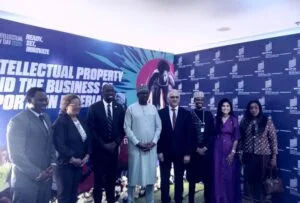
During a seminar at the United Nations House in Abuja on Monday, April 27, 2026, stakeholders gathered to discuss how patents, trademarks, and copyrights can turn games into gold.
NSC Chairman Shehu Dikko explained that for sports to contribute significantly to the economy, Nigeria must move beyond simply playing matches and start commercializing the branding, data, and technology behind the athletes.
The event, which featured sports legends like Daniel Amokachi alongside intellectual property regulators, highlighted a major shift in government strategy.
Instead of relying solely on government funding, the new approach focuses on protecting “image rights” and “media rights” to attract private investment.
By securing these assets, Nigerian clubs and athletes can better negotiate sponsorship deals and broadcasting contracts, ensuring that the wealth generated by Nigerian sports stays within the local ecosystem.
The Issues
The primary challenge is the enforcement-awareness gap; while the laws for trademarks and copyrights exist, many Nigerian athletes and small clubs are unaware of how to register their brands or defend them against piracy. Authorities must solve the problem of digital broadcasting theft, as unauthorized streaming of local matches deprives the league of the revenue needed to improve infrastructure.
Furthermore, there is a legal-capacity risk; the country requires more specialized sports lawyers and IP experts to handle complex international contracts and data rights. To succeed, the National Sports Commission must work with the Nigerian Copyright Commission to create a “user-friendly” system where even grassroots academies can easily document and protect their intellectual assets.
What’s Being Said
- “Intellectual property is what transforms sports from mere activity into a viable economic asset,” stated Shehu Dikko.
- WIPO Director-General Daren Tang noted that behind every sporting success is a framework enabling innovation and investment.
What’s Next
- The National Sports Commission is expected to roll out a series of IP education workshops for sports federations and club owners across the country.
- The Nigerian Copyright Commission and the Trademarks Registry are anticipated to collaborate on a specialized fast-track registration process for sports-related assets.
- Investors are likely to see new opportunities in sports technology and data analytics firms as the government prioritizes digital innovation in the sector.
- A legislative review of existing sports laws may be initiated to better align them with the technological realities of 2026, such as AI-driven fan engagement and virtual branding.
Bottom Line
By focusing on Intellectual Property, Nigeria is trying to build a sports industry that pays for itself. If the country can successfully protect its sports “IP,” it can turn its massive pool of talent into a sustainable source of jobs and national wealth.