










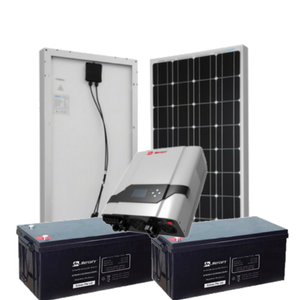
Nigeria has emerged as Africa’s second-largest solar installer, following a record-breaking year for the continent’s renewable energy sector, according to a new report by the Global Solar Council (GSC).
Africa recorded its fastest solar growth on record in 2025, installing approximately 4.5 gigawatts of new capacity — a 54% increase from the previous year and well above earlier forecasts. South Africa led the continent with 1.6 gigawatts of new installations, while Nigeria followed closely with 803 megawatts. Egypt ranked third with 500 megawatts.
The surge was largely driven by utility-scale solar projects, alongside growing adoption of distributed and rooftop systems by households and businesses. GSC projects that Africa could install more than 33 gigawatts of solar capacity by 2029 — over six times the amount added in 2025 — as both utility-scale and decentralized markets expand across more countries.
However, the report noted that unlocking this growth will depend on better alignment between financing, planning, and regulation. Leaders of major solar mini-grid companies recently estimated that up to $46 billion in investment will be required by 2030 to meet electrification targets in 29 African countries under a World Bank–backed initiative. This funding is expected to include roughly $28 billion in debt, $14 billion in equity, and $4.6 billion in grants and subsidies.
Africa is effectively navigating two parallel energy transitions, according to GSC: a government-led shift focused on grid-connected, utility-scale solar projects funded mainly by public and development finance, and a private-sector-driven transition powered by rooftop, commercial, and other distributed solar systems.
Despite rapid growth in distributed solar, financing structures have lagged behind. Public and development institutions still account for about 82% of clean energy funding on the continent, leaving limited tailored financing for smaller-scale and private installations.
Even so, industry leaders remain optimistic. “Solar and storage is the hope of Africa,” said GSC Chief Executive Officer Sonia Dunlop. “This technology can deliver energy access, sustainable development, green growth, and resilience to climate shocks.”
Nigeria’s strong showing underscores its growing role in Africa’s clean energy transition, positioning the country as a key player in the continent’s push toward a more resilient and sustainable power future.


.)