Key Points
- Nigeria’s natural gas production has risen from 6.8 billion cubic feet (bcf) per day in 2023 to 7.5 bcf per day in 2025.
- The Federal Government has set an ambitious target to reach 12 bcf per day by 2030, contingent on sustained reforms and investment.
- Infrastructure remains a primary hurdle, with 16 priority pipeline projects identified requiring approximately $22 billion in funding.
- Domestic energy strategy is focusing on gas-to-power initiatives and increasing LPG consumption from 1.8 million to 3 million tonnes per annum.
Main Story
Nigeria’s push to reposition natural gas as the backbone of its energy transition is reportedly gaining momentum, with production figures showing a steady climb over the last two years.
Mr Ed Ubong, the Coordinating Director of the Decade of Gas Secretariat, disclosed in Abuja on Monday that output had reached 7.5 billion cubic feet per day as of 2025.
Speaking at a ministerial roundtable held in partnership with the World Bank, Ubong projected that the country could nearly double its current output by 2030 if the present trajectory of collaboration across the value chain continues.
The director attributed the recent growth to improved synergy between government institutions, regulators, and industry investors.
He explained that the Decade of Gas initiative, spanning 2021 to 2030, was designed to unlock the nation’s vast reserves, estimated at over 200 trillion cubic feet.
To manage this expansion, a centralised database is currently tracking over 215 gas demand projects, ensuring better planning and accountability for infrastructure delivery.
Officials noted that several upstream operators have already taken Final Investment Decisions (FID) on major projects, signaling a resurgence in investor confidence.
The Issue
Despite holding one of the largest gas reserves in Africa, Nigeria continues to grapple with significant infrastructure deficits and pricing challenges. The primary bottleneck is the estimated $22 billion required to fund critical pipeline projects, including the African Atlantic Gas Pipeline and the Trans-Sahara Gas Pipeline. Furthermore, while gas is seen as a transition fuel, the domestic market still struggles with power shortages and a high reliance on traditional biomass like firewood and charcoal. Bridging the gap between vast upstream reserves and downstream consumption remains the central challenge for policy makers.
What’s Being Said
- “Nigeria has reaffirmed its ambition to significantly scale up gas production, with a target of delivering up to 12 billion cubic feet of gas per day into the market by 2030,” stated Mr Ed Ubong.
- He emphasised that Africa’s energy future depends on the ability to work across borders, noting that “shared prosperity” requires bidirectional pipeline systems.
- Aliyu Mohammed, Chief Executive of the NMDPRA, noted that the first half of the Decade of Gas focused on identifying enablers, while the second half must focus on “execution and measurable outcomes.”
- Mohammed further identified three major corridors for supply: the Africa Atlantic Gas Pipeline, the Trans-Sahara Gas Pipeline, and coastal LNG infrastructure along the Gulf of Guinea.
What’s Next
- The government is looking to the World Bank and other development partners to help mobilise the $22 billion needed for priority infrastructure.
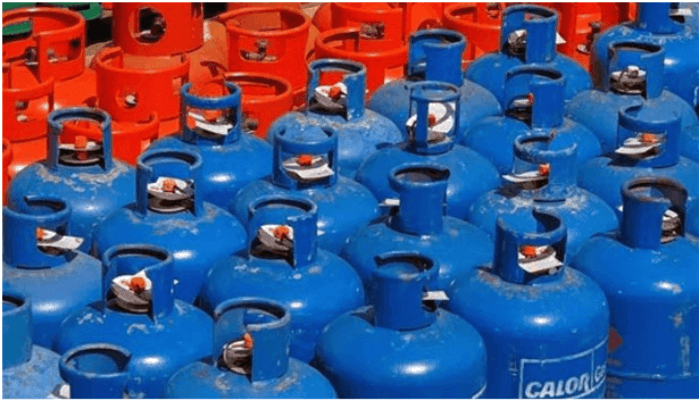
- Plans are underway to distribute over five million gas cylinders nationwide to support the transition to LPG.
- The next phase of the initiative will focus on the commissioning of new processing facilities and expanding regional pipeline networks to create a hub for the African gas market.
- Regulatory bodies are expected to work on harmonising frameworks to establish structured mechanisms for cross-border gas exports backed by firm supply agreements.
Bottom Line
The “Decade of Gas” has moved from a conceptual framework to a measurable growth phase, but the $22 billion infrastructure gap remains a formidable wall. For Nigeria to transition from a reserve-rich nation to a gas-powered economy, it must successfully convert investor interest into completed pipelines that can fuel both domestic industries and regional export markets.