


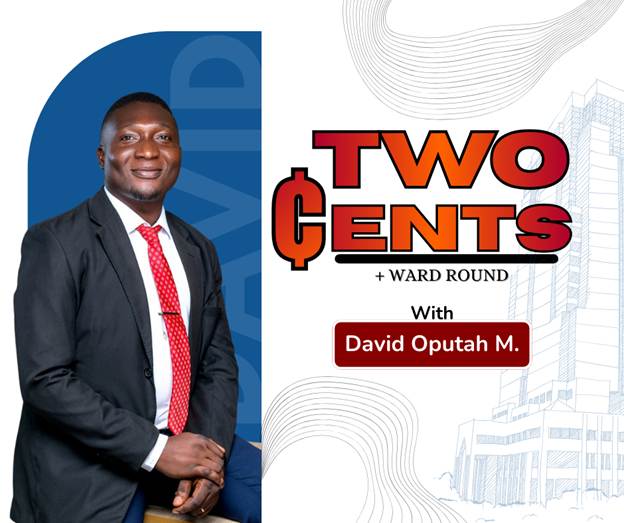
By Oputah David Michael
I didn’t write for two weeks, not because there was nothing to say, but because there was too much, and none of it felt light enough to hold or clear enough to shape into sense. I had just returned from Dakar, Senegal, from a sponsored training that reminded me what functional systems can look like; not perfect, but working, predictable, humane in ways that make everyday life easier rather than harder. And then I landed back in Nigeria, and reality settled in almost immediately.
The power situation was the first thing that hit. There is something about returning to inconsistency after experiencing stability that makes the contrast sharper, almost personal. The outages stretched longer, the heat felt heavier, and the cost of simply existing became more obvious.
Fuel prices continued their quiet climb, and with that came the usual adjustments: fewer trips, more calculations, constant awareness of cost. The freezer went off more times than it stayed on, food started to spoil, and cooking ahead, something as basic as that, became unreliable.
Eventually, I did what many people are now doing: I spent money I did not plan to spend on solar. It wasn’t comfort because there is a particular kind of exhaustion that comes from constantly solving problems that should not exist in the first place.
Somewhere in the middle of all this, my body decided to join the protest. A stomach upset, triggered by a food allergy, slowed me down even further. How do you form neat, thoughtful opinions in a country that keeps presenting disorder in layers? How do you step back and analyse when you are still inside the experience, still adjusting, still absorbing?
But even in that state, something happened that refused to be ignored, something that pushed past fatigue and demanded attention. The so-called rape culture incident in Delta State. Even calling it that feels insufficient, almost like language failing to carry the weight of what actually happened. What makes it even harder to process is the timing: from International Women’s Day to Mothering Sunday, within the same month, we are confronted with the reality that women and girls are still not safe in spaces where they should be.
And the truth is, this is not new. It has been happening, quietly, repeatedly, long before it became a trending topic or a subject of public outrage. What we are seeing now is not an isolated incident but a continuation of something that has been allowed to exist under the surface.
Yes, there have been reports of arrests, and that is important, but arrests are only the starting point of accountability, not the conclusion. Because this goes beyond individuals. It speaks to a culture that permits, excuses, or minimises behaviour until it escalates into something undeniable. It speaks to the everyday environments where women must think about safety before participation, where vigilance replaces freedom, where normal activities come with calculated risk.
Because if we are honest, this is not just about a few individuals making terrible choices. It is about a broader failure of culture, of systems, of responsibility alongside the everyday strain of living in a country where even basic infrastructure feels like a privilege. And that is why, this week, 2 cents does not feel like enough.
Ward Rounds
Electricity Crisis
Nigeria reportedly loses about ₦40 trillion annually due to poor electricity supply. Let that number sit for a moment. That is not just economic statistics, it is a daily lived experience. Businesses shrink, households improvise, and productivity bleeds quietly across sectors. When generation drops below 3,000 megawatts in a country of over 200 million people, we are not managing a system, we are managing a shortage.
Power is not a luxury. It is infrastructure. Until it is treated as such with seriousness, urgency, and accountability, every other conversation about growth remains theoretical. Full stop!
Fuel Costs
The Dangote Refinery reduced its petrol price to ₦1,200 per litre, yet many Nigerians are still buying as high as ₦1,350. This gap between policy, production, and actual market reality is where citizens feel the most pain. Relief announced is not relief experienced.
At this point, the conversation is no longer about global oil dynamics alone, it is about domestic cushioning. Nigerians are adapting, yes, but adaptation should not be mistaken for resilience forever. Something has to give and it shouldn’t be the people. Edakun.
Presidential Visit to the UK
We are told the President’s UK visit is an investment in Nigeria’s future: shuttle diplomacy, strategic positioning, long-term gains. Fine. But Nigerians are not just investors in the future; they are citizens in the present.
Diplomacy is important, but so is delivery. The real measure of such visits is not in meetings held, but in outcomes seen. For now, the ask is simple: translate engagement into impact and quickly.
Resurgence of Attacks
The reports from Maiduguri and Kebbi are deeply troubling: suicide bombings, ambushes, and a resurgence of insurgent activities. For communities affected, this is not “news”; it is reality. Loss, fear, disruption again.
What is even more concerning is the tone of some official responses. While rehabilitation has its place, it cannot overshadow justice or deterrence. When messaging appears softer than the reality of violence, it risks sending the wrong signal entirely. Security must be firm, clear, and uncompromising.
Nigeria Revenue Summit by Interswitch
The Nigeria Revenue Summit by Interswitch in Lagos brought important conversations around taxation, compliance, and growth to the forefront. In a country where revenue generation is both critical and contested, these dialogues matter.
As the conversation moves to Abuja on April 1st, the real opportunity lies in translating insights into policy clarity and practical reforms. Make it a date if you’re in or around Abuja. Quality conversations!
Editors note: Views and opinions expressed in this article are not of BizWatch Nigeria
- David is a respected Media and Communications Consultant in Nigeria. He has a first degree in Mass Communication and 2 Master degrees (Organisational Behaviour and Mass Communication). He is a Bloomberg-trained financial journalist (BMIA) and a participant in the Media Innovation Programme (MIP) at the University of Johannesburg, South Africa and the Pan Atlantic University, Lagos.