

KEY POINTS
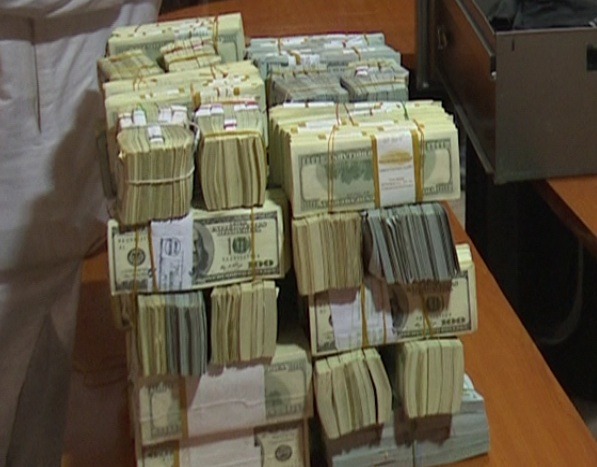
- Nigeria’s external reserves have hit $50.45 billion, the highest level in 13 years, providing 9.68 months of import cover.
- Financial experts lauded the growth in external buffers but noted that the increase has yet to improve the exchange rate or the standard of living.
- Economists are calling on the Federal Government to utilize these robust reserves to reduce reliance on foreign loans and stimulate the productive sectors.
MAIN STORY
Financial experts have commended the Federal Government following the rise of Nigeria’s external reserves to a 13-year high of $50.45 billion. The Central Bank of Nigeria (CBN) Governor, Mr. Olayemi Cardoso, announced the figure at the conclusion of the 304th Monetary Policy Committee (MPC) meeting in Abuja.
Cardoso noted that the current level is sufficient to cover nearly 10 months of imports, indicating a significant strengthening of the nation’s external buffers.
Reacting to the development on Thursday, Prof. Sheriffdeen Tella of Babcock University praised the milestone but questioned why the exchange rate had not seen a corresponding improvement. He argued that a massive reserve should ideally strengthen the local currency and urged the government to curb its “spate of foreign loans” in light of these accrued funds.
Tella emphasized the need for capital accumulation that supports productive sectors to accelerate real economic growth rather than simply maintaining high paper reserves.
Echoing these sentiments, Mr. Nerus Ekezie, former Executive Director of the National Association of Small and Medium Enterprise, stated that while robust reserves indicate a healthy economy on paper, the positive impacts have yet to be felt by the populace.
He suggested that the combination of high reserves and the removal of petroleum subsidies provides the government with enough economic fundamentals to address current headwinds. Similarly, Mr. Moses Igbrude of the Independent Shareholders Association of Nigeria noted that while the increase bolsters investor confidence, the ultimate success of the policy lies in whether it translates into a better quality of life for all citizens.
WHAT’S BEING SAID
- “The country’s exchange rate ought to have improved beyond what we have now, because a huge reserve determines the value of the exchange rate,” stated Prof. Sheriffdeen Tella.
- Nerus Ekezie cautioned: “We are yet to feel the positives of such reserves and the government should endeavour that is not just on paper.”
- Moses Igbrude highlighted the investor perspective: “The increase is a good move because it will engender investors confidence in the general economy.”
WHAT’S NEXT
- Analysts will be watching to see if the CBN utilizes the $50 billion buffer to intervene more aggressively in the foreign exchange market to stabilize the Naira.
- The Federal Government may face increased pressure from stakeholders to revise its borrowing plan for the 2026 fiscal year in favor of internal funding.
- Experts are looking for new initiatives aimed at channeling reserve gains into agriculture and manufacturing to reduce import dependency.
BOTTOM LINE
The Bottom Line is that while a $50.45 billion reserve marks a significant macroeconomic victory for the CBN, financial experts believe the real test is the “populace effect.” For these reserves to be truly effective, they must serve as a catalyst for a stronger Naira and a reduced national debt profile rather than just remaining a static indicator of external health.






%20Governor,%20Mr.%20Olayemi%20Cardoso,%20announced%20the%20figure%20at%20the%20conclusion%20of%20the%20304th%20Monetary%20Policy%20Committee%20(MPC)%20meeting%20in%20Abuja.)