






Key Points
- Nigeria has launched the national community food bank programme to fight hunger and malnutrition.
- The initiative targets vulnerable families, especially children under six and pregnant or nursing mothers.
- It will be implemented across all 774 Local Government Areas.
- Over 500,000 households are expected to benefit in the first phase.
- The programme links health centres with food banks stocked with local produce.
Main Story
The National Primary Health Care Development Agency (NPHCDA) has officially launched the National Community Food Bank (NCFB) Programme, a major step toward addressing hunger and malnutrition in Nigeria.
The programme was unveiled in Abuja by the Executive Director of NPHCDA, Dr. Muyi Aina, during the inauguration of the initiative’s Trust Fund. The event brought together government officials, business leaders, and stakeholders from different sectors.
According to Aina, the programme is designed to support Nigeria’s most vulnerable households, particularly families with young children under six years old, as well as pregnant and breastfeeding women who are at risk of malnutrition.
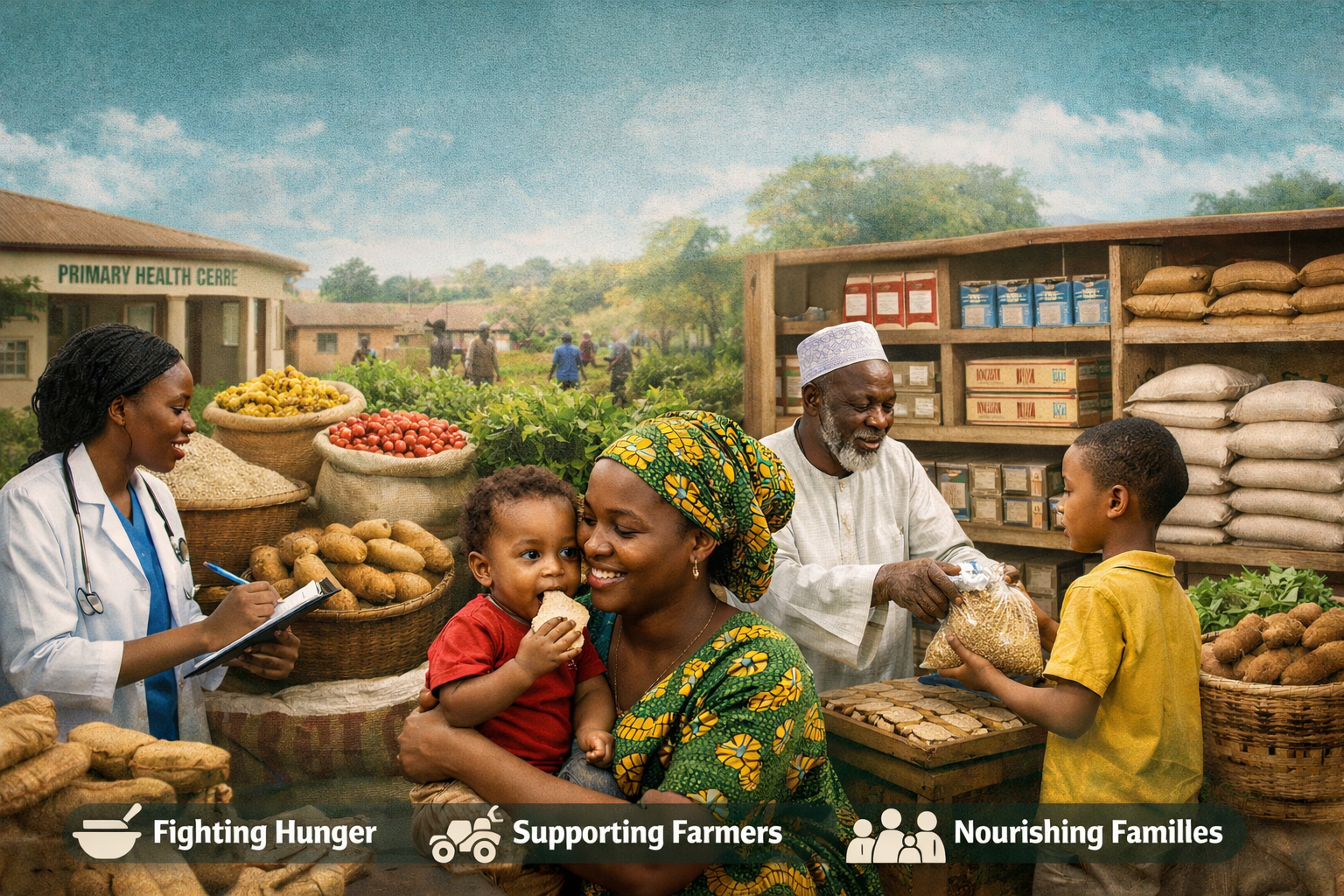
The initiative will operate nationwide, covering all 774 Local Government Areas. It will connect primary health care centres (PHCs) with community food banks stocked with locally sourced grains and Ready-to-Use Therapeutic Foods (RUTFs).
Families in need will be identified through health screenings conducted at PHCs. Once identified, they will receive vouchers that can be used to collect food from designated food banks. Support will continue until a child’s nutritional condition improves or until the child turns six.
Aina explained that the programme is not just about providing food, but about creating a system that ensures long-term access to nutrition and better health outcomes for families.
The Issues
Nigeria faces a serious food security challenge despite producing large quantities of food. According to Aina, between 30 percent and 50 percent of harvested food is lost every year. This translates to about 30 to 40 million metric tonnes of food waste annually.
At the same time, many households struggle to access nutritious meals, especially in rural and low-income communities. This gap between food production and access has contributed to high rates of malnutrition among children and women.
The lack of efficient food distribution systems, weak supply chains, and limited support for farmers have worsened the situation. Without proper intervention, these challenges could continue to affect public health, education, and economic productivity.
What’s Being Said
Aina emphasized that the new programme aims to solve these problems by connecting surplus food with those who need it most. He noted that the initiative would improve child growth, health, and school readiness.
He also highlighted that sourcing food locally would support Nigerian farmers by providing them with a stable market. This will strengthen local food systems and improve access to financing for small-scale farmers.
Stakeholders at the launch event also expressed strong support for the programme. They noted that beyond reducing hunger, the initiative could lead to better educational outcomes, improved workforce productivity, and overall national development.
The programme is being led by the Office of the First Lady and is supported by several government ministries, including Health, Agriculture, Women Affairs, and Budget and Economic Planning. It also involves the Bank of Agriculture, private sector partners, and civil society organisations.
Community health workers, social workers, and traditional leaders will play key roles in monitoring the programme and ensuring transparency and accountability.
What’s Next
The NCFB Programme will be rolled out in phases starting in 2026. The first phase will begin in six states representing Nigeria’s geopolitical zones, with Borno State expected to kick off the programme in late April.
By the end of the year, the initiative aims to expand across all 774 Local Government Areas. More than 13,000 primary health care centres will serve as entry points, while food banks will act as distribution hubs.
The goal is to reach over 500,000 households in the initial phase, with plans to expand further in the coming years.
Bottom Line
The National Community Food Bank Programme represents a major effort to tackle hunger and malnutrition in Nigeria. By linking health care, agriculture, and community support systems, the initiative offers a practical and sustainable solution.
If successfully implemented, it could reduce food waste, support farmers, and improve the health and future of millions of Nigerians—especially children who are most at risk.