











KEY POINTS
- Precocious puberty is the unusually early onset of sexual development before age eight in girls and nine in boys.
- The condition can cause bones to age prematurely, stunting adult height, and may signal underlying issues like cysts or tumors.
- Medical experts recommend using “puberty blockers” to pause development, allowing for emotional and physical maturity at a natural pace.
MAIN STORY
In a report for the News Agency of Nigeria (NAN), Folasade Akpan highlights the increasing concern over precocious puberty, where girls as young as seven begin experiencing menstruation. In Nigeria, the average age for a first period is typically 13 or 14, making these early cases a medical anomaly that specialists caution should never be dismissed as “early but normal.”
Medical experts interviewed in the NAN feature explain that this condition is triggered by early hormonal signals from the brain. Beyond the physical changes, early hormonal activation can negatively impact a child’s final adult height and emotional development. Research suggests that while many cases have unknown causes, factors like body weight, genetics, and exposure to hormone-disrupting chemicals in plastics and pesticides may play a role.
Psychologically, children at this age often interpret menstruation as a physical injury. The report emphasizes that calm reassurance from parents is vital to prevent panic. Furthermore, there is a call for schools to provide supportive environments including private washrooms and sanitary products https://bizwatchnigeria.ng/why-nigerian-school-girls-need-menstrual-pad-subsidy/to ensure young girls do not face isolation or shame. Ultimately, the goal of intervention is to align a child’s physical development with their chronological age through specialized pediatric care.
WHAT’S NEXT
- Parents are advised to seek a wrist X-ray for children showing early signs to monitor bone aging.
- Evaluation for the use of GnRH analogues (puberty blockers) may be necessary to pause the transition.
- Schools are encouraged to train teachers to offer respectful assistance to students experiencing early puberty.
BOTTOM LINE
The Bottom Line is that precocious puberty is a medical condition requiring prompt intervention and compassionate support. As noted by Folasade Akpan (NAN), timely care allows children to grow at a biologically appropriate pace, protecting both their physical health and emotional well-being.
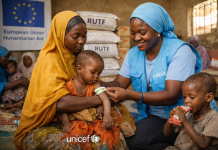


, Folasade Akpan highlights the increasing concern over precocious puberty, where girls as young as seven begin experiencing menstruation. In Nigeria, the average age for a first period is typically 13 or 14, making these early cases a medical anomaly that specialists caution should never be dismissed as "early but normal.")