



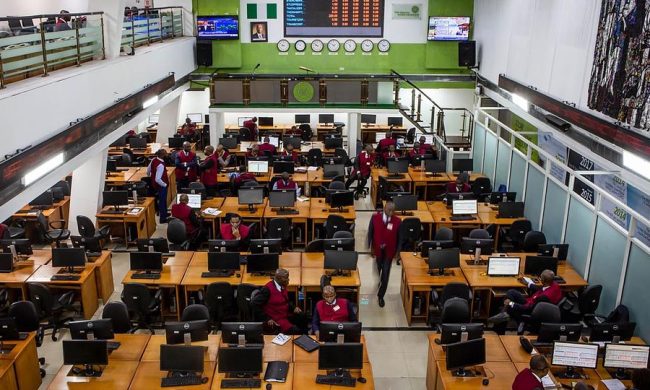







The Nigerian naira continued to lose ground against the US dollar, falling to ₦1,475 per dollar at the Nigerian Foreign Exchange Market (NFEM), as mounting dollar demand tightened pressure on the local currency.
The latest figures show that the naira has depreciated by ₦15 over the past two trading sessions, a development linked to the absence of foreign exchange (FX) interventions by the Central Bank of Nigeria (CBN).
According to data from the CBN, the exchange rate closed at ₦1,470.26 per dollar on Monday, weaker than the ₦1,465.67 recorded at the close of trading last week.
Market analysts say that rising demand for dollars by eligible forex users has outpaced liquidity in the official window, leading to intraday volatility. The official FX spot rate reached an intraday high of ₦1,475.50 before settling at ₦1,470.84 per dollar by market close.
Traders confirmed that the CBN did not sell US dollars to authorised dealers and commercial banks during the session. This shortfall, combined with carryover demand from the previous week, has intensified downward pressure on the naira.
A research note from Coronation Merchant Bank highlighted that overall activity levels at the NFEM moderated slightly last week. The bank reported that total FX inflows declined to $835.6 million from $1.18 billion in the previous week.
Breakdown of inflows revealed that foreign portfolio investors (FPIs) remained dominant, contributing $259.11 million — about 30% of total inflows. Exporters followed with 20.3%, while foreign direct investments (FDI) accounted for 19.9%. Contributions from non-bank corporates stood at 8.9%, the CBN supplied 14.89%, and other sources made up 12.2%.
Despite recent depreciation, the naira recorded gains across both the official and parallel markets last week, supported by CBN interventions and a boost in foreign inflows. At the NFEM, the currency appreciated by 1.02% week-on-week to close at ₦1,465.68 per dollar, while in the parallel market, it strengthened by 2.75% to ₦1,455 per dollar.
Consequently, the gap between the two markets narrowed to ₦10.68 — a premium of 0.73% in favour of the official market — from ₦14.34 a week earlier. Analysts attributed this convergence to reduced speculative trading and a slowdown in seasonal dollar demand typically seen before school resumption and post-summer travel.
Experts anticipate that the naira may sustain its stability this week if foreign inflows remain steady and the CBN continues its intervention efforts. However, they warned that both local and global macroeconomic shocks could still pose downside risks.











, as mounting dollar demand tightened pressure on the local currency.)