







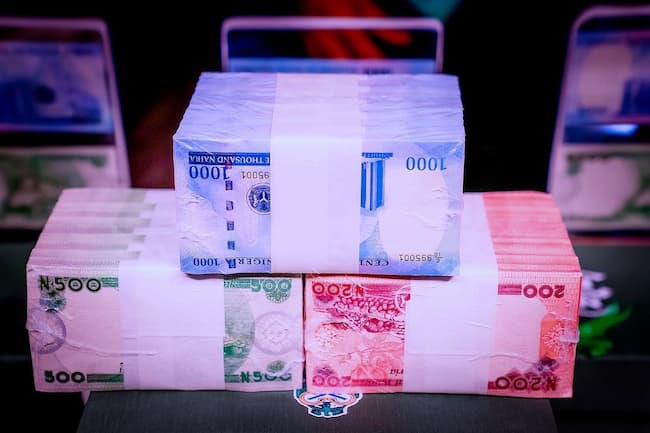
The naira gained ground against the US dollar last week as the Central Bank of Nigeria (CBN) temporarily halted its foreign exchange (FX) interventions. This pause followed weeks of aggressive FX injections that had increased dollar supply in the market.
The naira traded at ₦1,500 per dollar in the official market, appreciating by 93 kobo week-on-week. At the parallel market, the naira also strengthened, closing at ₦1,505 per dollar, marking a ₦10 gain within the same period.
The gap between the official and parallel market exchange rates has now narrowed to just ₦5, a sign of improved liquidity and reduced speculation. The launch of Bloomberg BMatch, an electronic FX trading platform, has also contributed to a more transparent and efficient market.
Despite short-term gains, concerns remain over the sustainability of the naira’s strength. In February, the naira depreciated by 1.69% in the official market but appreciated by 7.33% in the parallel market, bringing its year-to-date gain to 2.48% and 9.67%, respectively, according to TrustBanc Financial Group.
Nigeria’s external reserves have dipped to $39.10 billion, which some analysts attribute to ongoing FX interventions. However, investment banking firms believe the CBN is primarily using these reserves to support market liquidity rather than directly controlling the exchange rate.
While CBN’s recent policies have provided temporary relief, experts warn that lasting stability requires structural reforms. Speculative hoarding of dollars remains a challenge, and while increased FX inflows from foreign investors and remittances have helped, long-term stability depends on economic fundamentals.
Looking ahead, Nigeria’s renewed bilateral FX swap agreement with China could help support liquidity. With trade volumes between the two countries reaching nearly $15 billion, this deal ensures continued FX flow, reducing pressure on the naira.



 temporarily halted its foreign exchange (FX)...)