








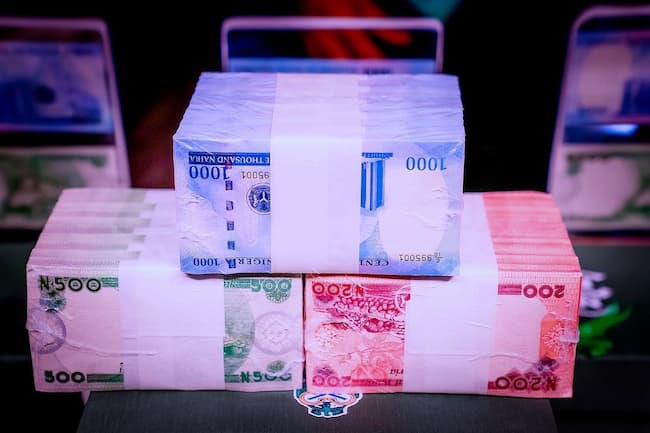
The Nigerian naira continued its upward momentum against the United States dollar at the official foreign exchange window at the start of the week, supported by easing demand pressures and an improvement in the country’s gross external reserves position.
According to the Central Bank of Nigeria’s (CBN) daily foreign exchange market update, the naira closed trading on Monday at an official rate of ₦1,442.5126 per dollar, reflecting sustained stability in the market amid reduced liquidity stress.
Market activity indicated a noticeable decline in dollar demand for foreign payments, a trend largely attributed to corporates winding down financial activities as the year approaches its close. With many companies concluding their books, pressure on the primary foreign exchange market moderated significantly.
During intraday trading, the naira appreciated to a high of ₦1,450 per dollar, strengthening from ₦1,455 recorded at the same period in the previous week. However, fluctuations were observed as the session progressed, with the intraday rate later weakening to ₦1,438.10 compared with ₦1,435 at the prior session, following targeted interventions by the apex bank.
Meanwhile, Nigeria’s external reserves recorded a modest increase, rising to $45.275 billion based on the latest available trading data. The current reserve level provides import cover for approximately 10 months, reinforcing confidence in the country’s external buffers amid ongoing foreign exchange reforms.
In the global commodities market, crude oil prices opened the week on a positive note, advancing by about two per cent in early trading. The gains came despite generally subdued activity across commodity markets, following diplomatic engagements between the United States and Ukraine.
An official statement released after a meeting between U.S. and Ukrainian leaders indicated progress toward a peace agreement, although key issues remain unresolved. The developments helped lift oil prices, with investors reacting cautiously to the prospect of reduced geopolitical risk in Eastern Europe.
U.S. benchmark West Texas Intermediate (WTI) crude rose by 2.43 per cent to trade at $58.12 per barrel, while Brent crude climbed 2.24 per cent to approximately $62 per barrel, marking a rebound from Friday’s close.
On Sunday, U.S. President Donald Trump and Ukrainian President Volodymyr Zelenskyy met to deliberate on a revised framework aimed at bringing an end to the Russia–Ukraine conflict, which has now persisted for nearly four years. Despite reported progress, several contentious matters remain outstanding, particularly the future of the Donbas region, which Russia continues to seek full control over.
Speaking after the talks, President Trump described the Donbas issue as unresolved but noted that negotiations were “getting a lot closer.” He added that an overall agreement on a peace pathway was nearing completion, estimating that discussions were approximately 95 per cent concluded.