








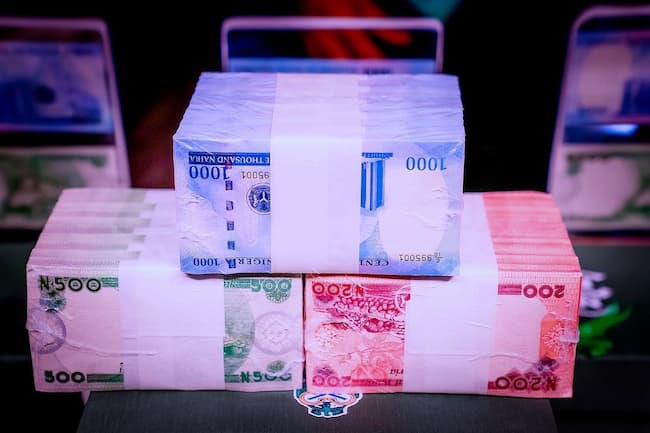
Nigeria’s naira is showing fresh resilience on the back of stronger foreign reserves and steady FX interventions, with analysts projecting sustained stability across the currency market.
External reserves climbed to $42.225 billion last week, the highest since 2019, supported by rising oil inflows and offshore portfolio investment. Analysts now expect reserves to reach $45 billion before year-end, buoyed by Nigeria’s Bonny Light crude which traded at $70.90 per barrel.
The local currency strengthened across official and parallel market windows. At the official FX window, early trades were anchored within ₦1,492–₦1,495/$ as improved supply met demand. Midweek pressures briefly pushed the exchange rate to ₦1,498/$, but inflows from local oil companies and modest Central Bank of Nigeria (CBN) interventions helped the naira rebound.
By the close of the week, the currency appreciated 49 basis points to settle at ₦1,480.66/$, its first time trading below ₦1,500/$ since February 2025. Parallel market rates also reflected the upbeat momentum, with the naira firming to ₦1,510/$, a 0.13% gain.
The reserve buildup, supported by stronger oil receipts and CBN activity, has bolstered investor confidence. Analysts argue that the growing reserve buffer enhances the apex bank’s ability to manage supply-demand mismatches while sustaining macroeconomic stability.
Global oil prices added further support. Brent crude closed at $69.65 per barrel, while U.S. WTI settled at $65.31. Nigeria’s Bonny Light outperformed with a 1.79% rise, reinforcing expectations of stronger FX inflows.
Cowry Asset Management noted that higher reserves and improved inflows create a strong case for continued naira stability. Similarly, AIICO Capital forecast that the apex bank’s interventions, complemented by fiscal measures, would sustain FX market balance.
Cordros Capital echoed the positive outlook, pointing to growing non-oil exports, a favorable current account balance, and expectations of global monetary easing as additional tailwinds for foreign investor sentiment.
Despite this, analysts cautioned that volatility in global oil prices and persistent local demand pressures could temper gains. Still, the consensus remains that Nigeria’s currency is set for relative stability in the near term, underpinned by stronger reserves and CBN policy actions.