






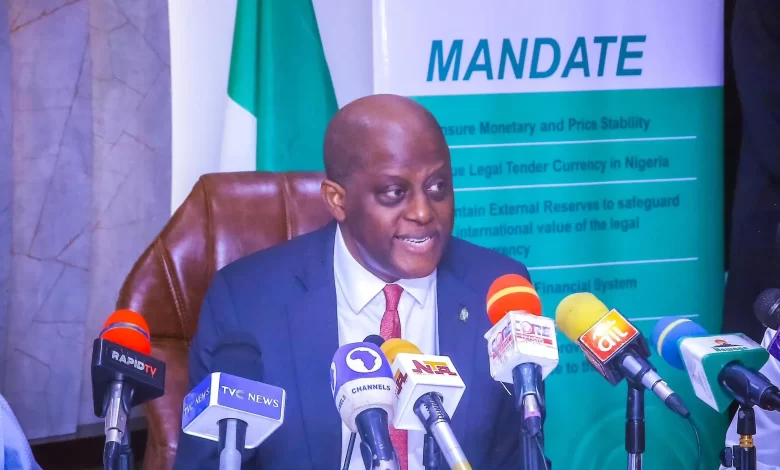
Nigeria’s economic reform drive appears to be yielding tangible results, with the Central Bank Governor, Mr. Yemi Cardoso, declaring that the Naira has become “more competitive globally” following months of monetary tightening and structural adjustments aimed at restoring stability and investor confidence.
Speaking at a G24 media briefing on the sidelines of the IMF/World Bank Annual Meetings in Washington on Tuesday, Cardoso said that recent fiscal and monetary interventions have helped cushion the economy against external shocks, stabilise the exchange rate, and improve trade performance.
“We were able to create resilience and buffers against potential shocks,” he said. “Those who closely monitor Nigeria’s economy have expressed increased confidence, and while oil remains our most vulnerable commodity, the overall impact of global fluctuations has been relatively modest.”
For the first time in several years, Nigeria is recording a positive balance of trade, a shift Cardoso attributes to the improved competitiveness of the Naira.
“Now, we have a more competitive currency,” he explained. “As a result, we are experiencing a positive trade balance, estimated at 6% of GDP, which we expect to sustain in the medium term.”
According to CBN data, the value of non-oil exports grew by over 20% in Q2 2025, driven by solid performance in agriculture and manufacturing, while import volumes declined marginally due to tighter foreign exchange management and increased domestic sourcing. Economists view this as an early sign that Nigeria’s trade structure is becoming more self-reliant and diversified.
“The ongoing reforms have encouraged local production and discouraged import dependency,” Cardoso noted. “This aligns with the government’s broader agenda to restructure the economy towards productivity and export-driven growth.”
As of Wednesday, the Naira traded at ₦1,463 to the U.S. dollar — marking its strongest performance in over six months. The local currency appreciated steadily throughout September, closing at ₦1,478/$1 at month’s end compared to ₦1,527.9/$1 at the start of the month.
Daily data from the FMDQ Exchange shows that between September 15 and 29, the Naira gained approximately 3% against the dollar, maintaining an average rate below ₦1,500/$1 for the last two weeks of the month. Analysts say this stability reflects improved dollar liquidity from oil receipts, foreign portfolio inflows, and the Central Bank’s tighter monetary policy stance.
The CBN has implemented several measures since mid-2024, including unifying exchange rate windows, tightening foreign exchange compliance, and introducing new market-based interventions to restore transparency and investor trust.
Nigeria’s Growing Role in Global Financial Governance
Cardoso also highlighted Nigeria’s active role in shaping global economic policy within the Group of 24 (G24), commending the bloc’s increased influence under Argentina’s leadership.
“The G24 has secured a stronger, more effective seat at the Bretton Woods institutions,” he said. “Our collective voice is now more prominent in global financial governance, and that represents a major milestone.”
He added that Nigeria’s participation in the G24 offers a platform to advocate for equitable international financial reforms and improved representation for developing economies.
With inflation easing to 22.7% in September and foreign reserves rebounding to $41.6 billion, analysts say Nigeria’s macroeconomic indicators are gradually improving. However, challenges remain — including high debt servicing costs and sluggish non-oil revenue growth.
“Nigeria is completely restructuring its economy. A competitive currency and sustained policy discipline are helping drive that transformation.”