








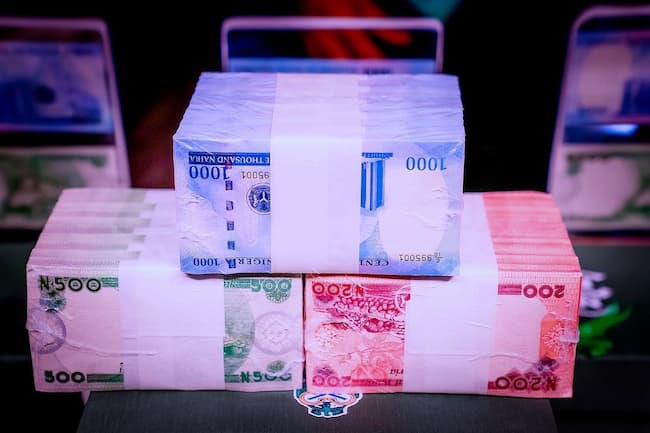
The Nigerian naira appreciated against the U.S. dollar last week, supported by a $66 million intervention from the Central Bank of Nigeria (CBN). The exchange rate improved by 0.6% to N1,501.08 per U.S. dollar at the Nigerian Foreign Exchange Market (NFEM), reflecting strong backing from the CBN.
The naira’s rally was fueled by increased foreign exchange supply from foreign portfolio investors (FPIs), international oil companies (IOCs), and direct CBN interventions. According to AIICO Capital Limited, trading was robust, with transactions occurring between N1,490.00 and N1,520.00 per U.S. dollar.
Market analysts believe the primary driver of the naira’s strength was the CBN’s intervention, as it injected $66.80 million into the foreign exchange market to authorized dealer banks. This also boosted supply to Bureau de Change (BDC) operators.
As a result, the naira gained N8.62 in the official market and N50.00 in the parallel market, closing at N1,501.08 and N1,510.00 per U.S. dollar, respectively. The exchange rate gap between the official and parallel markets narrowed significantly to 0.59% from the previous week’s 3.33%, according to TrustBanc Financial Group Limited.
However, Nigeria’s foreign reserves dropped by $300.11 million to $38.74 billion, marking the sixth consecutive week of decline. Analysts at Afrinvest Limited attribute this decline to the CBN’s continuous efforts to stabilize the naira through forex injections.
Looking ahead, analysts at Cordros Capital Limited expect the CBN’s intervention strategy to maintain liquidity in the forex market, supporting the naira’s stability in the short term.
Meanwhile, oil prices fell by 2% over the week, with Brent crude declining by $1.80 to $74.68 per barrel and WTI dropping by $1.81 to $70.67. Gold prices also saw a minor dip as investors took profits from record highs, but bullion remained on track for its eighth consecutive weekly gain, driven by demand for safe-haven assets amid concerns over U.S. tariffs.