








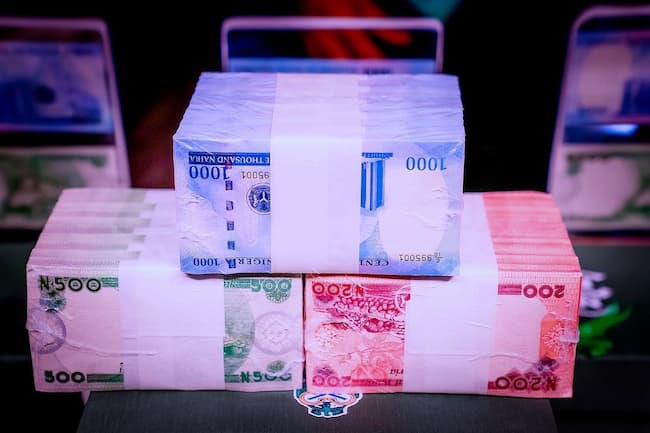
The Nigerian naira maintained relative stability around the N1,600 mark in the foreign exchange market, as the Central Bank of Nigeria (CBN) continued its efforts to manage exchange rate fluctuations and defend the national currency.
Volatility in the FX market eased during the week, aided by the CBN’s ongoing foreign exchange interventions through sales to commercial banks, as well as two Open Market Operations (OMO) auctions held at higher interest rates to draw in foreign portfolio inflows.
According to analysts at AIICO Capital Limited, these measures contributed to a stable exchange rate environment, buoyed by healthy liquidity conditions and a manageable uptick in foreign currency demand.
The naira traded between N1,580 and N1,603.50 to the US dollar during the session. At the close of trading, the naira appreciated by 19 basis points, settling at N1,596.68.
In the parallel market, the exchange rate closed at N1,601, with supply and demand dynamics balancing out. Spot foreign exchange data revealed that the spread between official and black-market rates narrowed to just N10 per dollar. Analysts suggest that the CBN’s continued intervention is likely to keep the naira within its current trading corridor in the near to medium term.
In a surprising shift, Nigeria’s external reserves rose after a prolonged period of outflows had driven the gross balance below $38 billion, the lowest level recorded in six months, amid unstable global oil prices.
Global oil markets took a downturn midweek, with prices set to register their sharpest monthly decline in over three years. This followed signals from Saudi Arabia indicating an intention to ramp up oil production in a bid to reclaim market share.
Additionally, fears over declining global fuel demand, spurred by ongoing international trade tensions, further pressured crude prices. Brent crude slipped by $1.16 or 1.81%, ending at $63.09 per barrel, while the U.S. West Texas Intermediate (WTI) crude fell $2.38 or 3.94%, closing at $58.04.
Elsewhere, gold prices recouped some earlier losses after disappointing U.S. economic growth data raised expectations of an interest rate cut by the Federal Reserve. Spot gold edged down 0.2% to $3,308.32 an ounce but remained on track for its fourth consecutive monthly gain, rising nearly 6% in April.
Market analysts warn that potential production hikes by OPEC+, along with possible crude exports from Iran and Ukraine, could saturate the market at a time of weakening demand exacerbated by trade disputes.




..)