







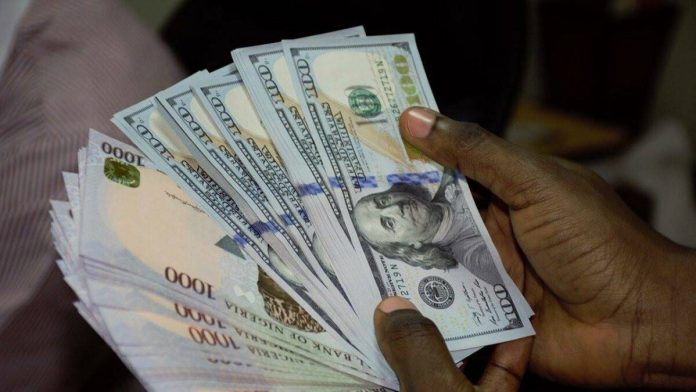
The naira closed the month of January on a firmer note in the official foreign exchange market, appreciating against the United States dollar and signalling improved stability in Nigeria’s currency landscape.
Data from the Central Bank of Nigeria (CBN) showed that the Nigerian Foreign Exchange Market (NFEM) rate strengthened from a weekly high of N1,422.07 per dollar recorded on Friday, January 23, to close at N1,386.55 per dollar at the end of trading on Friday, January 30. This represents a 2.47 per cent appreciation over the week.
The local currency sustained a steady upward trajectory from Monday, January 26, when it traded at N1,418.95 per dollar, advancing to its strongest level of the month at N1,386.55 per dollar by week’s end. Although the market recorded a peak rate of N1,423.50 per dollar earlier in the week, the narrowing spread between the highest and lowest daily rates towards the close of the month pointed to improving stability in the official market.
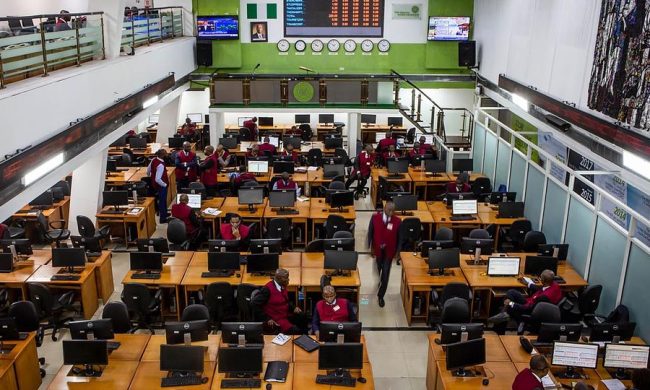
The performance of the NFEM is closely watched as it serves as the benchmark rate for eligible transactions, including corporate foreign payments, medical expenses and overseas school fees, and often influences the pricing of imported goods and services.
Market analysts said sustained appreciation at the official window could help ease inflationary pressures, particularly on imported commodities, if the trend is maintained.
Analysts at Cowry Assets Management Limited, in their weekly market update, noted that the naira strengthened against the dollar in both the official and parallel markets during the week. They reported that the currency appreciated by 2.11 per cent in the parallel market to close at N1,444.19 per dollar.
Looking ahead, Cowry Assets projected modest gains for the naira in the near term, supported by steady oil receipts, stronger non-oil inflows and a favourable trade balance. “Oil prices are expected to remain stable to mildly bullish, reflecting steady global demand and the United States Federal Reserve’s decision to maintain interest rates,” the analysts said.
Separately, CardinalStone reported that the naira traded at N1,465.00 per dollar in the parallel market.
AIICO Capital also confirmed an improvement in the parallel market, noting that the naira appreciated by 1.28 per cent in January, rising from N1,490.00 per dollar to close at N1,460.00 per dollar.
Explaining the drivers of the month’s performance, AIICO Capital said market stability prevailed, supported by improved foreign exchange liquidity from foreign portfolio investors and local market participants, alongside limited intervention by the CBN. The firm added that Nigeria’s external reserves increased by $687.40 million month-on-month to $46.18 billion, buoyed by stronger FX inflows, oil earnings, remittances and sustained stabilisation measures.
In its outlook, AIICO Capital projected that the naira would remain volatile but broadly stable in February, with scope for modest appreciation. “Strong external reserves and expectations of sustained high crude oil prices should continue to provide support, alongside ongoing monetary and fiscal reforms aimed at attracting foreign inflows,” the analysts said, adding that downside risks from external shocks were likely to remain limited in the near term.
Meanwhile, Bloomberg reported that concerns over newly introduced tax laws have fuelled demand for the dollar in the parallel market. A bureau de change operator, Abubakar Muhammed, told the news outlet that individuals were converting naira to dollars to safeguard their assets and avoid potential scrutiny from tax authorities.
“People are converting naira to dollars to secure their assets or avert scrutiny from tax agents,” Muhammed said. “We may see dollar demand ease and the exchange rate appreciate gradually once there is greater clarity around the tax.”
Corroborating this view, the Chief Executive Officer of Financial Derivatives Company, Mr Bismarck Rewane, said heightened tax-related anxiety was driving precautionary dollar purchases. “People are afraid that tax authorities could lock their accounts. In the interim, they are buying United States dollars and holding them aside,” he said.